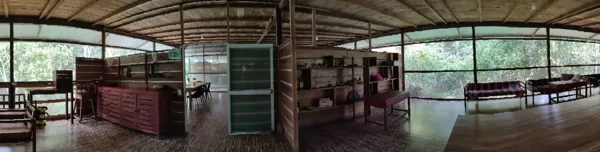
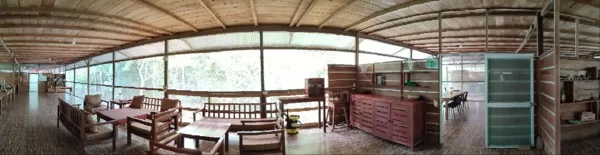
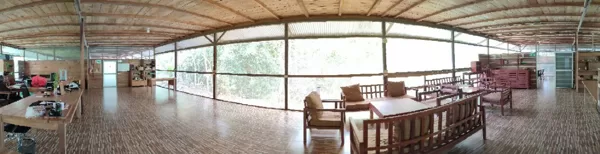
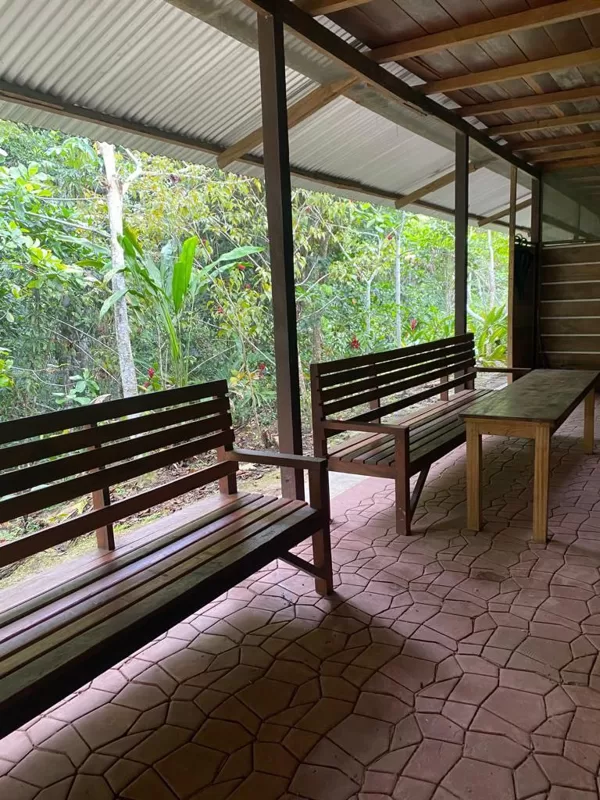
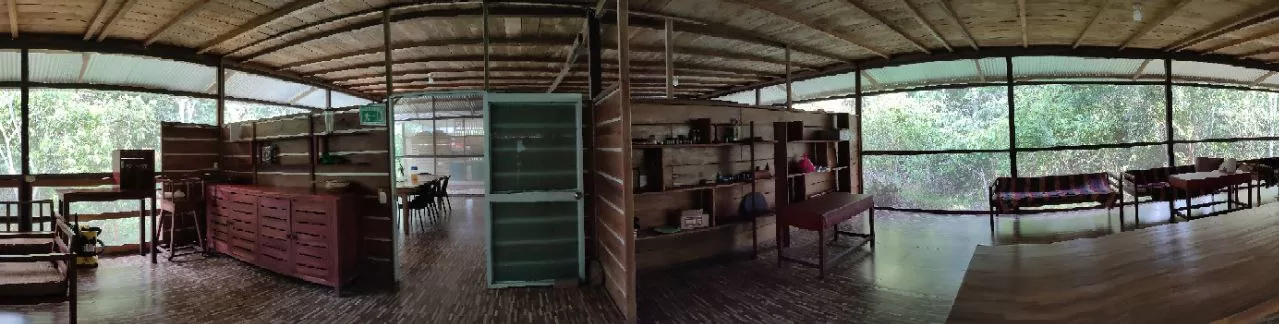
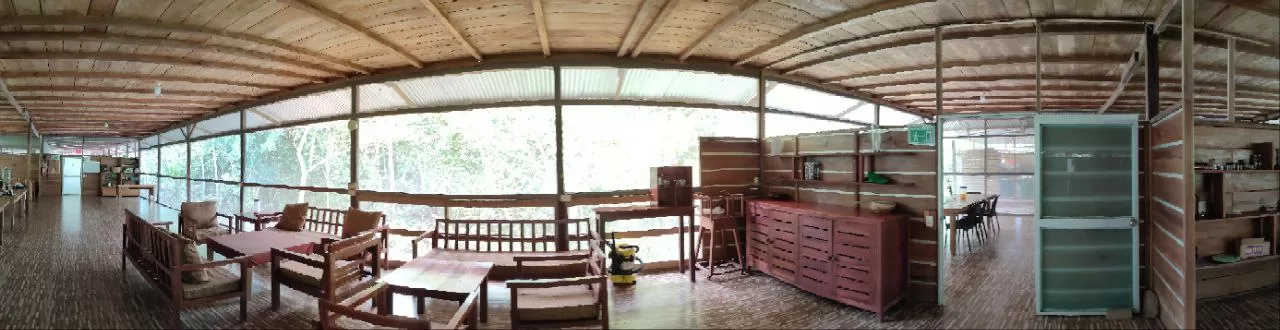
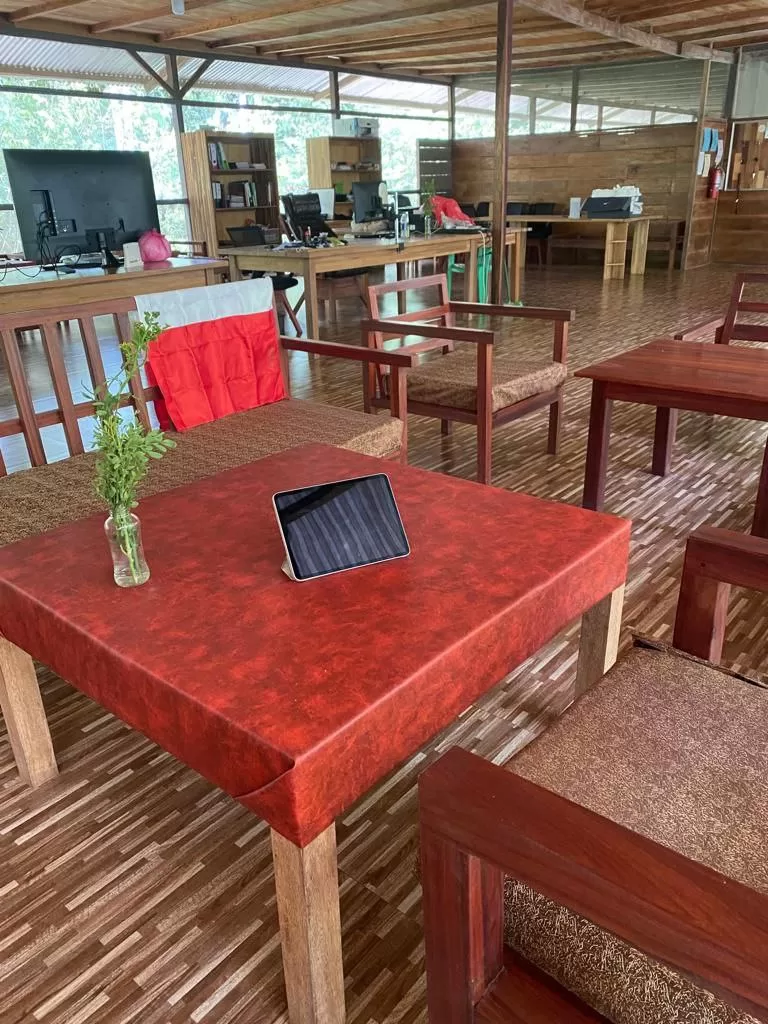
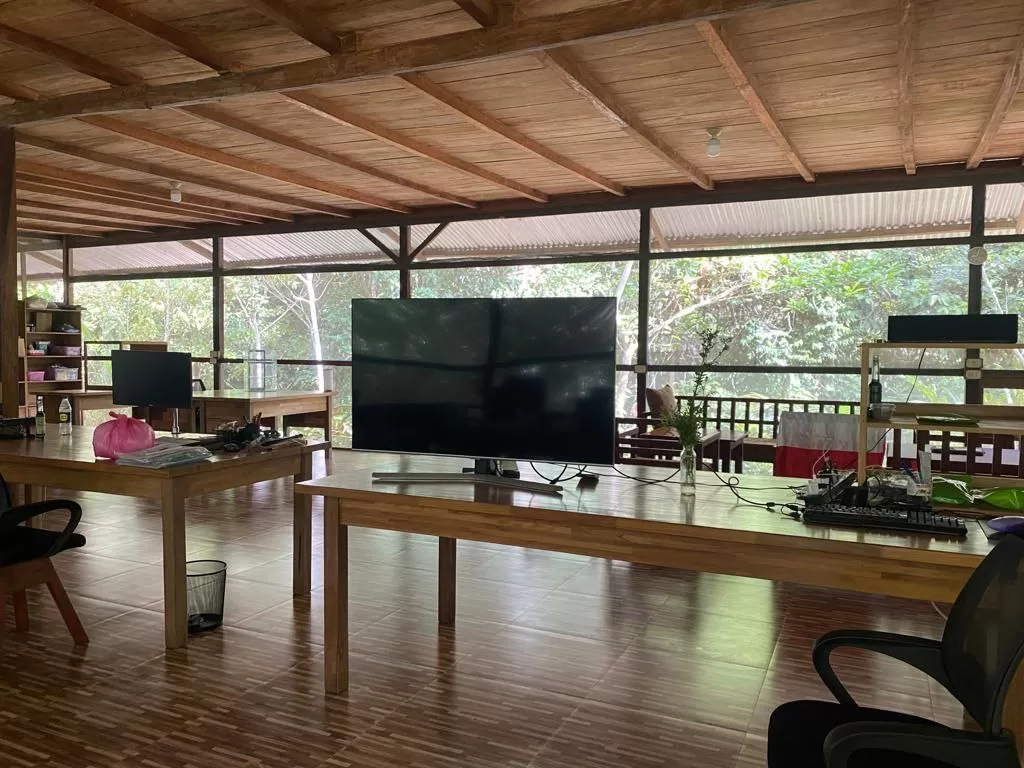
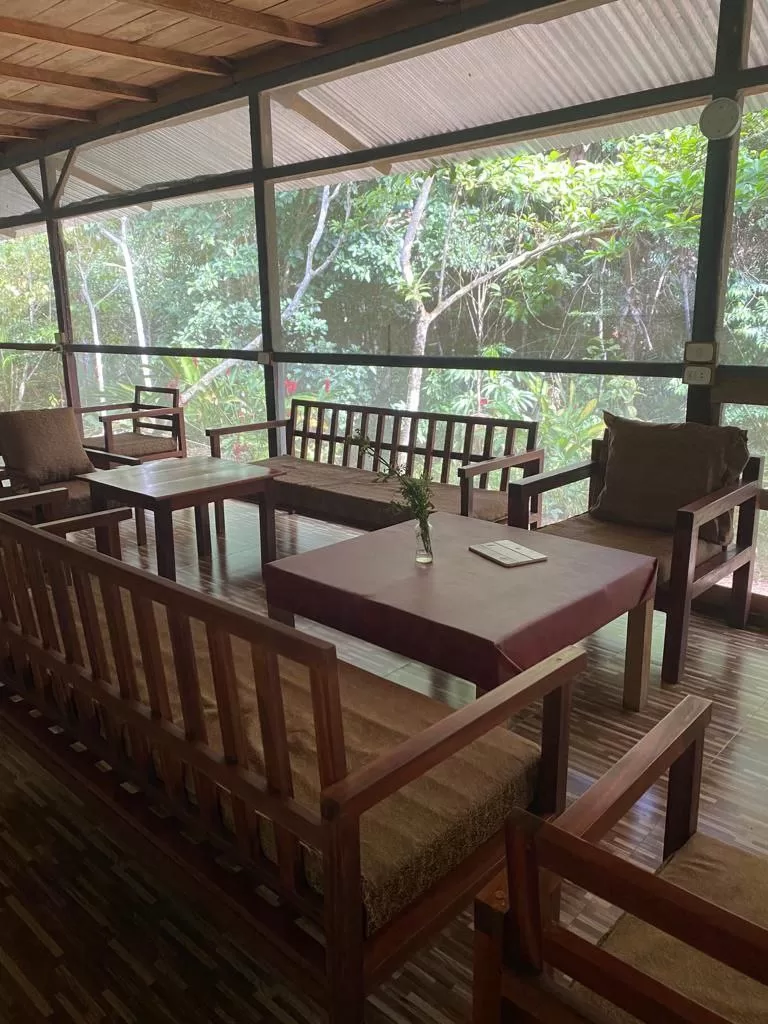
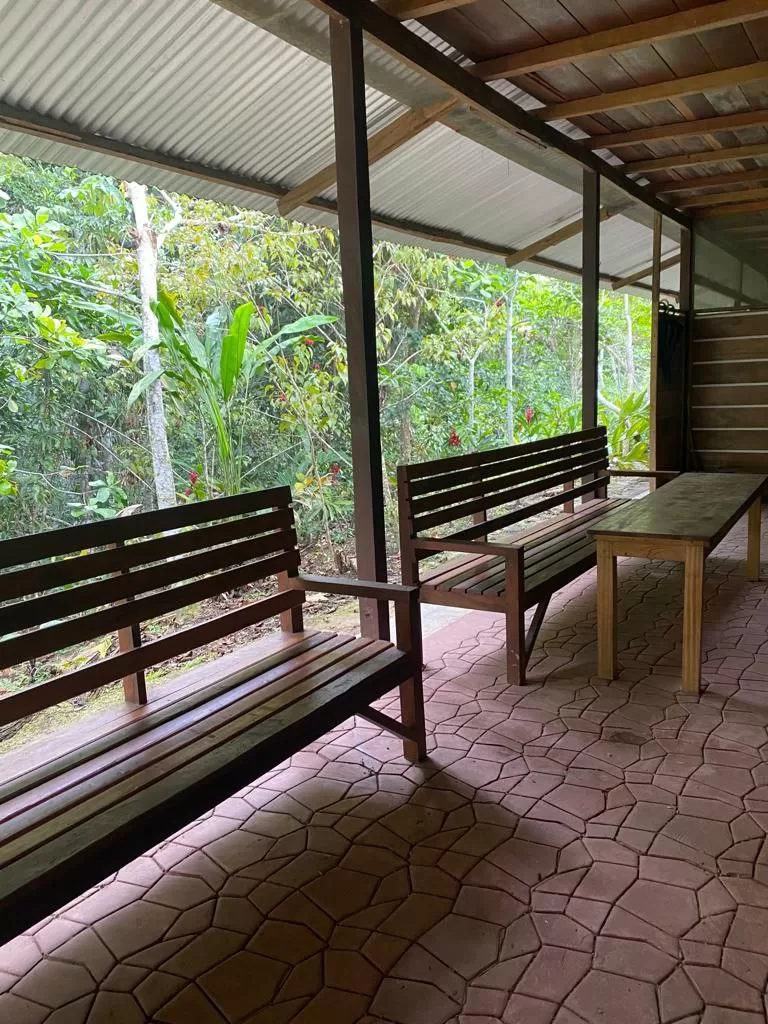
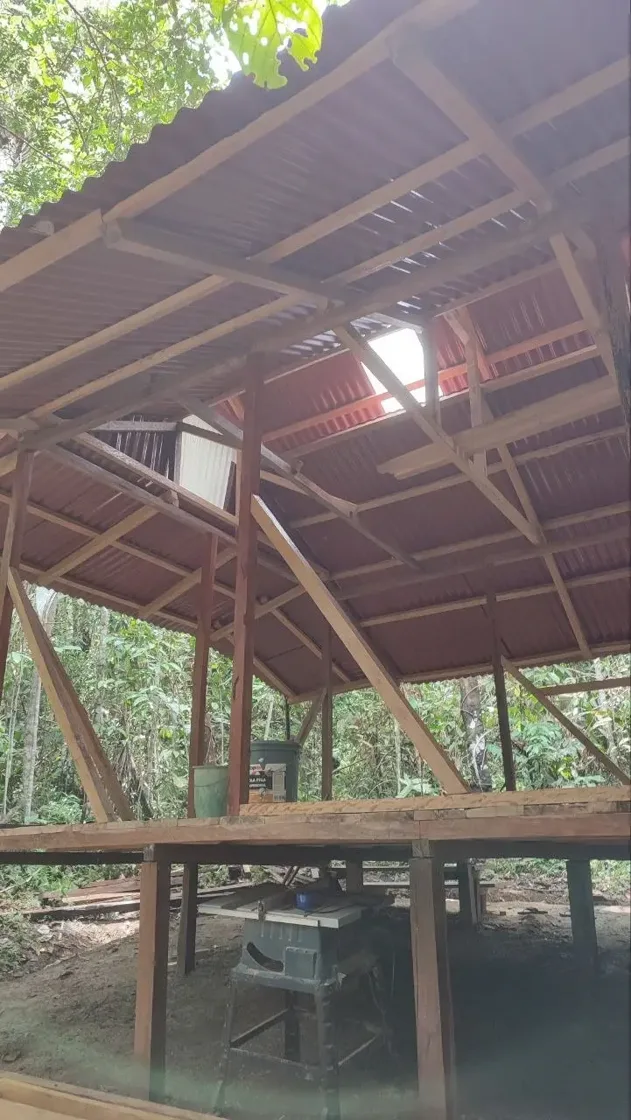
Wooden shelter with corrugated metal roof under construction on a raised platform in a jungle, with a table saw beneath and tropical vegetation around.

Updated: October 23, 2026

Please note: WELES is an active, operating retreat and eco-lodge that continues to evolve. Bungalows are regularly renovated, rebuilt, and upgraded, while existing facilities and infrastructure are continually maintained and improved.

As a result, information about the number, layout, and condition of buildings may vary across materials published at different times, reflecting different stages of the property's development.

Up-to-date details about the property and the exact assets included in the sale are provided to prospective buyers during the acquisition review process.

Buy a fully operational eco-lodge on 57.5 hectares of Amazon rainforest near Iquitos

This 57.5-hectare (142-acre) private rainforest property is located in Loreto, near Iquitos, in the Peruvian Amazon. The property has registered land ownership and an established eco-lodge infrastructure, making it suitable for buyers considering an existing nature-based hospitality business, a private rainforest estate, or a retreat project.

The estate includes guest accommodation, autonomous utility systems, and Starlink satellite internet. Its existing facilities provide a practical foundation for continued operations or future development, subject to the property's applicable permits and the buyer's intended use.

River transport and supply logistics are available throughout the year, although travel conditions and schedules may vary with seasonal water levels and weather. The property is an operating site, with buildings and infrastructure undergoing regular maintenance, renovation, and improvements.

Detailed information about ownership, infrastructure, property boundaries, and the proposed transaction is available to qualified prospective buyers following a non-disclosure agreement (NDA). Independent legal and technical due diligence is recommended before acquisition.

Contact WELES Group to request property details and discuss the acquisition.

Titled land, 57.5 ha, with an established lodge footprint

Established Amazon Eco-Lodge with 12 Bungalows and Off-Grid Infrastructure

This operating Amazon eco-lodge near Iquitos, Peru is intended for buyers who value privacy, existing infrastructure, and the ability to work with an established property. Unlike purchasing undeveloped rainforest land, the estate already has accommodation, essential utilities, and facilities for day-to-day operations. A new owner can build on this foundation and adapt the property to their long-term plans.
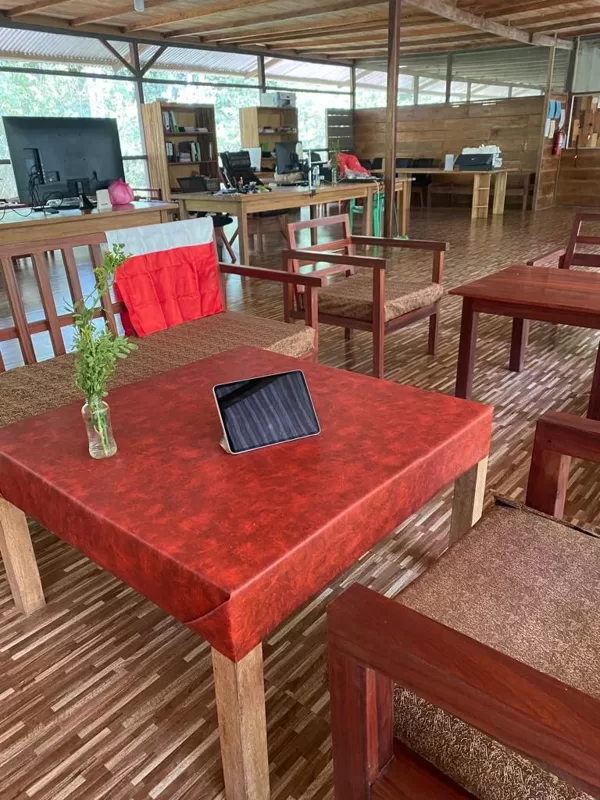
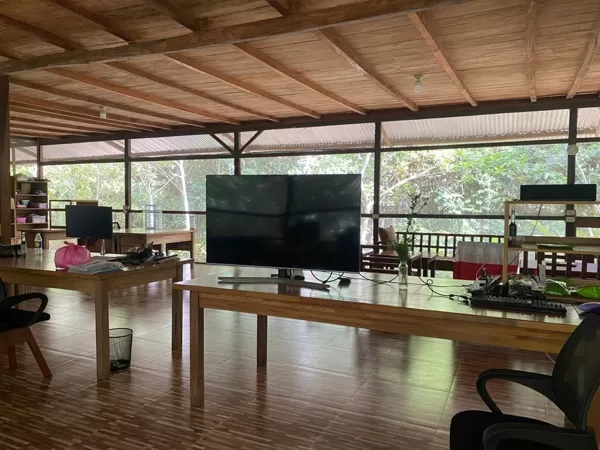
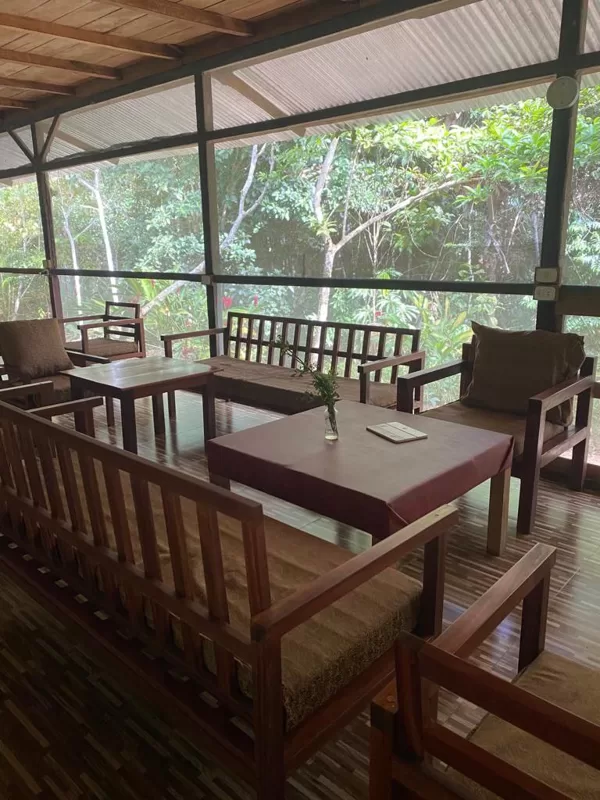
The 57.5-hectare estate includes 12 bungalows, a central operational complex, and dedicated service areas. Its autonomous infrastructure combines solar power with backup generators, while wells and natural water sources support the property's water supply. Starlink satellite internet provides connectivity for communication, administration, and everyday operations in this remote Amazon location.
The property remains an active, evolving operation. Bungalows and shared facilities undergo maintenance, renovation, and occasional reconfiguration as operational needs change. Existing infrastructure offers a foundation for further improvements, while potential expansion depends on technical feasibility, land-use requirements, and applicable permits.
For prospective buyers, the principal advantage is the combination of established accommodation, operational infrastructure, and a substantial private rainforest estate. The acquisition can be evaluated as an existing property with tangible assets and development possibilities, rather than a project that must begin with land clearing, infrastructure installation, and construction from the ground up.

Access via Iquitos — practical logistics year round

River Access and Year-Round Logistics Near Iquitos

The property is located approximately one hour from Iquitos by fast boat, providing river access to the regional commercial and transport hub. This connection is important for both private ownership and the continued operation of an Amazon eco-lodge, allowing the movement of guests, staff, supplies, and maintenance equipment.
River transport is practical throughout the year, although actual journey times and schedules depend on seasonal water levels, weather, and navigation conditions. Reliable logistics are a significant consideration when evaluating remote rainforest property, particularly where regular deliveries, technical maintenance, and guest transfers form part of the operation.

What Can You Do with a 57.5-Hectare Amazon Estate?

The combination of private rainforest land, existing guest accommodation, and operational infrastructure creates several possible ownership models. Buyers can evaluate the estate according to their priorities, available resources, and intended level of commercial activity.
  • Private Amazon Estate. Establish a secluded family residence or personal rainforest retreat with existing accommodation, autonomous utilities, and substantial surrounding land.
  • Operating Eco-Lodge. Continue or adapt the existing hospitality operation for nature tourism, individual retreats, or other permitted accommodation activities, subject to applicable licenses and operational requirements.
  • Private and Commercial Hybrid. Reserve part of the estate for personal use while maintaining selected bungalows for guests, creating a flexible arrangement between private living and nature-based hospitality.
Each option has different operational, financial, and regulatory implications. The property's existing facilities provide a starting point, while future development and changes of use must be assessed against applicable land-use rules, permits, infrastructure capacity, and investment requirements.

Confidential Property Documents and Acquisition Process

Prospective buyers can request a confidential property information package after signing a non-disclosure agreement (NDA). This provides a basis for examining the estate beyond its public listing and assessing whether the acquisition meets the buyer's objectives.
The review process covers available ownership documentation, the property's registered area and boundaries, existing buildings, operational infrastructure, and the proposed transaction structure. Additional legal, technical, and financial information can be examined during the appropriate stages of due diligence.
Independent verification remains essential. Buyers should review the legal status of the property, the assets included in the sale, operating requirements, and any intended development plans before making a binding commitment.
Contact WELES Group to request the confidential property package and discuss the acquisition process.

Amazon Eco-Lodge & Ayahuasca Retreat for Sale in Peru — 57.5 Hectares

Established Amazon Retreat and Eco-Lodge Property for Sale Near Iquitos

This 57.5-hectare (approximately 142-acre) rainforest estate is located in Loreto, near Iquitos, in the Peruvian Amazon. The property combines registered land ownership with an existing eco-lodge and retreat operation, guest accommodation, autonomous infrastructure, natural water sources, and substantial surrounding forest.

Unlike undeveloped jungle land, this property has an established operational base. Accommodation, service facilities, access arrangements, and essential utilities are already in place, allowing prospective buyers to evaluate an existing asset rather than a project that must be built entirely from the ground up.

The estate is approximately one hour from Iquitos by fast boat, depending on navigation conditions, and about two kilometers from a nearby village. Its location provides separation from urban surroundings while maintaining access to regional transport, supplies, and services.

The property may interest buyers seeking an operating rainforest lodge, a private Amazon estate, an established retreat location, or a combination of private residence and selected hospitality activities. Any change in commercial use remains subject to the applicable licensing and legal requirements.

Existing Eco-Lodge Infrastructure on 57.5 Hectares of Titled Land

The property has been developed over time as a functioning lodge and retreat center. Its established infrastructure includes 12 bungalows described in the current sales inventory, central operational facilities, service buildings, trails, and independent utility systems.

Solar power, backup generators, wells, natural water sources, and Starlink satellite internet support everyday operations. The property also includes spaces used for administration, food preparation, maintenance, and other practical activities associated with a remote rainforest establishment.

The estate remains an active operation. Bungalows and shared structures are maintained, renovated, and occasionally rebuilt or reconfigured as operational needs change. Therefore, the number, layout, and condition of buildings may differ between photographs and descriptions published at different stages of development.

The exact building inventory and assets included in the sale are confirmed during the acquisition review process, together with the relevant technical, legal, and financial documentation.

What Makes This Different From Buying Undeveloped Rainforest Land?

Purchasing raw land in the Amazon can involve extensive preparatory work before it becomes suitable for occupation or commercial activities. Roads or river access, water supply, sanitation, energy systems, accommodation, and maintenance facilities may all require separate investments.

This estate already has operating infrastructure and an established accommodation footprint. A buyer can assess existing buildings and systems, review current operating arrangements, and identify which improvements or changes would be necessary for the intended ownership model.

Existing facilities can reduce the amount of development required, but they do not eliminate maintenance costs, licensing obligations, or the need for independent technical inspections.

Registered Land Ownership and Property Acquisition in Peru

The estate is presented for sale with registered ownership under Peruvian law. Relevant property records, boundaries, and transaction documents can be examined by qualified prospective buyers as part of the confidential acquisition process.

Peru generally permits foreign individuals and companies to acquire qualifying real estate without permanent residency. However, property acquisition is subject to applicable legislation, including constitutional restrictions on certain rights within 50 kilometers of international borders.

The buyer's legal review should establish the registered owner, any encumbrances, the precise land boundaries, relevant restrictions, and the proposed transaction structure. Any company or business assets included in the acquisition must be identified separately and documented in the definitive agreements.

Can Foreign Investors Buy an Amazon Eco-Lodge in Peru?

Foreign investors can generally acquire qualifying real estate and participate in Peruvian companies. The appropriate acquisition structure depends on whether the transaction involves land, buildings, operating assets, company ownership, or a combination of these elements.

A purchase of property does not automatically provide residency, authorize every proposed business activity, or transfer licenses without further formalities. These matters must be considered during due diligence.

For a detailed explanation of the legal process, read How to Legally Buy Land in Peru as a Foreigner — Step-by-Step Guide for 2026.

Explore the Natural Environment of This Private Amazon Estate

Aerial photograph of the Amazon rainforest landscape near the 57.5-hectare eco-lodge and retreat property in Loreto, Peru

The landscape includes extensive rainforest vegetation, areas of regenerating forest, established paths, cultivated plants, and natural freshwater features. These elements contribute to the character of the estate and provide opportunities for nature observation, ecological education, and land-management projects compatible with local regulations.

The surrounding vegetation creates a natural setting for individual retreats, forest walks, birdwatching, and other activities centered on the Amazon environment. The forest is also a functioning ecosystem whose management requires attention to drainage, vegetation, wildlife, and long-term conservation.

Fruit Trees, Native Plants and Established Cultivation Areas

The estate contains a variety of cultivated and naturally occurring plant species. The existing property description identifies edible and agricultural plants including:

  • Achiote (Bixa orellana) — a tropical plant traditionally valued for the pigment in its seeds and various local uses.
  • Umarí (Poraqueiba sericea) — an Amazonian fruit tree associated with regional food traditions.
  • Brazil nut trees (Bertholletia excelsa) — large native rainforest trees with ecological and potential economic significance.
  • Pineapples (Ananas comosus) — cultivated tropical fruit plants established in suitable areas of the property.

The presence of these species reflects the site's existing vegetation and history of cultivation. It should not be interpreted as a verified commercial plantation inventory or a guarantee of agricultural production.

Traditional Amazonian Plants Found on the Property

The property description also records plants associated with traditional Amazonian botanical knowledge, including:

  • Chuchuhuasi
  • Mururé
  • Rosewood
  • Tahuari
  • Ayahuasca
  • Chiric sanango

These plants form part of the region's botanical and cultural landscape. Their presence does not establish unrestricted harvesting, processing, or commercial-use rights. Relevant forestry, conservation, and other legal requirements must be considered before any proposed use.

Wildlife and Biodiversity in the Surrounding Rainforest

The property and surrounding forest provide habitat for diverse Amazonian wildlife. The existing site description reports animals such as monkeys, sloths, anteaters, opossums, armadillos, birds, and numerous insect species.

An existing pond supports aquatic life, including fish and turtles. Wildlife observations vary by season, location, and time of day, and encounters with particular species cannot be guaranteed.

For buyers interested in conservation, ecological education, or biodiversity monitoring, these natural features deserve further investigation through appropriate field surveys and environmental assessments.

Rainforest trail, tropical vegetation and a wooden structure near natural freshwater features on an Amazon retreat property in Loreto, Peru

Natural Water Resources, Wells and Rainforest Land Features

Access to water is important for any remote property in the Amazon. The estate's documented features include three forest streams, four wells, natural springs, and an existing pond, alongside infrastructure used for the lodge's water supply.

These features contribute to the operation and character of the property, but their suitability for particular applications should be verified. Water quality, seasonal availability, extraction rights, and system capacity are relevant considerations for both residential and commercial uses.

Existing Pond and Potential for Aquaculture Development

The estate includes a pond described as approximately 800 square meters, with fish and turtles present. The property inventory also identifies around 30 natural depressions associated with spring-fed areas or local water accumulation.

These features may be relevant to landscape design, ecological observation, freshwater management, or the preliminary evaluation of small-scale aquaculture.

However, creating additional ponds or modifying natural waterways would require a separate assessment of soil conditions, drainage, environmental impacts, water rights, and applicable permits. The number of natural depressions does not by itself establish a permitted or technically feasible fish-farming capacity.

Why Consider This 57.5-Hectare Eco-Retreat Property in Peru?

The property's principal value lies in the combination of registered rainforest land, existing guest accommodation, independent utilities, water resources, and an established operating site near Iquitos.

For a buyer planning private ownership, the estate offers space and separation from urban surroundings without starting with completely undeveloped land. For someone evaluating a nature-based hospitality business, it provides an existing operational footprint that can be examined and adapted.

The estate may support different ownership and management approaches:

  • Private rainforest estate. A personal residence or family property using existing accommodation and autonomous infrastructure.
  • Eco-lodge and nature tourism. Continued or adapted hospitality operations, with the required permits, staffing, maintenance, and business planning.
  • Individual retreat center. A private setting for organized retreats and nature-oriented programs, subject to the applicable operational and regulatory requirements.
  • Mixed private and commercial use. A combination of personal occupation and selected guest accommodation, where legally and operationally appropriate.

The suitability of each model depends on the buyer's objectives, the current condition of the facilities, the permits in force, and the costs of any proposed changes.

An established Amazon estate with operating infrastructure — not simply a plot of undeveloped rainforest land.

Explore a Larger Rainforest Property in Peru

Buyers seeking a substantially larger landholding can also explore a separate 700-hectare rainforest property in the Peruvian Amazon presented by WELES Group.

The larger property may be relevant to buyers evaluating forest conservation, ecological research, land-management initiatives, or other long-term uses compatible with its legal status.

The two opportunities should be assessed independently. A developed 57.5-hectare lodge and a large rainforest landholding differ in infrastructure, management requirements, operating costs, and permitted activities.

View the 700-Hectare Rainforest Property for Sale in Peru.

Financial Planning Tools for Amazon Property Investors

Understanding the financial requirements of a remote rainforest property is essential. Acquisition cost is only one part of the calculation; operating expenses, transport, maintenance, staffing, and future capital expenditure can have a substantial effect on the economics of ownership.

WELES Group provides three online tools for preliminary scenario analysis:

These calculators support initial planning. They do not replace independent property valuation, commercial due diligence, legal review, or environmental assessment.

Confidential Sale Documents and Property Acquisition

The estate is offered to prospective buyers who wish to evaluate an established Amazon rainforest property and its existing infrastructure. Detailed materials are made available through a confidential acquisition process.

Following a non-disclosure agreement (NDA) and the relevant buyer-qualification procedures, prospective purchasers can request further information concerning the registered property, buildings, utilities, operational arrangements, and proposed transaction.

The definitive scope of the sale, including any company interests, operating assets, equipment, rights, or contractual arrangements, must be specified in the acquisition documentation.

Prospective buyers should arrange independent legal, technical, and financial due diligence before entering into binding commitments. The seller can provide available information and coordinate the review of the property with qualified parties.

Contact WELES Group to Request the Confidential Property Information Package.

Property information reviewed October 24, 2026. WELES is an active operation, and the accommodation inventory, building layouts, infrastructure, and development status may change as maintenance and improvements continue. The precise assets and conditions of sale are established through the current documentation provided during the acquisition process.

Amazon Rainforest Aerial Journey

Fly over 57.5 hectares of remote jungle land in Loreto, Peru – as seen from the sky.

This 9-minute aerial video offers a calm and spacious view across the vast greenery of the Peruvian Amazon. Filmed above a private land parcel in the Fernando Lores district, it reveals the scale, silence, and energy of this remarkable place. 

No narration, just natural soundscapes and ambient music to let the viewer experience the atmosphere directly.

It's not a commercial — it's a window into something real and alive. A visual impression of freedom, depth, and a different way of living.

Off-Grid Living in Peru with Established Amazon Eco-Lodge Infrastructure

Living or operating a business in the Amazon rainforest requires reliable infrastructure. Electricity, water supply, sanitation, maintenance facilities, and accommodation must function in an environment where humidity, heavy rainfall, and river transport are part of everyday life. This 57.5-hectare eco-lodge near Iquitos, Peru, already has an established operational base designed for these conditions.

The estate combines 12 existing bungalows, a central administration and service complex, solar power with backup generators, water infrastructure, and Starlink satellite internet. These facilities support the property's current operations and provide a starting point for buyers considering private rainforest living, nature-based hospitality, or a combination of both.

Guest Bungalows and Accommodation Facilities

The existing accommodation inventory describes two groups of bungalows, distributed across different areas of the estate:

  • Five larger bungalows. Approximately 40 m² each, with electrical connections, toilets, and showers. These buildings form part of the established guest accommodation infrastructure.
  • Seven forest bungalows. Approximately 16–24 m² each, located in separate rainforest accommodation areas. Their layouts and facilities vary according to construction and renovation stages.
  • Six additional forest houses. A separate development group previously documented with structural frames and roofing in place. Their current completion status, remaining works, and inclusion in the acquisition are subject to verification.

The estate is a working property under continuous development. Existing buildings are maintained, renovated, rebuilt, or reconfigured as operational requirements change. Consequently, the accommodation inventory and the condition of individual structures should be confirmed against the current documentation during the purchase review.

Central Administration, Kitchen and Service Infrastructure

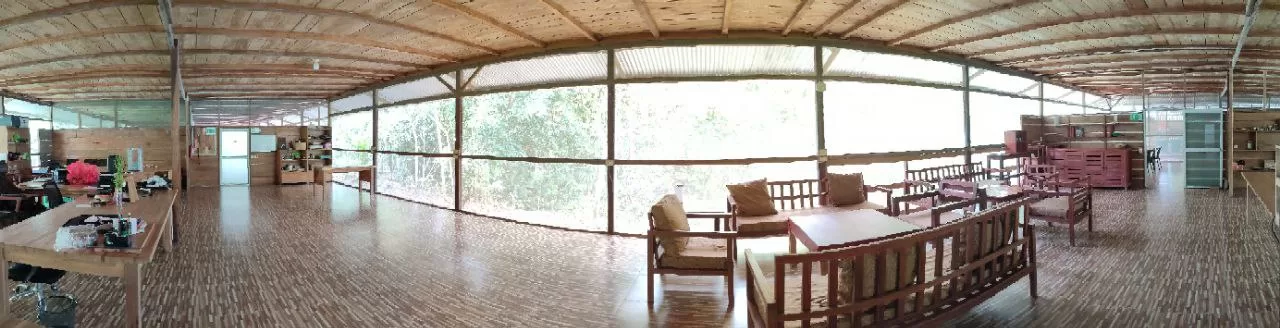
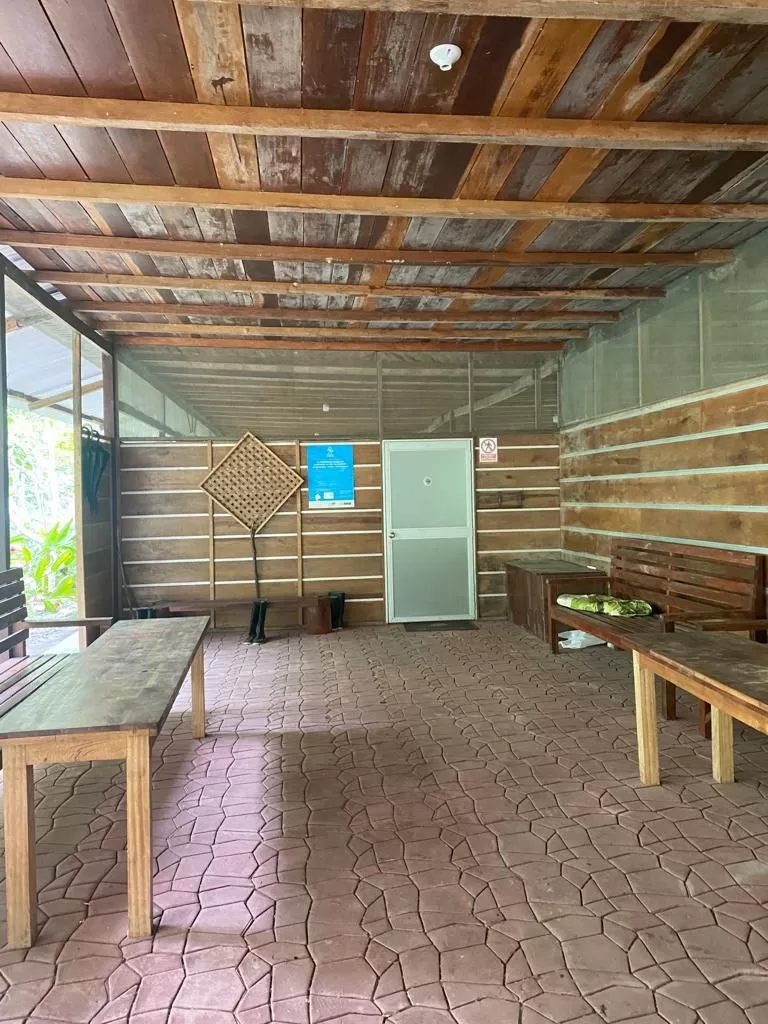
The property includes a central operational complex, previously described in the site inventory as approximately 500 m² of administrative and service facilities. It accommodates functions essential to managing a remote eco-lodge, including administration, food preparation, storage, and operational support.

Additional facilities include a bakery, carpentry workshop, equipment and storage areas, water towers, and septic systems. These are practical assets for a property where routine repairs, food preparation, and infrastructure maintenance must often be managed on-site.

The precise covered floor area, current building configuration, equipment inventory, and technical condition are confirmed during due diligence. An independent inspection is recommended before assigning a value to individual structures or systems.

Solar Power, Backup Generators and Water Supply

The estate uses an autonomous power system combining solar panels and diesel generators. This arrangement allows essential operations to be supported without depending entirely on a conventional public electricity connection.

Water infrastructure includes wells, storage and distribution facilities, and access to natural freshwater sources. Septic systems support sanitation, while Starlink satellite internet provides connectivity for administration, communication, bookings, and personal use.

Independent infrastructure offers flexibility, but it also requires maintenance, fuel, spare parts, and periodic technical inspection. Power capacity, water quality, system condition, and available reserves should be checked against the intended occupancy and operating requirements.

How Is the 57.5-Hectare Amazon Property Organized?

The existing development has been organized into four functional zones, allowing accommodation, operational activities, and further building work to be distributed across different parts of the estate.

The zoning described here reflects the property's internal operational layout. It should not be confused with an official municipal land-use classification or a construction permit.

  • Zone I — Main Operations. Five larger bungalows, the principal administrative and service complex, kitchen facilities, and core power infrastructure.
  • Zones II and III — Forest Accommodation. Seven smaller rainforest bungalows, associated service areas, forest kitchens, and water infrastructure.
  • Zone IV — Additional Development. Six forest houses and a communal building described in earlier development records. Their present condition and remaining construction requirements must be established from the latest site inventory.

This distribution creates a useful separation between central operations, guest accommodation, and areas intended for further development. It may allow a future owner to maintain existing activities while considering improvements in specific parts of the property.

Further construction, renovation, changes of use, or expansion depend on technical feasibility, legal land classification, environmental requirements, and applicable permits. The existence of partly developed structures does not automatically guarantee approval for their completion or commercial use.

Existing wooden eco-bungalow surrounded by tropical rainforest on a 57.5-hectare Amazon eco-lodge property near Iquitos, Loreto, Peru

Investment and Ownership Options for an Established Eco-Lodge in Peru

The property's value extends beyond its accommodation buildings. It combines substantial private rainforest land with infrastructure developed for a remote operating environment. For a prospective buyer, this creates several possible directions, each with different requirements for capital, staffing, management, and legal compliance.

Nature Tourism and Eco-Lodge Operations

A buyer interested in eco-tourism in the Peruvian Amazon can evaluate the existing accommodation and service facilities as the basis for continued hospitality operations. The property's location near Iquitos, established river access, and independent infrastructure are relevant to planning guest transfers, staffing, and routine supplies.

Commercial performance depends on accommodation quality, seasonality, occupancy, operating expenses, and the services offered. Buyers should review available operating information and applicable tourism requirements before preparing revenue forecasts or investment projections.

Private Retreats and Nature-Based Hospitality

The separation between individual bungalows and shared facilities may be suitable for private retreats, meditation programs, yoga, or small-group nature experiences. The property has also been associated with traditional Amazonian retreat activities.

Any proposed retreat operation must be assessed according to its actual activities, accommodation standards, safety procedures, professional responsibilities, and applicable regulations. Traditional plant-based ceremonies raise additional health, ethical, and legal considerations that require specific review.

Private Rainforest Estate and Off-Grid Residence

The estate may also appeal to buyers who want a private property in the Amazon rainforest with existing accommodation and utilities. The size of the land provides physical separation between buildings and substantial surrounding natural areas.

For residential use, the practical considerations include river transportation, supplies, medical access, building maintenance, connectivity, and long-term property management. Off-grid living can offer greater control over essential infrastructure, but it does not eliminate dependence on external services and regular maintenance.

Regenerative Agriculture and Rainforest Conservation

Existing cultivated areas, fruit trees, forest vegetation, and freshwater features create possibilities for evaluating agroforestry, small-scale food production, ecological education, and conservation-oriented land management.

Agricultural suitability must be established through soil assessment, drainage, water availability, land classification, and the intended crop or production system. Organic certification, forest clearing, aquaculture, and other specialized activities may involve additional requirements.

Carbon-credit or biodiversity-credit projects require separate legal and technical feasibility studies. Ownership of rainforest land does not automatically establish eligibility for environmental credits or guarantee income from conservation.

What Should a Buyer Verify Before Acquiring the Property?

An established Amazon eco-lodge can offer advantages over undeveloped land, but the buyer must understand exactly what is being acquired. The property, its buildings, equipment, operating arrangements, and potential future uses should be assessed separately.

The acquisition review should establish the current inventory of buildings and equipment, technical condition of the utility systems, outstanding construction work, legal ownership, permitted activities, and the definitive scope of the transaction.

Detailed documentation is available to qualified prospective buyers through the confidential review process, subject to a non-disclosure agreement (NDA). This allows the buyer and their advisers to examine current records instead of relying exclusively on historical photographs or earlier descriptions of the estate.

Contact WELES Group to Request the Current Property Inventory and Confidential Acquisition Documents.

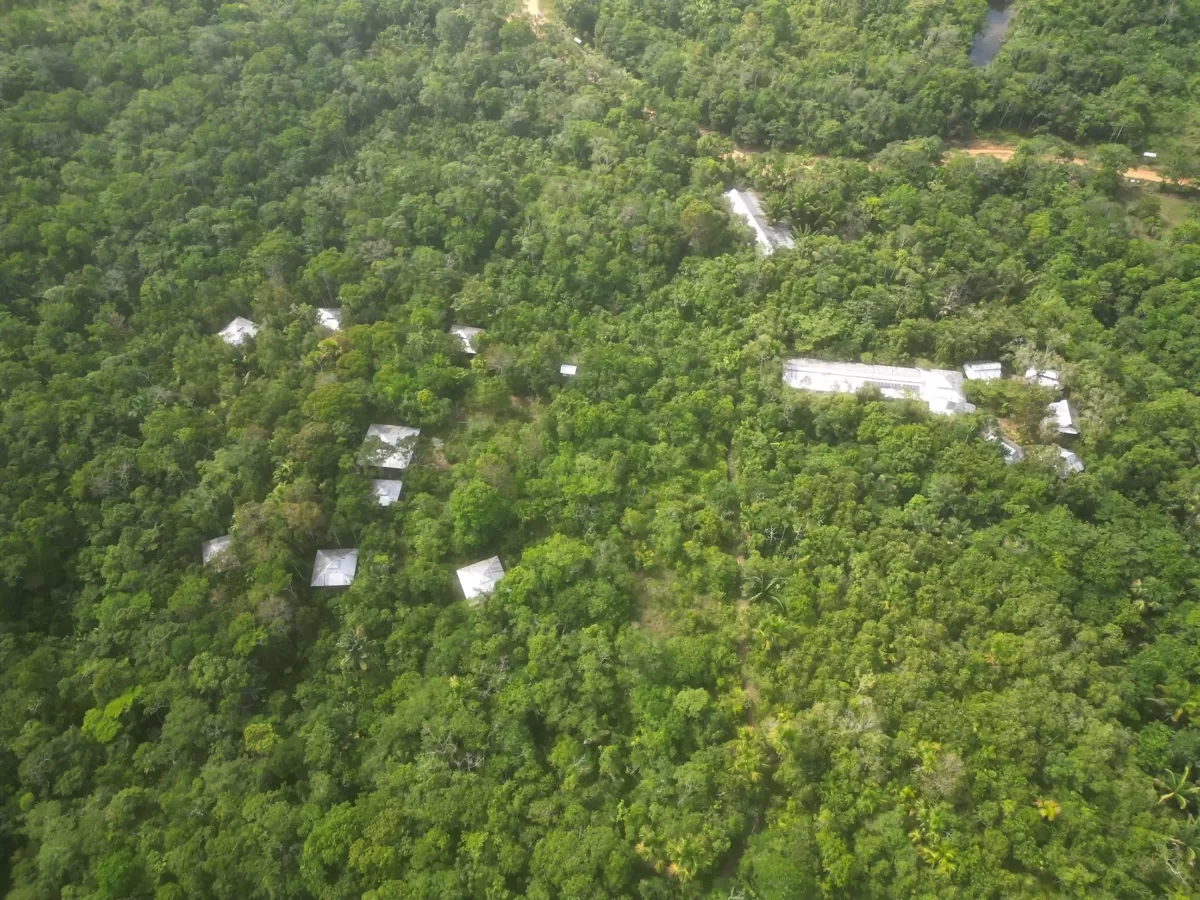
Aerial photograph showing eco-lodge buildings within dense Amazon rainforest vegetation on the 57.5-hectare property in Loreto, Peru

Frequently Asked Questions about Buying Land in the Peruvian Amazon (FAQ)

What is the estimated value of the 57.5-hectare property in Loreto, Peru?

What is the asking price of the Amazon eco-lodge in Peru, and how was the property valued?

The asking price for the operating eco-lodge and its 57.5-hectare rainforest estate near Iquitos, Peru, is USD 690,000. The proposed sale covers the existing business, the registered land, guest accommodation, operational buildings, utilities, and associated assets, subject to the agreed transaction structure and the final inventory.
The property's indicative market valuation has been considered within a range of USD 690,000 to USD 1,200,000, with an approximate midpoint of USD 950,000. These figures reflect valuation estimates based on regional property comparisons, the existing physical assets, replacement considerations, and the potential for continued commercial use.
Several characteristics are relevant to the valuation: 57.5 hectares of titled land, 12 guest bungalows, administrative and service buildings, solar power systems, backup generators, water infrastructure, and Starlink connectivity. The estate also includes additional structures at various stages of development, natural water sources, and established operational facilities.
Valuing an operating property in the Peruvian Amazon requires more than comparing land prices. River access, the condition of the buildings, maintenance requirements, transport costs, legal documentation, and the practical costs of operating in a remote location all influence what a buyer may reasonably be prepared to pay.
The estimated valuation range should not be interpreted as a certified current market value, a guaranteed resale price, or evidence of future profitability. Any previously prepared assessments should be reviewed alongside their methodology, dates, and supporting documentation. Buyers are encouraged to obtain their own independent valuation and conduct legal, technical, and financial due diligence.
We are open to substantive discussions with qualified buyers who understand the property's existing infrastructure, its operating conditions, and its long-term possibilities. Final terms will depend on the agreed scope of the acquisition, the findings of due diligence, and the arrangements negotiated between the parties.
Detailed information and available supporting documents can be requested after signing a non-disclosure agreement (NDA) and completing preliminary financial qualification.

What legal documents confirm ownership of the land?

Does the Amazon eco-lodge in Peru have a registered property title, and how is the purchase legally secured?

Yes. The 57.5-hectare rainforest property in Loreto, Peru, has a formally registered ownership title (título de propiedad). The ownership rights are registered with SUNARP (Superintendencia Nacional de los Registros Públicos), Peru's national authority responsible for public registries, including real estate ownership records.
This registration provides an official basis for verifying the property's legal ownership. Prospective buyers can examine the registered owner's identity, the history of ownership transfers, existing liens or encumbrances, and other recorded restrictions that could affect the acquisition.

What legal documents are available to prospective buyers?

The proposed transaction involves the acquisition of an existing business and real estate complex, including the Peruvian company, registered land, buildings, operational infrastructure, and associated assets, subject to the final purchase agreement.
The available documentation supports examination of several important aspects of the acquisition:
  • Property ownership: registered title documents, SUNARP records, ownership history, and relevant information about the land.
  • Corporate structure: documents relating to the Peruvian company, its ownership, registered activities, assets, and obligations.
  • Buildings and infrastructure: the current inventory of guest bungalows, administrative buildings, utilities, equipment, and other assets included in the proposed sale.
  • Operating documentation: available records relating to the existing business, applicable authorizations, and operational arrangements.
  • Transaction structure: the proposed method of transferring the company, real estate interests, and associated assets, together with the contractual conditions.
WELES GROUP S.A.C. provides qualified buyers with access to the available documentation and assists in coordinating the legal purchase process, including communication with relevant professionals, notaries, and registration authorities in Peru.

Can international buyers conduct independent legal due diligence?

Yes. Buyers are encouraged to engage independent Peruvian legal counsel to conduct legal, corporate, financial, and property due diligence before entering into a binding transaction.
The review should establish the current legal status of the property, verify any registered encumbrances or restrictions, examine the company's obligations, and assess whether the buyer's intended use is compatible with applicable Peruvian regulations. Foreign purchasers should also obtain advice on any ownership restrictions relevant to their circumstances and the property's location.
Detailed documents are made available following the signing of a non-disclosure agreement (NDA) and preliminary confirmation of the prospective buyer's financial capacity.
Our objective is to support a transparent, document-based acquisition process in which the property's ownership, the company's legal position, the scope of transferred assets, and the transaction terms can be independently verified before completion.

What types of ecotourism projects can be developed on the land?

What is the income potential of an eco-lodge in the Peruvian Amazon near Iquitos?

The property's location in the Peruvian Amazon, near Iquitos in the Loreto region, provides opportunities for nature-based tourism, rainforest excursions, river trips, and private retreat programs. The surrounding waterways and tropical forest are important attractions for travelers interested in exploring the Amazon beyond conventional tourist destinations.
The 57.5-hectare estate already operates as an eco-lodge, with 12 guest bungalows, communal areas, administrative facilities, and off-grid infrastructure. This existing operational base allows prospective buyers to evaluate the development of a tourism business without having to construct an entirely new accommodation complex.

What tourism activities could the property support?

Depending on the chosen business model, available staff, and applicable permits, the estate could support several complementary tourism activities:
  • Amazon rainforest accommodation: multi-day stays for guests seeking nature, privacy, and an immersive jungle experience.
  • Guided jungle excursions: rainforest walks, birdwatching, wildlife observation, and educational activities led by qualified local guides.
  • River-based tourism: organized boat excursions, exploration of regional waterways, and visits to nearby communities where appropriate.
  • Private retreats and small-group programs: nature-focused stays, meditation, yoga, and individual retreat experiences using the existing accommodation and communal facilities.
  • Extended rainforest stays: longer visits for travelers, researchers, or remote-working guests who value a private setting with established utilities and Starlink internet.
Each activity requires its own operational planning. River transportation, qualified guides, guest safety, equipment, insurance, and any applicable authorizations should be considered before expanding the services offered.

Could a 20-guest Amazon lodge generate $50,000 to $100,000 per year?

For preliminary financial planning, an eco-lodge operating with an assumed capacity of up to 20 guests could be modeled using an illustrative annual gross revenue range of USD 50,000 to USD 100,000.
This range is a hypothetical business scenario, not verified historical revenue from the property, an independent financial forecast, or a guarantee of future earnings. The actual number of guests the lodge can accommodate must also be confirmed against the current condition, configuration, and operational availability of its bungalows.
Revenue depends on several commercial variables, including:
  • Occupancy: the percentage of available accommodation booked throughout the year.
  • Average daily rate: the price charged for accommodation and included services.
  • Length of stay: whether guests book short visits, extended jungle experiences, or structured retreat packages.
  • Additional services: revenue from excursions, transfers, meals, private programs, and other separately priced activities.
  • Seasonality and distribution: booking patterns, international demand, direct reservations, partnerships, and marketing effectiveness.

What operating expenses should buyers consider?

Gross revenue is not net profit. An eco-lodge in a remote Amazon location has operating costs that may differ significantly from those of a hotel with road access and centralized utilities.
A realistic financial model should account for staff wages, food supplies, boat transfers, fuel, generator maintenance, solar equipment, water systems, bungalow repairs, communications, marketing, insurance, taxes, and periodic infrastructure improvements.
If the lodge also operates retreat programs, accommodation already included in retreat package prices should not be counted again as separate lodging revenue. This distinction is essential when evaluating different income streams and calculating the property's potential profitability.
The advantage of acquiring this estate lies in its existing buildings, utilities, and established operational infrastructure. Prospective buyers can investigate its current condition, assess future investment requirements, and prepare conservative, moderate, and higher-occupancy financial scenarios based on their intended business model.
Available business and financial documentation can be discussed with qualified buyers following a non-disclosure agreement (NDA) and preliminary financial qualification. Independent financial, legal, and technical due diligence is recommended before making an investment decision.

Is the land suitable for sustainable agriculture?

Is the Amazon property suitable for organic farming, agroforestry, and carbon credit projects?

The 57.5-hectare rainforest estate in Loreto, near Iquitos, Peru, offers opportunities to explore sustainable agriculture, agroforestry, and forest conservation projects. The property combines established tropical vegetation, natural water sources, cultivated areas, and sections of regenerating rainforest with infrastructure already supporting an operating eco-lodge.
The tropical climate of the Peruvian Amazon supports a variety of regional crops. Depending on soil conditions, drainage, sunlight, and the legal classification of individual areas, potential agricultural activities may include cacao, açaí, pineapples, and other Amazonian fruit species. Brazil nut trees are also present on the estate and may form part of a longer-term forest management or agroforestry approach.

What types of sustainable agriculture could be developed?

The existing land characteristics and operational facilities provide a starting point for evaluating several forms of small-scale agriculture and forest-based production:
  • Cacao and mixed agroforestry: cultivation on suitable land using systems that combine agricultural crops with shade trees and existing vegetation.
  • Amazonian fruits: potential cultivation of açaí, pineapples, and other locally adapted crops for consumption, hospitality services, or commercial distribution.
  • Brazil nuts and native forest species: conservation and management of existing trees, with any productive use dependent on ecological conditions and applicable regulations.
  • Small-scale food production: developing appropriate garden plots and planting systems to supply part of the eco-lodge's kitchen requirements.
  • Forest restoration and environmental education: maintaining regenerating vegetation, documenting native plants, and incorporating sustainable land management into nature-based tourism activities.
The presence of tropical vegetation does not establish that all 57.5 hectares are suitable or legally available for cultivation. Soil testing, land classification, drainage assessment, and environmental restrictions should be evaluated before establishing new agricultural areas. Commercial use of the term organic may also require compliance with applicable certification standards.

Can a private rainforest property in Peru generate carbon credits?

Rainforest conservation, forest restoration, and certain agroforestry activities may qualify for consideration under carbon credit programs, depending on the project's design and the applicable certification methodology.
However, owning rainforest land does not automatically create carbon credits or an entitlement to sell them. An eligible project must demonstrate measurable and verifiable climate benefits, establish the relevant rights, meet additionality and monitoring requirements, and comply with applicable Peruvian regulations and certification standards.
For a property of this size, project development and verification costs are particularly important. Independent carbon credit certification may not be commercially viable on its own. Participation in a larger, aggregated conservation or restoration program could be investigated as an alternative, subject to eligibility and the terms offered by the program operator.
Other biodiversity-related initiatives may also be worth examining, but they require separate ecological assessments and should not be treated as existing sources of income or automatically tradable environmental credits.

Could sustainable agriculture or environmental projects generate $20,000 per year?

For preliminary investment planning, up to USD 20,000 in additional annual gross revenue may be considered as an illustrative scenario for suitable agricultural or environmental activities. This figure is not verified historical revenue from the estate, a guaranteed return, or a forecast of carbon credit sales.
Actual income would depend on the area legally available for production, crop selection, yields, market prices, transportation, labor requirements, and the investment needed to establish and maintain the operation. Carbon credit projects involve additional uncertainties concerning eligibility, measurable climate benefits, certification expenses, issuance, and market demand.
Gross revenue must be distinguished from net profit. Operating costs, equipment, planting materials, staffing, river logistics, maintenance, taxes, and any certification expenses need to be deducted when assessing financial performance.
The property's principal advantage is the combination of an existing eco-lodge business, established service infrastructure, natural water sources, and a substantial rainforest estate. These characteristics allow prospective buyers to investigate complementary agricultural and conservation initiatives alongside the existing hospitality operation, with each proposed activity assessed for legal feasibility, environmental impact, and commercial viability.

What retreat opportunities does the property offer?

Is the Amazon eco-lodge in Peru suitable for yoga, meditation, and ayahuasca retreats?

Yes. The 57.5-hectare eco-lodge and rainforest estate near Iquitos, Peru, offers an established setting for developing yoga retreats, meditation programs, private nature retreats, and carefully organized experiences connected with traditional Amazonian practices.
The property's location within the tropical rainforest provides privacy, natural surroundings, and separation from the distractions of urban life. The existing facilities include 12 guest bungalows, communal spaces, kitchens, administrative buildings, solar power systems, independent water supplies, and Starlink internet. Together, these features provide a practical foundation for organizing individual stays and small-group programs.

What types of retreat programs could operate on the property?

Depending on the intended business model, available facilities, qualified personnel, and applicable regulations, the estate could accommodate several approaches:
  • Yoga retreats: multi-day programs combining yoga sessions, guided movement, relaxation, and time in nature.
  • Meditation and silent retreats: individual or small-group stays focused on contemplative practice, personal reflection, and extended periods of quiet.
  • Ayahuasca retreats: programs associated with traditional Amazonian practices, subject to appropriate legal review, qualified supervision, health screening, informed consent, and established safety procedures.
  • Private and individual retreats: personalized stays for guests seeking solitude, nature immersion, and time away from their usual routines.
  • Integration and personal development programs: non-clinical reflection, structured discussions, and supportive activities following significant personal experiences.
The arrangement of separate forest bungalows allows retreat organizers to consider different levels of privacy and group interaction. Existing communal areas can support shared activities, while individual accommodations offer spaces for rest and personal time.

What should buyers consider when developing an ayahuasca retreat center in Peru?

Programs involving ayahuasca require particular attention to participant safety, medical contraindications, medication interactions, informed consent, professional competence, and emergency preparedness. The remote rainforest setting makes reliable transport arrangements and access to appropriate medical assistance especially important.
An operating eco-lodge does not automatically have all the authorizations or facilities necessary for every proposed retreat activity. Buyers should independently verify the legal and operational requirements for their intended programs before offering them to guests.
Traditional Amazonian practices also have important cultural contexts. Any related program should be developed with appropriate respect for local knowledge, participating communities, and the responsibilities of those conducting the activities. Ayahuasca experiences should not be marketed as guaranteed treatments for physical or mental health conditions.

How much annual revenue could an Amazon retreat center generate?

For preliminary business planning, a retreat operation on the estate could be modeled using an illustrative annual gross revenue range of USD 30,000 to USD 80,000, depending on the type of programs, number of participants, length of stay, and pricing structure.
This range is a hypothetical financial scenario. It is not verified historical revenue from the property, a guaranteed income figure, or an independently established earnings forecast.
Actual revenue would depend on the number of retreats organized each year, available accommodation capacity, occupancy, program fees, international demand, marketing performance, and the services included in each package.
Operating expenses must also be considered. These include staff and specialist fees, meals, boat transfers, fuel, accommodation maintenance, utilities, administration, insurance, marketing, taxes, and any safety-related arrangements required by the program.
Gross revenue is not net profit. Where retreat packages include accommodation, those lodging charges must not be counted again as separate eco-lodge revenue. This is particularly important when comparing or combining financial scenarios for hospitality, excursions, and retreat activities.

Why consider buying an existing retreat property instead of building a new center?

A significant advantage of this estate is its existing accommodation and operational infrastructure. Buyers can evaluate a functioning property rather than beginning with undeveloped rainforest land and building every facility from the ground up.
The estate remains an active, evolving property. Individual bungalows are periodically renovated, reconfigured, or upgraded, while additional buildings are at various stages of development. The current accommodation capacity, technical condition, and requirements for any proposed retreat operation should therefore be assessed through an updated inventory and on-site inspection.
For prospective owners, the opportunity lies in adapting an established Amazon eco-lodge to a clearly defined retreat concept, with realistic investment planning, appropriate safety standards, and compliance with Peruvian law.

What infrastructure is already in place to support projects?

What infrastructure is already available at the Amazon eco-lodge, and can a buyer begin operating immediately?

The 57.5-hectare rainforest estate near Iquitos, Peru, is an existing eco-lodge with established accommodation, administrative facilities, workshops, and independent utility systems. The property has been developed and operated over many years, providing a practical foundation for buyers interested in continuing a tourism business, establishing a retreat center, or creating a private Amazon estate.
Unlike an undeveloped rainforest property, the estate already has the essential infrastructure required for accommodation, food preparation, maintenance, water distribution, electricity generation, and everyday operations.

Which buildings and utilities are included in the existing infrastructure?

The property's main facilities include:
  • 12 guest bungalows: five larger bungalows of approximately 40 m² each and seven smaller forest bungalows measuring approximately 16–24 m². Their layouts, amenities, and current availability vary according to ongoing maintenance and renovations.
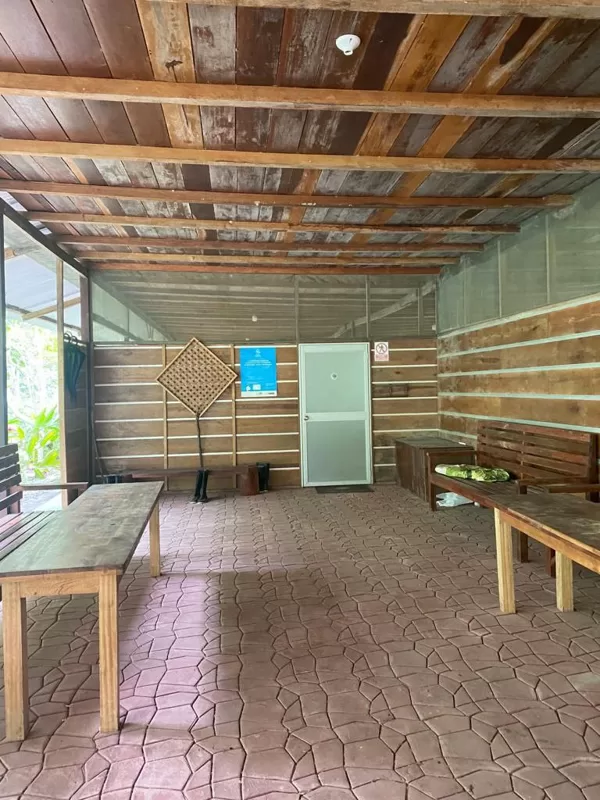
  • Administrative and communal buildings: facilities for managing the property, organizing guest services, preparing meals, storing supplies, and supporting daily operations.
  • Solar power systems: existing solar panels supported by diesel generators, providing an independent electricity supply for the property's operational requirements.
  • Bakery: a dedicated facility for food preparation and bread production, with equipment subject to confirmation through the current inventory.
  • Woodworking workshop: facilities for carpentry, furniture repairs, building maintenance, and the ongoing renovation of wooden structures in the tropical climate.
  • Independent water supply: four wells, natural water sources, storage tanks, and distribution equipment serving different areas of the estate.
  • Septic and wastewater systems: decentralized sanitation infrastructure supporting the existing residential and service buildings.
  • Starlink satellite internet: connectivity for guest communication, reservation management, administrative work, and other online activities.
  • Storage and maintenance areas: dedicated spaces for tools, building materials, equipment, and supplies required for operating a remote property.

Can the eco-lodge be operated without building new infrastructure from scratch?

Yes, the property already has an established operational foundation. Existing accommodation, service buildings, electricity generation, water systems, and maintenance facilities can substantially reduce the initial construction requirements compared with developing a new eco-lodge on vacant rainforest land.
This is particularly relevant in the Peruvian Amazon, where transporting construction materials, equipment, and replacement parts often involves river logistics. Having workshops, storage facilities, and essential utilities already in place provides practical advantages for managing an operating tourism property.
However, an existing operational infrastructure does not mean that no additional investment will be necessary. The actual costs of continuing or expanding the business depend on the condition of the buildings, the capacity of the utility systems, maintenance requirements, applicable permits, and the buyer's intended operating standards.

Is there room to expand the existing eco-lodge or retreat facilities?

In addition to the 12 bungalows in the main inventory, the estate includes six additional forest buildings at various stages of development. Their completion status, technical connections, and suitability for accommodation must be assessed separately.
The property remains an active and evolving project. Individual bungalows are periodically renovated, rebuilt, or adapted to changing operational needs. As a result, historical photographs and descriptions may reflect different stages of development.
Future improvements could support different concepts, including nature-based hospitality, private retreats, small-group programs, or a combination of commercial and personal use. Any new construction or change of use would require appropriate technical evaluation and compliance with Peruvian regulations.

What should buyers verify before taking over the existing facilities?

Before purchasing the eco-lodge, buyers should review the current building inventory, structural condition, electrical capacity, water quality, wastewater systems, maintenance requirements, and operating documentation. An independent technical inspection can help establish which facilities are ready for continued use and which may require investment.
WELES Group provides qualified buyers with access to available property and infrastructure documentation following a non-disclosure agreement (NDA) and preliminary financial qualification. Virtual and on-site inspections can also be arranged.
The principal advantage of this offering is the opportunity to acquire an existing eco-lodge business with substantial infrastructure already in place, allowing the next owner to plan future operations and improvements around an established property.

Fully equipped eco-lodge in the Peruvian Amazon is ready for your off-grid projec?

Is the Amazon eco-lodge in Peru suitable for off-grid living, remote work, and self-sufficiency?

Yes. The 57.5-hectare rainforest estate near Iquitos, Peru, has an established infrastructure designed to support off-grid living and the daily operation of a remote eco-lodge. The property combines independent electricity generation, private water sources, decentralized sanitation, and satellite internet connectivity.
These facilities make the estate an option for buyers interested in an off-grid property in Peru, a private Amazon residence, extended rainforest stays, or a nature-based business that accommodates remote workers. The existing guest bungalows and communal buildings provide flexibility for separating private living spaces from accommodation and operational areas.

What off-grid utilities are already available on the property?

The estate includes several systems developed to support everyday life without relying on conventional municipal utility connections:
  • Solar power: existing solar panels supply part of the property's electricity requirements. Diesel generators provide additional power when solar production is insufficient or operational demand increases.
  • Four private water wells: the property has four wells, natural springs, and other water sources, supported by storage and distribution systems. Water quality, seasonal availability, pumping capacity, and any necessary treatment should be independently verified before relying on these sources for drinking water.
  • Independent septic systems: decentralized wastewater infrastructure serves the accommodation and service areas. Its condition and capacity must be assessed against the number of occupants and the intended use.
  • Starlink satellite internet: existing connectivity supports online communication, business administration, reservations, and many forms of remote work. Actual speeds and reliability depend on local conditions, equipment, and service availability.
  • Maintenance and storage facilities: workshops, storage areas, and operational buildings support routine repairs, equipment maintenance, and the management of essential supplies.

Can digital nomads and remote professionals live and work from the Amazon rainforest?

The combination of Starlink internet, independent power generation, and existing accommodation creates opportunities for location-independent professionals, entrepreneurs, and guests interested in longer stays in the Peruvian Amazon.
Separate bungalows can be considered for living, working, and receiving guests. The property's extensive rainforest surroundings also provide privacy and space away from densely populated areas.
However, remote work in the Amazon requires practical planning. Anyone dependent on uninterrupted video calls, continuous internet access, or electrically powered equipment should test the available connection and assess battery storage, generator capacity, and backup arrangements before committing to long-term use.

Is the property suitable for families seeking a self-sufficient lifestyle?

The estate offers an existing foundation for families or private owners considering long-term residence in the Peruvian Amazon. Its accommodation, water sources, power systems, and service buildings provide facilities that would otherwise need to be developed on an undeveloped rainforest property.
Existing fruit trees and cultivated areas also create possibilities for small-scale food production and agroforestry on suitable land, subject to soil conditions, environmental restrictions, and applicable permits.
Living independently in a remote rainforest location nevertheless involves continuing reliance on regional services. Food supplies, fuel, replacement parts, medical care, and specialized maintenance may require transportation through Iquitos. Families should also consider schooling, healthcare access, and emergency transport arrangements.

What should buyers verify before using the estate as an off-grid home?

Before planning permanent residence or expanding the existing facilities, buyers should review the electrical capacity, water quality, wastewater systems, technical condition of the buildings, internet performance, and ongoing maintenance costs.
The eco-lodge remains operational and is continuously maintained, renovated, and adapted. Individual bungalows and technical installations may therefore differ in condition or configuration from earlier descriptions and photographs.
The main advantage is that the core infrastructure already exists. Prospective owners can assess a working off-grid estate and determine which improvements are necessary for their preferred living arrangements, rather than beginning with an undeveloped rainforest property.
WELES Group can provide qualified buyers with available technical and property information following a non-disclosure agreement (NDA) and preliminary financial qualification. Virtual and on-site inspections can also be arranged.

How accessible is the property?

Where is the Amazon eco-lodge located, and can international buyers arrange a virtual or in-person viewing?

The 57.5-hectare eco-lodge and rainforest property is located in the Loreto region of northeastern Peru, approximately two kilometers from the nearest village. The estate is surrounded by tropical forest and offers a private natural setting with access to local communities and regional transportation services.
The main gateway to the property is Iquitos, the capital of Loreto and a major transportation and logistics center in the Peruvian Amazon. From Iquitos, the journey continues by river. Under suitable navigation conditions, the trip takes approximately one hour by speedboat.
Transportation can generally be arranged throughout the year, although travel times and routes depend on seasonal water levels, weather conditions, and the type of boat used. These factors are important when planning guest transfers, property maintenance, supplies, and future commercial operations.

Can prospective buyers view the Amazon property remotely?

Yes. WELES Group offers virtual property viewings for prospective international buyers who would like to evaluate the estate before traveling to Peru.
A remote viewing can provide an initial overview of the existing accommodation, operational buildings, utilities, and selected areas of the rainforest property. Depending on the buyer's interests and the technical conditions on-site, particular attention can be given to:
  • Guest accommodation: the 12 existing bungalows, their layouts, amenities, and current condition.
  • Operational facilities: administrative buildings, communal areas, kitchens, storage facilities, the bakery, and woodworking workshop.
  • Off-grid infrastructure: solar power systems, backup generators, water supply, septic systems, and Starlink connectivity.
  • Land and natural features: accessible forest trails, existing cultivated areas, natural water sources, and selected development zones.
  • Ongoing improvements: renovation work, additional structures, and areas undergoing maintenance or redevelopment.
Because the estate remains an operating property undergoing regular maintenance and improvements, current viewings are particularly useful for confirming details that may have changed since earlier photographs or descriptions were published.
A virtual tour provides preliminary information and does not replace a physical inspection or independent technical assessment.

How can buyers arrange an in-person property inspection near Iquitos?

WELES Group assists qualified buyers with planning on-site visits, coordinating local logistics, and arranging the necessary river transportation from Iquitos to the property.
Before traveling, prospective purchasers are encouraged to review the principal terms of the offer and clarify their intended use of the estate. Following a non-disclosure agreement (NDA) and preliminary financial qualification, detailed property documentation can be made available for further examination.
During a personal inspection, buyers can assess the condition of the bungalows, administrative and service buildings, utilities, water systems, natural surroundings, and transportation arrangements.
Purchasers may also involve independent Peruvian legal counsel, engineers, building specialists, or other professional advisers to conduct legal, technical, and operational due diligence before proceeding with an acquisition.

What should buyers know before traveling to inspect the property?

Visiting a remote rainforest estate requires more planning than inspecting conventional urban real estate. Weather, river conditions, transportation availability, and the time needed to examine a large property should all be considered when arranging the visit.
The estate covers 57.5 hectares, approximately 142 acres. A meaningful inspection should therefore allow sufficient time to evaluate both the developed areas and the natural characteristics relevant to the buyer's plans.
The asking price for the complete business and property complex is USD 690,000. The precise scope of the acquisition, including the Peruvian company, registered land, buildings, infrastructure, and associated assets, is established through the current documentation and agreed transaction terms.
To arrange a virtual viewing, discuss an inspection visit, or request confidential purchase documentation, prospective buyers can contact WELES Group through the website's contact page.

Are there any restrictions on land use in the Amazon?

What environmental regulations apply to the Amazon eco-lodge and rainforest property in Peru?

Land ownership, construction, tourism operations, and natural resource use in the Peruvian Amazon are subject to national environmental legislation and applicable regional and local regulations. For a 57.5-hectare rainforest property in Loreto, these requirements are particularly relevant to forest conservation, water management, tourism development, agriculture, and the construction or renovation of buildings.
The estate near Iquitos is an existing eco-lodge with a registered property title, guest accommodation, operational facilities, and independent utility systems. Its established infrastructure provides a foundation for continued use, while any proposed changes or new activities must be evaluated against the legal requirements applicable to the specific project.

Which environmental and land-use requirements should buyers consider?

The applicable rules depend on the property's legal land classification, existing authorizations, environmental characteristics, and the activities a future owner intends to undertake. Key considerations include:
  • Forest conservation and land use: clearing natural vegetation, converting forest land to agricultural use, or developing previously undisturbed areas may require specific authorizations or be subject to legal restrictions. Relevant authorities include Peru's National Forest and Wildlife Service (SERFOR) and regional forestry agencies.
  • Ecotourism and hospitality: operating guest accommodation and organized tourism activities involves applicable business registration, tourism, municipal, and safety requirements. Depending on the activity, these may involve MINCETUR, regional tourism authorities, and local government.
  • Water resources: the use of wells, streams, and natural springs may require water-use rights or other authorizations from Peru's National Water Authority (ANA), depending on the intended use and applicable conditions.
  • Construction and expansion: additional bungalows, new service buildings, major renovations, and changes in land use must be assessed against applicable building regulations, environmental requirements, and any necessary permits.
  • Wastewater and waste management: septic systems, wastewater treatment, and the disposal of operational waste must comply with the relevant environmental and sanitary standards.
  • Protected areas and biodiversity: prospective buyers should verify whether any protected-area designations, buffer zones, or other conservation restrictions affect the property or proposed activities. Peru's protected-area authority, SERNANP, provides relevant information.
Holding a registered property title does not automatically authorize forest clearing, unrestricted agricultural development, new construction, or every type of commercial activity. Property rights and permits for particular activities are separate legal matters.

Are the existing eco-lodge operations and future development projects legally authorized?

The existing business and any future development plans should be examined separately. A buyer may wish to continue the current hospitality operation, establish a private residence, expand the accommodation capacity, introduce retreat programs, or develop agricultural activities. Each option may involve different regulatory requirements.
The presence of existing buildings and operational infrastructure does not establish that every proposed use has already been approved. Current permits, registrations, land-use restrictions, and the legal status of buildings should be reviewed as part of the acquisition process.
Where additional permissions are required for an intended activity, the buyer should confirm the necessary approval procedures before undertaking construction or commencing that activity.

How does WELES Group support environmental and legal due diligence?

WELES GROUP S.A.C. assists qualified buyers in accessing available property and business documentation and coordinating the review process with relevant professionals in Peru.
Following a non-disclosure agreement (NDA) and preliminary confirmation of financial capacity, prospective purchasers can request available documents relating to land ownership, existing infrastructure, business operations, and applicable authorizations.
Buyers are encouraged to arrange independent legal, technical, and environmental due diligence. This can include reviewing SUNARP ownership records, identifying any relevant land-use restrictions, evaluating the condition of existing utilities, and determining whether the buyer's proposed activities require additional permits.
WELES Group supports a transparent, document-based acquisition process. However, the legality and feasibility of future projects must be established individually; they cannot be guaranteed solely on the basis of the property's existing ownership and infrastructure.
Can the property be developed according to sustainable tourism and conservation principles?

The existing eco-lodge, rainforest vegetation, water sources, and cultivated areas provide opportunities to explore responsible ecotourism, environmental education, agroforestry, and rainforest conservation.
Practical sustainability measures may include maintaining existing forest cover, protecting natural waterways, managing wastewater responsibly, improving energy efficiency, and concentrating new activities in suitable areas rather than unnecessarily disturbing intact forest.
The estate is an active property whose buildings and infrastructure are regularly maintained, renovated, and adapted. Future development can be planned around the existing facilities, with environmental impacts, operational costs, and legal requirements assessed before major changes are made.
Sustainable development is established through actual management practices, measurable results, and regulatory compliance, not simply through the designation of a project as ecological or environmentally friendly.
For further information, buyers can consult the official Peruvian authorities: SERFOR for forest management, SERNANP for protected natural areas, ANA for water resources, and MINCETUR for tourism-related requirements.

Contact us today to schedule a virtual tour, request pricing details, or learn more about buying land in Peru.


ℹ️  A Living Project in Ongoing Development

This center has been in continuous operation for decades. The infrastructure evolves naturally — with regular upgrades, expansions, and refinements to meet both practical needs and long-term vision.

Please note that the information provided may change, as the project is in constant organic growth. For accurate and up-to-date details, we recommend reaching out directly. You won’t be visiting a fixed site — but a living, evolving place.