
🌎 Best South American Countries for Expats in 2026: Real Costs, Safety & Visas — Peru Included
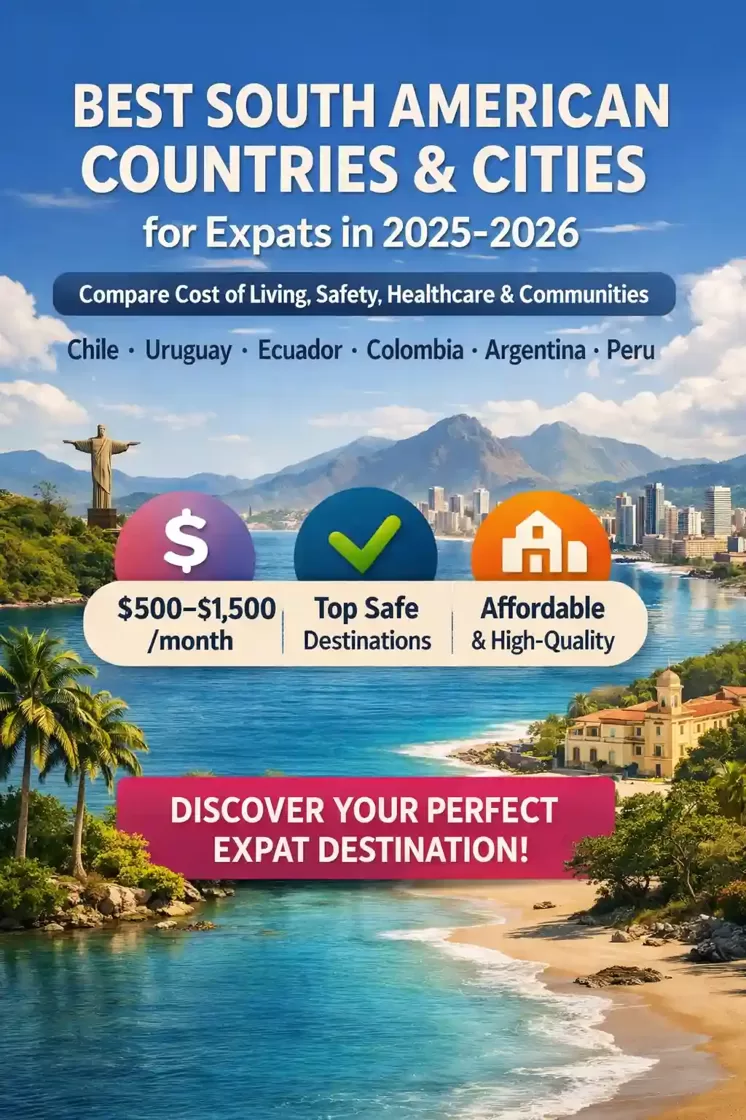 Updated for 2026 with current costs, safety data, healthcare insights, and visa
changes — plus a clearer view of which South American destinations offer the
best balance for expatsSouth America's expat map looks different in 2026 than it did two years ago. Argentina
is no longer the cheap hack it was. Ecuador's coastal cities now require serious
caution. And Peru — long overlooked by mainstream expat lists — has quietly matured
into one of the most compelling options for those willing to look beyond the
obvious.
Updated for 2026 with current costs, safety data, healthcare insights, and visa
changes — plus a clearer view of which South American destinations offer the
best balance for expatsSouth America's expat map looks different in 2026 than it did two years ago. Argentina
is no longer the cheap hack it was. Ecuador's coastal cities now require serious
caution. And Peru — long overlooked by mainstream expat lists — has quietly matured
into one of the most compelling options for those willing to look beyond the
obvious.
This guide compares six countries on the numbers that actually matter: what you'll spend each month, where it's safe to live, how the healthcare holds up, and what the visa path looks like. No generic rankings — just an honest breakdown so you can decide which country fits your actual situation.
Best Countries to Live in the Jungle (2025–2026): Peru, Colombia, Ecuador, Costa Rica, Panama, Bali & More — Honest Comparison
Jungle Off-Grid Living: The Complete Guide to Building, Moving, and Living Self-Sufficiently in the Tropics
Visas and Company Registration in Peru
Complete guide to obtaining various types of visas and registering companies in Peru for entrepreneurs and investors.
Read moreInvesting in Peruvian Jungle Land
Opportunities for conscious entrepreneurs: how to invest in Peruvian jungle lands with ecological and sustainable development considerations.
Read moreBuying Land in Peruvian Jungle
Practical guide to purchasing land in the Peruvian jungle: legal aspects, procedures, and recommendations.
Read moreNature Reserves in Peruvian Jungles
Preserving biodiversity and natural resources in Peruvian jungles: the role of reserves and participation opportunities.
Read more🎸 Top 6 Countries for Expats: Where to Settle in 2026
🏔️ Chile: The Benchmark for Stability
Chile remains the region's most reliable choice for professionals and families who put infrastructure and safety first. It's pricier than most of its neighbours, but the quality gap is real: fast internet, modern hospitals, and a functioning rule of law.
- 💰 Cost of Living: Moderate-to-high. A single expat in Santiago needs roughly $1,000–$1,700/month, with one-bedroom rent in safe neighbourhoods running $600–$950. Valparaíso and smaller cities cut that noticeably.
- 🛡️ Safety: High. Chile consistently leads the Global Peace Index for South America. Santiago and Viña del Mar are safe by any regional comparison.
- 🏥 Healthcare: Excellent. Private hospitals like Clínica Alemana and Clínica Las Condes are world-class. Private insurance runs roughly $60–$110/month.
- 🤝 Expat Community: Strong in Santiago (Las Condes, Providencia) and Viña del Mar. Active Meetup and Facebook groups, growing coworking scene.
- ✅ Pros: Political and economic stability, digital nomad visa (1-year, renewable), best internet in the region, diverse landscapes.
- ⚠️ Cons: Highest costs in the comparison; colder winters in the south; Santiago traffic.
🌊 Uruguay: The Safe Bet
Uruguay's reputation holds firmly in 2026: it's South America's most politically stable country, with low crime, functioning public services, and a genuinely relaxed coastal lifestyle. Costs have crept up — Montevideo is no longer a budget destination — but for expats who value predictability over bargain-hunting, the trade-off is widely considered worth it.
- 💰 Cost of Living: Moderate. Around $900–$1,500/month for a single expat in Montevideo. One-bedroom apartments range $500–$800. Punta del Este runs higher seasonally.
- 🛡️ Safety: Very high. Uruguay consistently ranks as South America's safest country. Low violent crime in both Montevideo and Punta del Este.
- 🏥 Healthcare: Good. Hospital Británico and private mutualistas in Montevideo are expat-friendly. The public system is functional but slower.
- 🤝 Expat Community: Growing — Sinergia and other coworking spaces attract digital nomads; retiree groups active in Punta del Este and Colonia del Sacramento.
- ✅ Pros: Outstanding safety and stability, relatively straightforward residency, eco-conscious lifestyle, welcoming culture.
- ⚠️ Cons: Higher costs than Colombia or Ecuador; smaller job market; residency process can take time.
🌿 Ecuador: Affordable — With Caveats
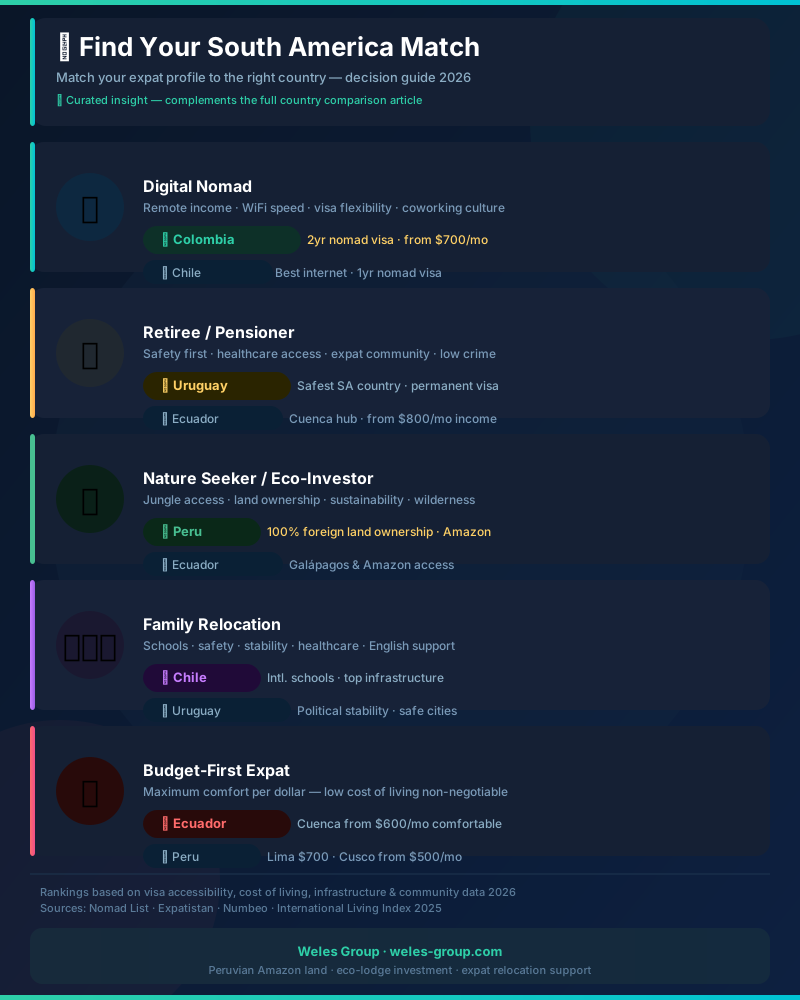
Ecuador still offers one of the best cost-to-quality ratios in South America, and the highland cities — Cuenca in particular — remain genuine expat favourites. That said, the security picture across the country has grown more complex since 2023. Coastal cities like Guayaquil and Esmeraldas face serious gang-related crime, and multiple governments have issued travel advisories recommending heightened caution. The Andes highlands and the Amazon remain largely unaffected. For an expat committed to Cuenca or Quito's safe neighbourhoods, Ecuador still makes a compelling case — but it requires more homework than it did five years ago.
- 💰 Cost of Living: Low. $600–$1,100/month for a single expat in Cuenca or Quito. One-bedroom rent averages $320–$550 in expat-popular areas.
- 🛡️ Safety: Variable. Cuenca remains Ecuador's safest city, and Andean highlands and Amazon tourist zones are considered safe with standard precautions. Coastal cities (Guayaquil, Esmeraldas) and border zones carry significantly higher risk. The UK Foreign Office and U.S. State Department both advise increased caution. Use pre-arranged private transport, avoid displaying valuables, stay in established neighbourhoods.
- 🏥 Healthcare: Affordable and good quality in Cuenca (doctor visits ~$20–$40) and Quito. Private insurance from ~$35–$65/month.
- 🤝 Expat Community: Large and established in Cuenca — one of the biggest retiree expat communities in South America. Quito has a growing digital nomad scene.
- ✅ Pros: USD currency (no exchange rate risk), low healthcare costs, flexible visas, mild Andean climate, retiree-friendly infrastructure.
- ⚠️ Cons: Security situation in coastal cities and some provinces is serious; state of emergency declared for several provinces in late 2025; requires zone-specific planning.
🏙️ Colombia: Vibrant, Affordable, and Evolving
Colombia has cemented itself as a top destination for digital nomads and younger expats. Medellín in particular has matured into one of Latin America's most dynamic cities, though the rapid influx of expats has sparked gentrification discussions and some housing price pressure. Safety has improved dramatically compared to a decade ago, though the situation varies by neighbourhood and requires common-sense awareness.
- 💰 Cost of Living: Affordable. $700–$1,300/month for a single expat in Medellín or Bogotá. One-bedroom rent: $400–$700.
- 🛡️ Safety: Improved, with nuance. Medellín (El Poblado, Laureles) and Bogotá (Zona Rosa, Chapinero) are safe for expats who stay in established areas and take standard precautions. Some outlying areas remain risky.
- 🏥 Healthcare: High-quality private options in major cities. Clínica Las Américas (Medellín) and top Bogotá hospitals are internationally recognised. Private insurance from ~$45–$80/month.
- 🤝 Expat Community: Strong and growing. Medellín's Selina spaces, coworking hubs, and expat meet-up scene are among the most active in South America.
- ✅ Pros: Great climate in Medellín ("eternal spring"), vibrant culture, 2-year digital nomad visa, affordable dining and entertainment.
- ⚠️ Cons: Gentrification raising costs in prime Medellín areas; some safety pockets outside established zones; complex bureaucracy.
🎉 Argentina: Stabilising — But No Longer a Budget Destination
Argentina has undergone a dramatic economic transformation under President Milei. Annual inflation fell from nearly 300% at its 2024 peak to around 33% by early 2026 — a genuine improvement, though prices in USD terms have risen sharply as artificial exchange rate distortions unwind. The era of Argentina as an ultra-cheap destination for dollar-earning expats is over. A one-bedroom in Palermo now costs $900–$1,200/month — comparable to Santiago. What Argentina offers instead is genuine cultural richness, excellent private healthcare, world-class dining at still-reasonable prices, and a stabilising economy that increasingly looks like a place you can commit to long-term.
- 💰 Cost of Living: Moderate and rising. A single expat in Buenos Aires now needs $1,000–$1,800/month. Prime area rent: $700–$1,200. The rest of Argentina (Mendoza, Córdoba) remains cheaper.
- 🛡️ Safety: Moderate. Buenos Aires is safe in expat-friendly neighbourhoods (Palermo, Recoleta, Las Cañitas). Standard urban precautions apply.
- 🏥 Healthcare: Excellent in Buenos Aires. Private clinics offer rapid specialist access — often within days, not months. Consultations from ~$35–$60.
- 🤝 Expat Community: Large and cosmopolitan in Buenos Aires. Active cultural scene with events, language exchanges, and social groups.
- ✅ Pros: Rich cultural life, excellent food and nightlife, strong private healthcare, import deregulation improving tech access, improving long-term stability outlook.
- ⚠️ Cons: Annual inflation still ~33% in early 2026; purchasing power for local workers squeezed; ongoing currency policy uncertainty; utility costs rising as subsidies are cut.
Understand the Real Value of Rainforest Land in Peru
Before comparing price per hectare, buyers should look at legal title, access, water, usable zones, hidden costs and long-term management risk. This guide explains how to evaluate rainforest land beyond the surface price.
Read the Rainforest Land Valuation Guide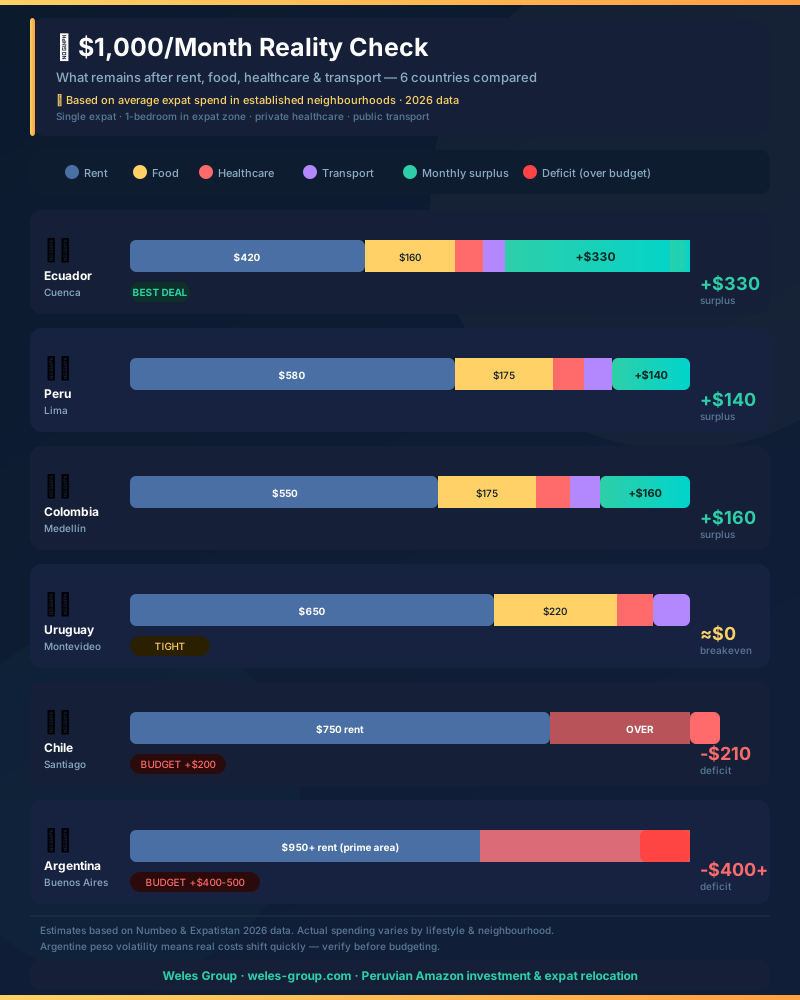
🌿 Peru: The Overlooked Option — Cities, Andes, and Amazon
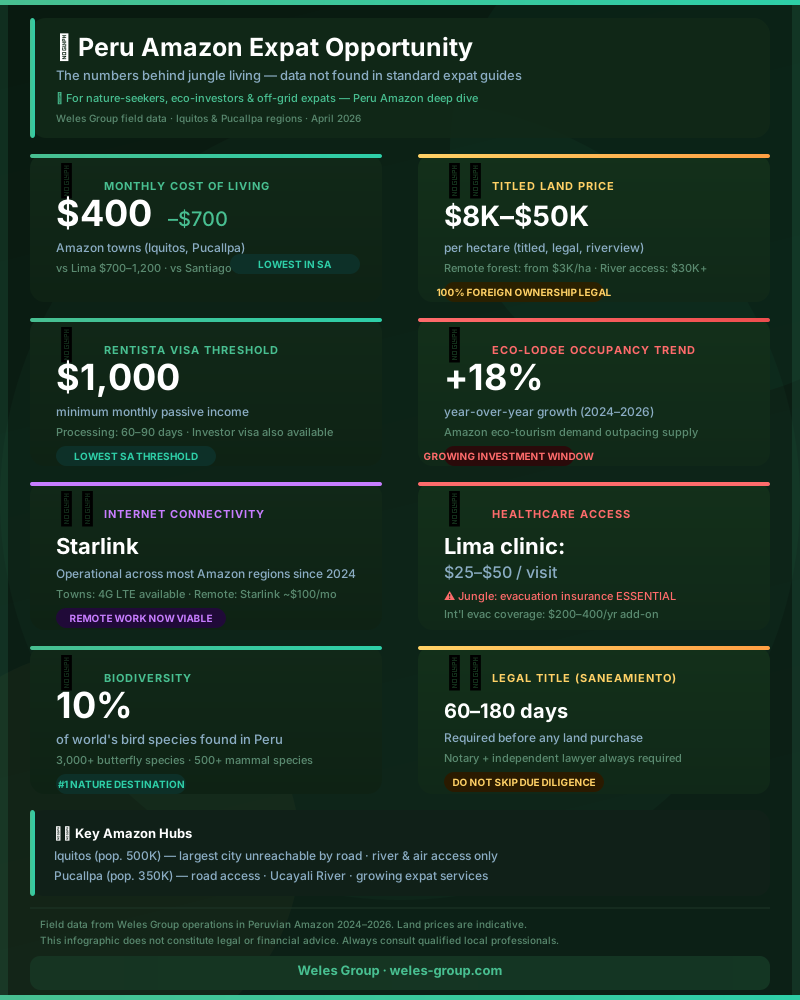
Peru rarely appears on mainstream expat lists, yet it's one of the most affordable and geographically diverse options in South America. Lima's coastal districts offer an urban expat life at a fraction of Santiago's cost. Cusco gives access to the Andes and a well-established tourism infrastructure. And for a specific kind of expat — one drawn to nature, sustainability, or jungle living — the Peruvian Amazon offers something no other country on this list can match: the combination of legal land ownership for foreigners, growing eco-lodge infrastructure, and genuine wilderness within reach of functional towns like Iquitos and Pucallpa.
- 💰 Cost of Living: Low-to-moderate. A single expat in Lima (Miraflores, San Isidro) typically spends $700–$1,200/month including rent. Cusco runs $500–$900/month. Amazon jungle towns and rural areas are significantly cheaper, though infrastructure trade-offs apply.
- 🛡️ Safety: Moderate with zone awareness. Miraflores and San Isidro in Lima are considered safe by regional standards. Cusco's tourist centre is well-managed. Standard precautions apply: avoid displaying valuables, use registered taxis or Uber, stay in established areas. Some districts of Lima (Callao, Villa El Salvador) are not recommended for expats.
- 🏥 Healthcare: Good in Lima, adequate in Cusco. Private clinics like Clínica Anglo Americana and Clínica Ricardo Palma in Lima offer international-standard care with English-speaking staff. Doctor visits from ~$25–$50; private insurance from ~$40–$70/month. Outside Lima and Cusco, access to private care is limited — important to factor in for jungle living.
- 🤝 Expat Community: Growing in Lima and Cusco. Lima's expat scene is smaller but well-organised, with active Internations events and Facebook groups. Cusco attracts long-term travellers and sustainability-minded expats. The jungle regions have a niche but tight-knit community of eco-investors, retreat operators, and nature-based entrepreneurs.
- ✅ Pros: Low cost of living, USD-stable Sol with minimal exchange rate drama, foreigners can legally own land and title property, growing eco-lodge and nature-based investment scene, Rentista visa with low income threshold (~$1,000/month), rich Amazonian and Andean culture.
- ⚠️ Cons: Bureaucracy can be slow and opaque (especially for land transactions — always use a local notary and independent legal check); infrastructure outside Lima and Cusco is limited; connectivity in jungle areas is improving but still unreliable; Lima can be overcast and humid June–October.
Weles Group note: We work specifically in the Peruvian Amazon — with land acquisition, eco-lodge development, and nature-based investment. If Peru's jungle angle interests you, see our land listings and complete Peru expat guide.
🥁 Top 12 Cities for Expats: Urban Havens in 2026
| City | Country | Cost of Living (USD/month) | Safety | Healthcare | Expat Community |
|---|---|---|---|---|---|
| 🌆 Santiago | Chile | $1,000–$1,700 | High | Excellent | Strong |
| 🏖️ Valparaíso | Chile | $800–$1,300 | High | Good | Moderate |
| 🏙️ Montevideo | Uruguay | $900–$1,500 | Very High | Good | Growing |
| 🌴 Punta del Este | Uruguay | $1,000–$1,700 | Very High | Good | Small |
| 🏞️ Cuenca | Ecuador | $600–$1,100 | Moderate* | Good | Large |
| 🏔️ Quito | Ecuador | $650–$1,100 | Moderate* | Good | Growing |
| 🌺 Medellín | Colombia | $700–$1,300 | Moderate | Excellent | Strong |
| 🏙️ Bogotá | Colombia | $700–$1,300 | Moderate | Excellent | Moderate |
| 🎭 Buenos Aires | Argentina | $1,000–$1,800 | Moderate | Excellent | Large |
| 🍷 Mendoza | Argentina | $750–$1,300 | Moderate | Good | Small |
| 🌊 Lima | Peru | $700–$1,200 | Moderate | Good | Growing |
| 🏔️ Cusco | Peru | $500–$900 | Moderate | Adequate | Niche |
*Ecuador: safety applies to highland/Andean zones; coastal cities carry higher risk.
🎤 Santiago, Chile: The Urban Powerhouse
Santiago combines modern infrastructure, mountain access, and the region's best internet. Expat hubs in Las Condes, Providencia, and Ñuñoa offer international schools, coworking spaces, and active community groups. It's the priciest option in this list but delivers consistency that others can't match.
🎻 Valparaíso, Chile: Bohemian Coastal Charm
Valparaíso's colourful hillside neighbourhoods and arts scene draw creative expats. Noticeably cheaper than Santiago, with a slower pace and growing community of remote workers and artists.
🪗 Montevideo, Uruguay: Quiet Sophistication
Montevideo offers coastal living with city convenience — walkable neighbourhoods, a growing food scene, and one of the continent's safest environments. The Rambla (coastal promenade) is a genuine quality-of-life feature. Costs are higher than five years ago but the stability premium is real.
🏝️ Punta del Este, Uruguay: Resort-Style Living
A smaller, upscale coastal city that attracts retirees and remote workers seeking a quieter lifestyle. Expat groups are tight-knit. Costs spike in high season (December–March).
🌄 Cuenca, Ecuador: Retiree's Anchor
A UNESCO World Heritage city with a mild climate, low costs, and one of South America's most established retiree expat communities. Cuenca remains Ecuador's safest city — though recent reports of isolated incidents in peripheral neighbourhoods (March 2026) are a reminder to stay informed and stick to established expat areas.
🏰 Quito, Ecuador: High-Altitude Adventure
Quito's historic centre and access to the Andes draw adventurous expats. Tourist zones (González Suárez, La Floresta, Cumbayá) are safe with standard precautions. Pre-arrange private transport, especially at night.
🌸 Medellín, Colombia: Eternal Spring
Medellín's near-perfect climate (averaging 22°C year-round) and dense digital nomad infrastructure make it a perennial favourite. El Poblado and Laureles are the main expat hubs. Rapidly growing, with coworking spaces and an active international community.
🏙️ Bogotá, Colombia: Cultural Capital
Colombia's capital offers a cosmopolitan lifestyle, world-class restaurants and museums, and excellent private healthcare. Expat-safe areas include Zona Rosa, Chapinero, and Usaquén.
🥂 Buenos Aires, Argentina: The Paris of South America
Buenos Aires delivers what no other South American city quite can — tango, architecture, steakhouses, and a café culture that runs until 3am. Costs have risen since the Milei-era repricing, but it remains cheaper than most European equivalents and the cultural dividend is enormous.
🍇 Mendoza, Argentina: Wine and Mountains
Mendoza offers a slower pace, spectacular Andes access, and wine country living. Cheaper than Buenos Aires and growing in popularity among expats seeking nature over nightlife.
🌊 Lima, Peru: Coastal Capital with Expat Infrastructure
Lima's districts of Miraflores and San Isidro offer a genuinely comfortable expat life — oceanfront parks, international restaurants, reliable internet, and private clinics with English-speaking staff. It's not the cheapest city on this list, but it delivers solid infrastructure at a noticeably lower cost than Santiago or Buenos Aires. The city's grey overcast winters (June–October) are a common complaint; otherwise the climate is mild year-round.
🏔️ Cusco, Peru: Andes Base for the Long-Term Traveller
Cusco is for a specific kind of expat: someone drawn to altitude (3,400m), Andean culture, and proximity to some of the world's most significant archaeological sites. The tourist infrastructure is well-developed, English is widely spoken in the centre, and costs are among the lowest on this list. Healthcare access beyond basic care requires travel to Lima — factor this in carefully if you have ongoing medical needs.
🥁 Visa and Residency Options: Your Ticket to South America in 2026
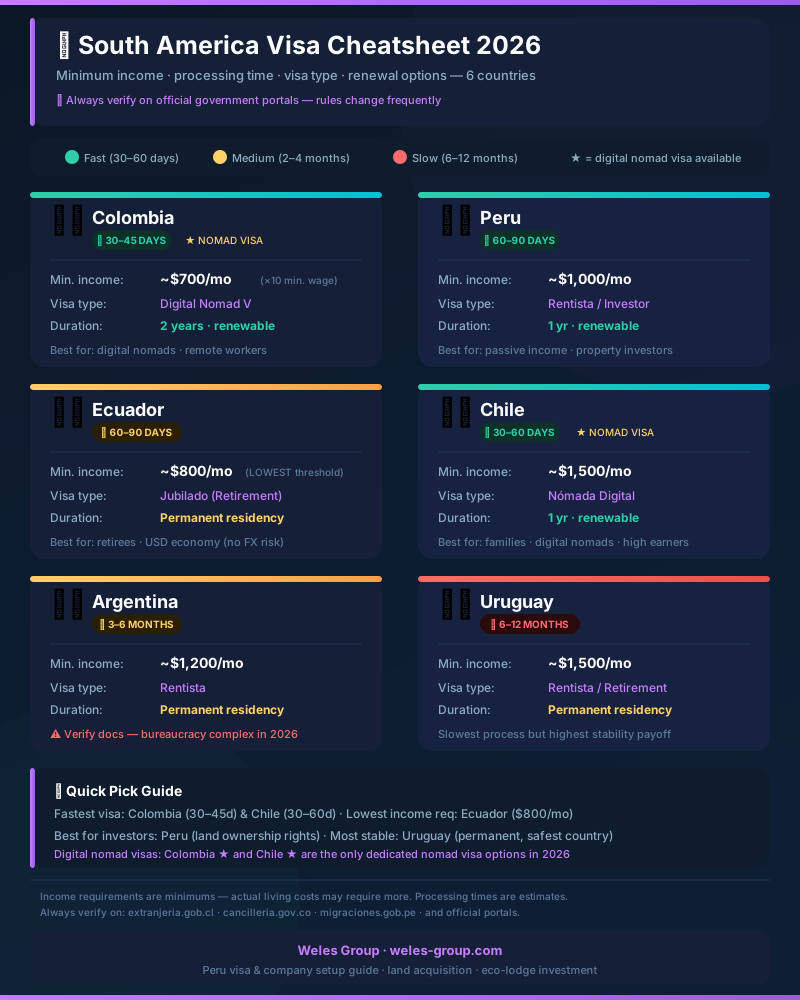
Visa rules evolve — always verify on official government portals before making plans.
- Chile: Digital nomad visa (1 year, renewable) requiring proof of remote income. Retirement visa requires ~$1,500/month passive income. Check Chile's Immigration Portal.
- Uruguay: Residency for retirees requires demonstrating regular income (~$1,500/month) plus standard documentation. Process is transparent but can take 6–12 months. No dedicated digital nomad visa yet, though remote workers can enter on a tourist basis while applying.
- Ecuador: Retirement visa requires ~$800/month income. Professional/remote worker visas available. USD currency eliminates exchange rate complexity.
- Colombia: 2-year digital nomad visa active and popular — one of the most accessible in the region. Retirement visa income threshold ~$1,000/month. Verify current requirements at Colombia's Migration Portal.
- Argentina: Rentista visa for passive income holders (~$1,200/month). Investment-to-citizenship programme under development as of early 2026 — details still being finalised.
- Peru: Rentista visa for passive income holders (~$1,000/month — one of the lowest thresholds in the region). Investor visa available for those purchasing property or establishing a business. Foreigners can legally own titled land and property in Peru. See our full Peru visa and company setup guide.
Tip: Official requirements change. Join active expat forums on Reddit (r/expats, country-specific subs) and Expat.com for current first-hand accounts.
🎷 Healthcare in South America: Staying Healthy Abroad
Private healthcare in all six countries remains far cheaper than the US or Western Europe, with quality in major cities often matching international standards.
| Country | Doctor Visit (USD) | Private Insurance (USD/month) | Quality |
|---|---|---|---|
| Chile | $50–$90 | $60–$110 | Excellent |
| Uruguay | $35–$65 | $45–$85 | Good |
| Ecuador | $20–$45 | $35–$65 | Good |
| Colombia | $25–$55 | $45–$80 | Excellent |
| Argentina | $35–$65 | $60–$100 | Excellent |
| Peru (Lima) | $25–$50 | $40–$70 | Good |
Standout options: Clínica Alemana and Clínica Las Condes (Santiago); Hospital Británico (Montevideo); Clínica Las Américas (Medellín); private clinics in Cuenca catering specifically to expats; Buenos Aires private clinics with rapid specialist access; Clínica Anglo Americana and Clínica Ricardo Palma (Lima).
Note on Peru outside Lima: Private healthcare quality drops significantly outside Lima and Cusco. For anyone considering jungle or rural living in Peru, comprehensive international health insurance with evacuation coverage is not optional — it's essential.
🎺 Expat Communities: Finding Your Tribe
- Chile: Santiago has active groups on Meetup and Facebook. Internations hosts regular events. Viña del Mar has a tighter, less formal community.
- Uruguay: Montevideo's coworking spaces (Sinergia, Hackerspace) attract remote workers. Retiree groups active in Punta del Este and Colonia del Sacramento.
- Ecuador: Cuenca has one of South America's largest organised retiree expat networks — social events, English-language services, and dedicated support resources. GringoPost remains active. Quito's digital nomad community growing on Slack and local meetups.
- Colombia: Medellín's Selina coworking spaces, El Social bar, and dense network of digital nomad meetups. Bogotá active in Zona T and Usaquén. Note: rapid expat growth in Medellín has raised housing costs in El Poblado — Laureles offers a more affordable and less tourist-heavy alternative.
- Argentina: Buenos Aires has one of South America's most vibrant and internationally-minded expat scenes. Palermo and Recoleta are the main hubs. Active Internations chapter, language exchange programmes, and cultural events year-round.
- Peru: Lima's expat community is smaller but active — Internations Lima runs regular events, Facebook groups for English-speaking residents in Miraflores are well-maintained. Cusco has a niche community of long-term travellers and sustainability-oriented expats. In the Amazon regions, communities are small and largely built around eco-tourism, conservation, and retreat operations.
🪕 Cost of Living Breakdown: 2026 Real Numbers
| City | Rent 1-Bed (USD) | Groceries (USD) | Transport (USD) | Total (USD) |
|---|---|---|---|---|
| Santiago, Chile | $600–$950 | $220–$330 | $55–$110 | $1,000–$1,700 |
| Montevideo, Uruguay | $500–$800 | $170–$270 | $45–$90 | $900–$1,500 |
| Cuenca, Ecuador | $320–$550 | $110–$210 | $20–$50 | $600–$1,100 |
| Medellín, Colombia | $400–$700 | $130–$220 | $35–$70 | $700–$1,300 |
| Buenos Aires, Argentina | $700–$1,200 | $170–$280 | $35–$80 | $1,000–$1,800 |
| Lima, Peru | $450–$800 | $130–$220 | $30–$70 | $700–$1,200 |
Key change from 2025: Buenos Aires costs have risen significantly in USD terms due to the unwinding of peso exchange-rate distortions under Milei. The "$700/month Buenos Aires life" widely circulated on social media in 2023 is no longer realistic in prime neighbourhoods.
Tips for saving:
- Housing: Explore suburbs or secondary cities — Mendoza vs. Buenos Aires, Laureles vs. El Poblado, Cotacachi vs. Cuenca, Barranco vs. Miraflores in Lima.
- Food: Local markets (ferias, mercados) cut grocery costs by 30–50% compared to supermarkets in every country on this list.
- Transport: Public transport and rideshare apps (Uber, Cabify, InDriver in Peru) cover most needs in all major cities.
🥁 Emerging Trends for Expats in 2026
Digital nomad infrastructure matures. Colombia and Chile have among the best-designed digital nomad visas in Latin America. Medellín, Santiago, and Bogotá now compete directly with Lisbon and Chiang Mai for remote worker infrastructure — reliable internet, coworking density, and expat services.
Argentina repricing creates a new profile. Argentina is shedding its "cheapest hack in South America" reputation and attracting a different kind of expat: people genuinely drawn to Buenos Aires' culture and quality of life, not just exchange rate arbitrage. Milei's import deregulation (January 2026) means electronics are now priced at international levels.
Ecuador demands zone-specific planning. The highland cities (Cuenca, Quito tourist zones, Baños, Cotopaxi area) remain safe and rewarding. Coastal cities require serious caution. Expats moving to Ecuador in 2026 need to research specific neighbourhoods, not just the country-level overview.
Peru's Amazon is attracting a new category of expat. Nature-based investment, eco-lodge development, and conservation-linked land ownership are drawing a niche but growing segment of expats who want ownership — not just residency — in a genuinely wild environment. Land with legal title in the Peruvian Amazon remains accessible to foreign buyers in a way that's unusual globally.
Retiree boom continues. Ecuador (Cuenca) and Uruguay (Montevideo, Colonia) remain top-five globally for retirement according to International Living's 2025 index. Affordable healthcare, mild climates, and established support networks are key draws.
Spanish fluency matters more than ever. As expat destinations become more established, integration pressure grows. Online platforms (italki, Preply, local language exchanges) make learning accessible before you land.
🎉 Practical Tips for a Smooth Transition in 2026
- 🧳 Research visas early and verify on official portals — requirements change, and forum information goes stale.
- 🛡️ Do neighbourhood-level safety research — country-level safety ratings can mislead. A city like Quito has areas that are genuinely safe and areas to avoid.
- 🗣️ Invest in Spanish before you arrive — even basic fluency transforms daily life and integration speed.
- 💸 Budget for the real 2026 numbers — Argentina in particular is no longer priced as it was in 2022–2023. Run your budget against current Numbeo data, not year-old blog posts.
- 🌐 Join country-specific expat communities early — Reddit (r/expats, r/Colombia, r/Argentina, r/ecuador, r/peru), Expat.com, and dedicated Facebook groups provide current, ground-level intelligence.
- 📋 Get comprehensive health insurance before you arrive — even in affordable markets, a serious medical event without cover creates major financial exposure. For Peru outside Lima: include emergency evacuation coverage.
- 🔌 Test connectivity requirements — if your work depends on low-latency video calls, Chile has the most reliable high-speed internet in the region; verify speeds in specific cities for other countries.
❓ FAQ: Best Country in South America for Expats
What is the best South American country for expats in 2026? It depends on your priorities. Chile offers the best infrastructure and stability. Colombia (Medellín) is the top choice for digital nomads. Uruguay is South America's safest country for retirees. Ecuador's Cuenca is the most affordable for retirees. Peru is the strongest option for those seeking low cost, legal land ownership, or nature-based living in the Amazon.
Which South American country has the lowest cost of living for expats? Ecuador and Peru are the most affordable. A single expat can live comfortably in Cuenca or Lima for $700–$1,100/month including rent. Cusco, Peru runs even lower at $500–$900/month.
Is Peru a good country for expats? Yes — especially for those drawn to nature, the Peruvian Amazon, lower costs, and property ownership. Lima offers solid urban infrastructure at lower cost than Santiago or Buenos Aires. The main trade-offs are bureaucratic complexity and limited healthcare infrastructure outside major cities. See our complete Peru expat guide for the full picture.
Can foreigners buy land in South America? Yes, in most countries — but the rules vary significantly. Peru explicitly allows foreigners to own titled land and property with the same rights as citizens, which is one reason it's increasingly attractive for eco-lodge and nature-based investment. Always work with a local notary and independent legal counsel. See our step-by-step guide to buying land in Peru as a foreigner.
Which South American country has the easiest visa for expats? Colombia's 2-year digital nomad visa is the most accessible for remote workers. For retirees on passive income, Peru's Rentista visa has the lowest income threshold (~$1,000/month). Ecuador's retirement visa requires ~$800/month but has more bureaucratic steps in practice.
Is South America safe for expats in 2026? Safety varies enormously by country and neighbourhood, not just by country. Uruguay is the regional benchmark for safety. Chile and Peru's expat districts are safe with standard urban precautions. Colombia is much safer than its reputation from a decade ago in established areas. Ecuador requires careful zone-selection — highlands are fine, coastal cities are not. Argentina's expat neighbourhoods are safe. Research at the neighbourhood level, not the country level.
Featured article
How much does it cost to live in the Amazon rainforest?
A practical cost breakdown for living in the Peruvian Amazon, including land prices, housing, monthly expenses, infrastructure, internet, and realistic startup costs.
Read the full Amazon cost of living guideAll costs are approximate for 2026 and based on available data from Numbeo, Expatistan, and expat community reports. Verify current figures before budgeting. Visa rules and safety conditions can change — always check official government travel advisories and immigration portals.
For some expats, South America is not only about cost of living, climate, or visas, but also about finding the right environment for a personal reset. If Peru is already on your radar, it may also be worth exploring Amazonian solo retreats — private, individually designed programs in the Peruvian Amazon, held in a licensed centre in Loreto that has been operating since 2003
https://www.weles-group.com/projects/amazonian-solo-retreats/