
Ayahuasca Research in 2026: What New Studies Show About Depression, Cognition, Safety, and Integration
If you are looking for a serious overview of ayahuasca research in 2026, the first thing to know is this: the science is getting stronger, but it is still far from simple.
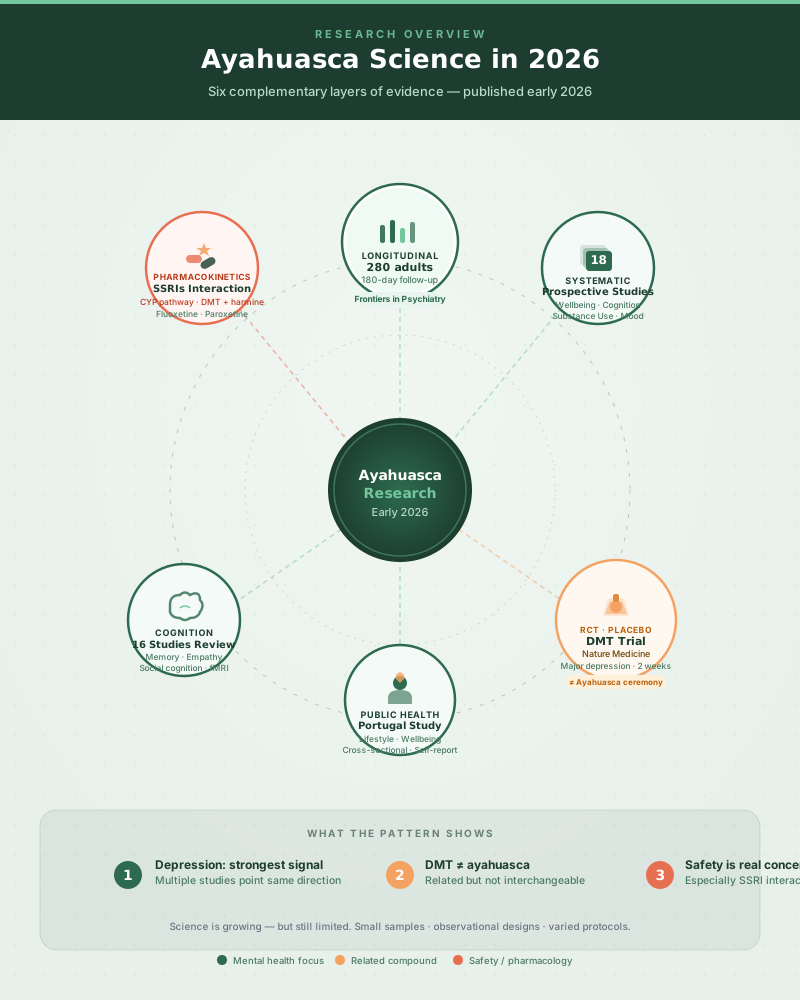
Early 2026 brought a cluster of important studies on ayahuasca, mental health, cognition, public health, medication risks, and related DMT-based antidepressant research. Together, they show that ayahuasca is no longer discussed only through anecdote, ceremony stories, or plant medicine mythology. It is now part of a real and growing scientific conversation.
That does not mean the field has reached certainty. It has not. The strongest papers from the first months of 2026 support ayahuasca’s relevance in depression research, long-term mental health outcomes, cognitive flexibility, and social functioning.
At the same time, they also repeat the same warning in different forms: most ayahuasca studies still suffer from small samples, uneven protocols, nonrandomized designs, and the difficulty of separating pharmacology from context.
That tension is exactly what makes the subject worth reading carefully. A good article on ayahuasca research should not sound like retreat marketing, and it should not sound like fear-based dismissal either. The real picture is more demanding than both extremes.
For a broader view of the ayahuasca landscape, see our 2025–2026 global field report on research, regulation, safety, and retreat markets: Ayahuasca 2025–Feb 12, 2026- A Global Field Report
Why early 2026 matters in ayahuasca research
This period matters because the literature became denser in a short time. Instead of one isolated headline, we now have several complementary layers of evidence.
There is a systematic review of prospective studies looking at longer-term outcomes.
There is a longitudinal study focused on depressive burden. There is a systematic review on neuropsychological performance and social cognition.
There is a public health paper from Portugal. There is a pharmacokinetic modeling paper on ayahuasca and SSRIs.
And there is a randomized DMT depression trial that, while not a direct ayahuasca trial, still sharpens the biological discussion around antidepressant potential.
That shift changes the quality of the conversation.
For anyone searching ayahuasca studies, ayahuasca depression, ayahuasca safety, ayahuasca integration, or plant medicine research, the field now offers more than broad speculation. It offers a clearer pattern. The pattern is promising, but still incomplete.
What current ayahuasca studies in 2026 are actually measuring
A common mistake in discussions of ayahuasca research is to assume all studies are trying to answer the same question. They are not.
Some studies focus on depression scores and symptom burden. Others examine cognition, memory, executive function, empathy, or social perception.
Some look at broader public health indicators such as lifestyle, alcohol use, physical activity, and self-reported wellbeing.
Others examine risk, especially where ayahuasca interacts with psychiatric medication. And some studies, especially in the DMT literature, focus on mechanism and controlled efficacy rather than the full ceremonial context of ayahuasca itself.
This matters because a strong result in one domain does not automatically settle the others. A paper showing changes in depressive symptoms is not the same as a paper proving long-term safety.
A cognition review is not the same as a retreat outcome study. A DMT infusion trial
is not the same as an ayahuasca ceremony. Once those layers are separated, the
research becomes much easier to read honestly.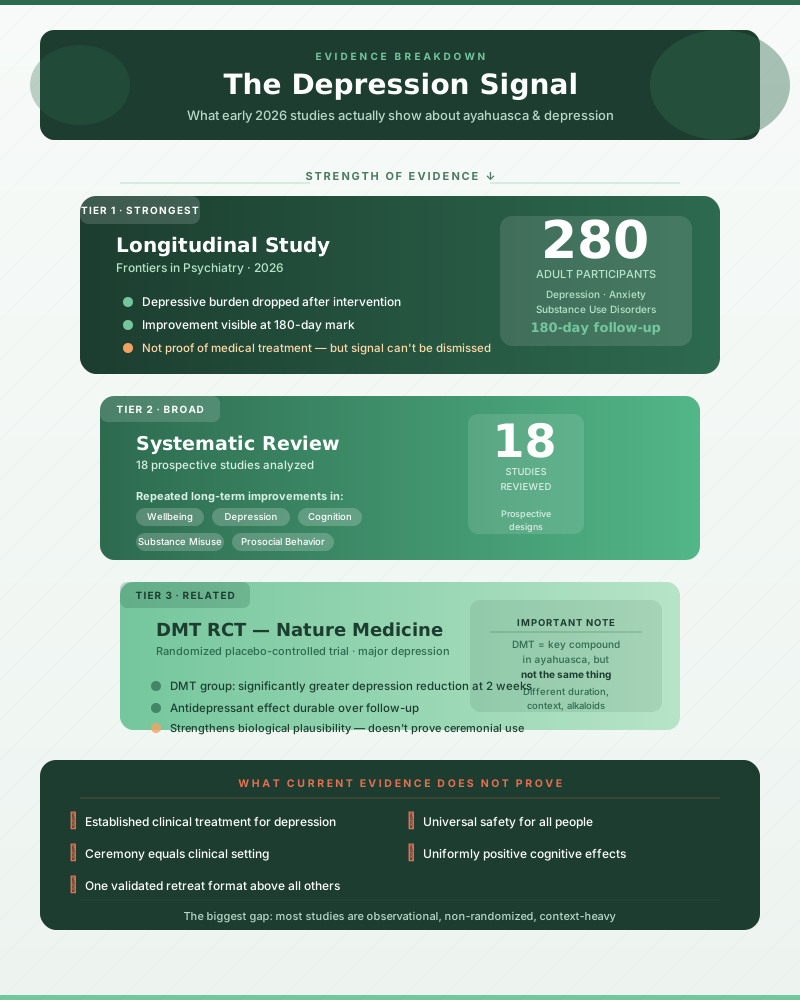
Ayahuasca and depression: why mental health remains the strongest signal
The clearest signal in early 2026 ayahuasca research is still mental health, especially depression-related outcomes.
One of the most important publications of the period was a longitudinal study in Frontiers in Psychiatry that followed 280 adults and examined depressive burden over time in participants with depression, generalized anxiety, and substance use disorders.
The key point was not only that symptom burden dropped after the intervention, but that the improvement remained visible across follow-up, including the 180-day mark. That does not prove ayahuasca is a validated medical treatment for depression. It does show that the antidepressant signal cannot be dismissed as a one-night emotional afterglow.
The broader review literature moved in the same direction. A systematic review of 18 prospective studies found repeated long-term improvements in wellbeing, quality of life, depression and other psychiatric symptoms, substance misuse, cognitive flexibility, personality, and prosocial behavior. That is a meaningful pattern. It suggests that ayahuasca research is beginning to show a stable direction of effect across multiple study designs.
Still, the most responsible reading is cautious. The review also underlined the limitations of the field: small samples, unstandardized doses, no control groups in many studies, and nonrandomized methods that make causality hard to establish. Some studies also reported subsets of participants with persisting psychiatric complications linked to ayahuasca use. So the right conclusion is not that ayahuasca has been “proven” to treat depression. The right conclusion is that ayahuasca depression research has become strong enough to justify serious attention and much better trials.
If you want a focused breakdown of the depression evidence, this
companion article reviews what recent clinical trials actually show
about ayahuasca, where the signal looks strongest, and where the
evidence is still limited: Does ayahuasca beat depression? Facts from recent clinical trials
Why the 2026 DMT trial matters, and why it is not the same as ayahuasca
A major part of the early 2026 conversation came from the randomized placebo-controlled DMT trial published in Nature Medicine. This was not a direct ayahuasca trial. That distinction should stay clear.
DMT is the main psychoactive compound in ayahuasca, but ayahuasca is a brewed preparation with additional alkaloids, a longer duration, and a very different experiential and contextual structure. Even so, the DMT paper matters because it helps explain why the field remains so interested in ayahuasca and related compounds.
In the study, adults with moderate-to-severe major depressive disorder received either DMT or placebo with psychotherapeutic support. The DMT group showed significantly greater reductions in depressive symptoms at two weeks, and the antidepressant effect remained durable over follow-up. For the broader psychedelic field, that is a major result. For ayahuasca readers, it does something more specific: it strengthens the biological plausibility of rapid antidepressant effects in ayahuasca-related pharmacology.
But it does not close the ayahuasca question. Ayahuasca includes more than DMT,
and ayahuasca outcomes are shaped by setting, ritual, preparation, psychological
support, and integration. So the DMT trial should be used as related evidence,
not as a shortcut for claims about ayahuasca ceremonies or ayahuasca retreats.
What ayahuasca research says about cognition, empathy, and social functioning
Another important early 2026 paper was the systematic review on neuropsychological performance and social cognition. This review included 16 studies, 11 observational and 5 experimental, and it offers one of the clearest summaries currently available on ayahuasca cognitive effects.
The short-term pattern was interesting. Some studies reported improvements in working memory and cognitive flexibility. In the social cognition domain, observational work often found increased empathy and better emotion recognition, while experimental work more often found faster response times rather than broad transformations across all measures.
The long-term pattern may be even more important for public debate. The review did not find clear evidence that ayahuasca produces lasting neuropsychological deficits as a general rule. Some studies even reported improved memory and executive function over time. That does not mean ayahuasca is a cognitive enhancer. It means the evidence does not support the simplistic idea that repeated ayahuasca exposure automatically leads to long-term cognitive damage in the populations studied so far.
A separate fMRI study added a mechanistic angle. In healthy participants, ayahuasca
increased connectivity in networks related to social perception and perspective-taking.
That result is too preliminary to turn into a clinical claim, but it helps explain
why some participants describe strong interpersonal or relational effects after
an ayahuasca experience. For anyone interested in ayahuasca integration, that
matters, because integration often depends as much on social meaning as on symptom
change.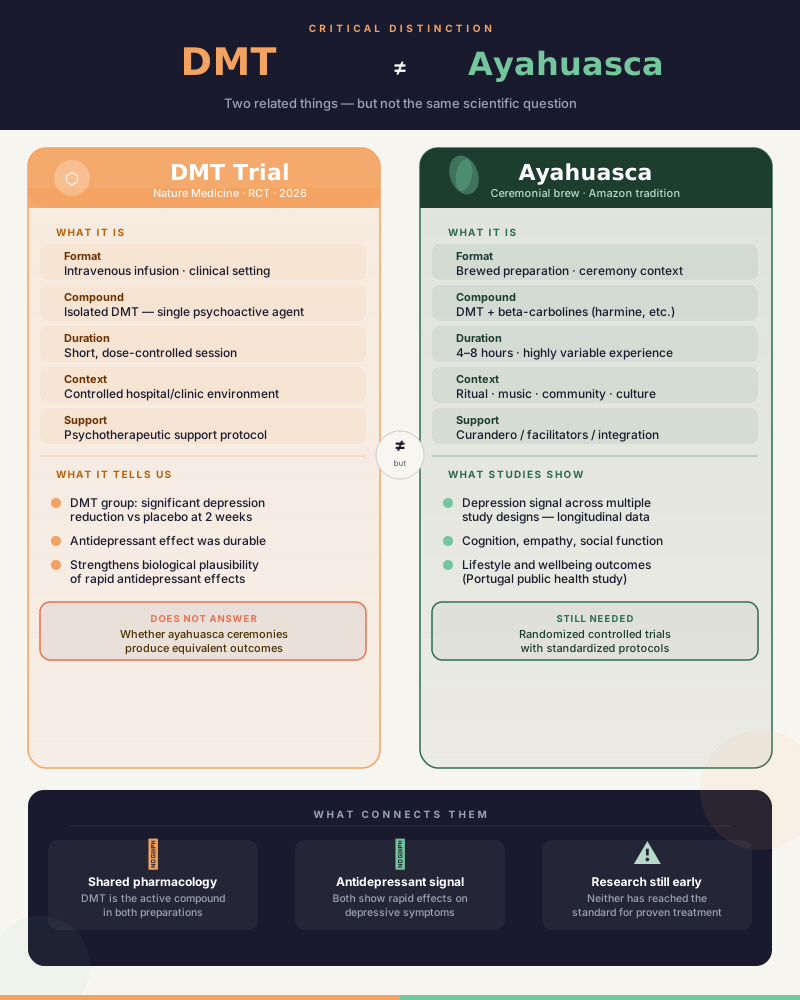
What the Portugal public health study adds to the picture
The Portugal paper widened the discussion beyond symptom scores and laboratory tests. It looked at health status, lifestyle behaviors, and psychosocial wellbeing in Portuguese adults who had attended ayahuasca ceremonies.
The results were notable. Participants reported better perceived health, lower rates of chronic disease and obesity compared with population norms, greater physical activity, lower alcohol consumption, and better psychological wellbeing. Many also attributed positive lifestyle changes, reduced substance use, and less reliance on prescription medication to their ayahuasca experiences.
This kind of result is important, but it also needs restraint. It was a cross-sectional study based on self-report. That means it cannot prove ayahuasca caused those differences. It may be that healthier, more motivated, or more change-oriented people are more likely to attend ceremonies in the first place. Even so, the study matters because it shifts the conversation toward public health and real-life behavior, not only acute psychological effects.
Ayahuasca safety and ayahuasca risks: what the evidence supports, and what it does not
Search interest around ayahuasca safety, plant medicine safety, ayahuasca risks, and ayahuasca contraindications is justified. The current literature does not support a simple safe-or-dangerous binary.
On one side, the field does not support the crude claim that ayahuasca is nothing but harm. Some longer-term studies report meaningful improvements in mental health and lifestyle indicators. On the other side, the literature also does not support careless statements like “safe for everyone” or “science-backed healing” without qualification. The prospective review literature explicitly notes persisting psychiatric complications in some participants.
A separate 2026 paper on physiologically based pharmacokinetic modeling adds another important safety layer. The study predicted clinically meaningful interactions between ayahuasca alkaloids and SSRIs such as fluoxetine and paroxetine. The mechanism involved altered exposure to DMT and harmine through CYP-related pathways, which could intensify serotonergic effects.
This is one of the clearest reminders that ayahuasca safety is not a vague lifestyle question. It is a real pharmacological question. For readers searching ayahuasca risks, ayahuasca contraindications, ayahuasca legal status, or what happens on an ayahuasca retreat, this is part of the answer: the scientific literature is telling us that context, screening, medication history, and aftercare are not optional details.
Why ayahuasca integration appears in the science, not only in retreat culture
Many people first encounter the term ayahuasca integration through retreat language. But integration is not just a cultural add-on. It is part of how outcomes are interpreted in the literature.
The stronger studies do not treat the acute experience as the whole intervention. They often discuss support, follow-up, behavior change, and psychological processing as part of the larger outcome structure. That matters because some of the apparent value associated with ayahuasca may not come only from acute pharmacology. It may also depend on what happens before and after the experience.
This point is highly relevant to English-language search behavior. People often
search ayahuasca integration, ceremony integration, ayahuasca aftercare, or ayahuasca
intentions because they intuitively understand that a single experience is not
the whole story. The research increasingly points in the same direction. Whatever
therapeutic value exists here is likely to be partly chemical, partly contextual,
and partly developmental.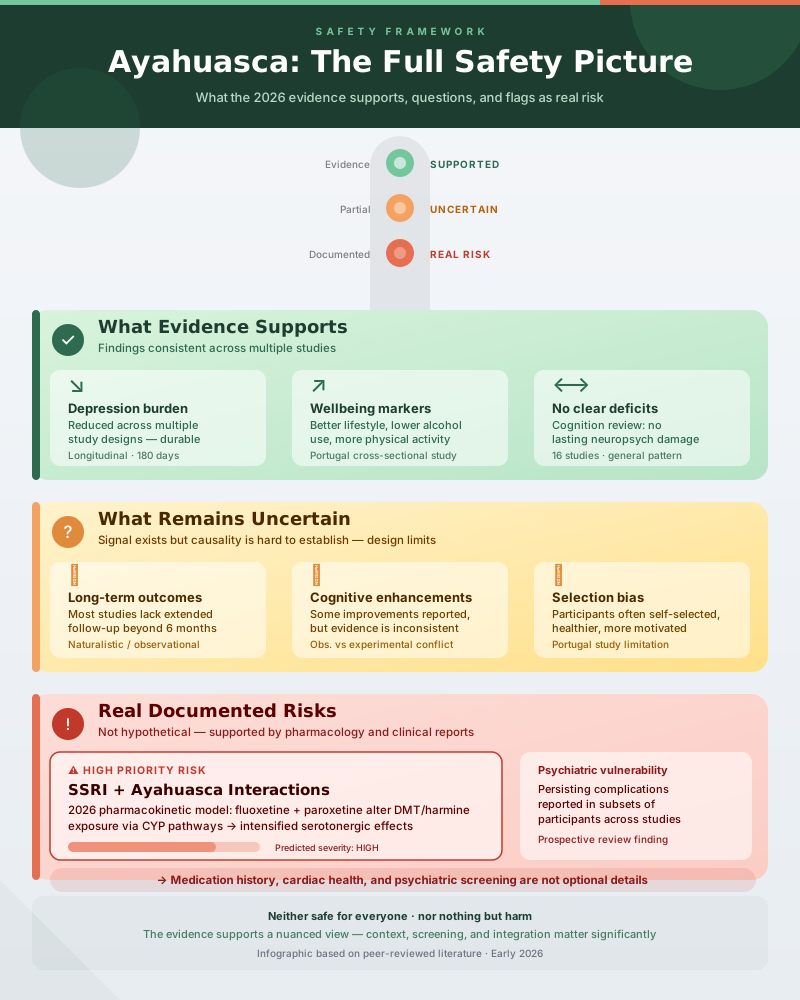
What current ayahuasca studies still do not prove
This is where many weak articles collapse. They describe interesting studies and then jump too fast into certainty.
Current ayahuasca studies still do not prove that ayahuasca is an established treatment for depression. They do not prove universal safety. They do not prove that ayahuasca cognitive effects are uniformly positive. They do not prove that ceremonial use is equivalent to clinical use. And they do not prove that one retreat format, one ayahuasca center, or one integration model is scientifically validated above all others.
The biggest weakness is still design. Much of the literature remains observational, naturalistic, and highly influenced by context. Ayahuasca preparations vary. Doses vary. ceremony structure varies. Psychological support varies. Integration support varies. Participants are often self-selected. All of this makes interpretation harder.
The science is moving, but it is not finished. That is exactly why serious ayahuasca research deserves more respect than hype.
What this means for people researching ayahuasca retreats, ceremonies, and plant medicine
A lot of readers do not come to this topic through academic databases. They come through searches like ayahuasca retreat, ayahuasca ceremony, what happens on an ayahuasca retreat, ayahuasca experience, ayahuasca healing stories, or plant medicine. That is normal.
The scientific literature does not answer every practical question behind those searches, but it does change how they should be approached. It suggests that ayahuasca should be treated neither as a magical shortcut nor as a topic that can be reduced to stigma. It deserves the same things any serious mental health intervention deserves: careful screening, realistic expectations, respect for risk, and attention to integration.
That is the bridge between search intent and scientific evidence. People often begin with retreat curiosity, but what they are really looking for is credibility. Early 2026 research helps with that credibility, because it offers a more grounded language for discussing depression, cognition, safety, and the role of support after the experience.
What the best 2026 ayahuasca studies actually support
If the question is what the science genuinely supports right now, the answer is narrower than the marketing language used in this space.
The strongest support is for a real therapeutic signal in mental health, especially around depressive burden. There is also meaningful support for interest in cognition, social functioning, and broader lifestyle or wellbeing outcomes. The safety picture is not catastrophically negative, but it is not simple either, especially when medication interactions and vulnerable populations are considered.
So the best final sentence is not dramatic. It is precise. Ayahuasca research in 2026 is strong enough to justify serious attention, strong enough to reject lazy dismissal, and still limited enough that any honest article must leave room for uncertainty.
Amazonian solo retreats in Peru: structure, preparation, and integration 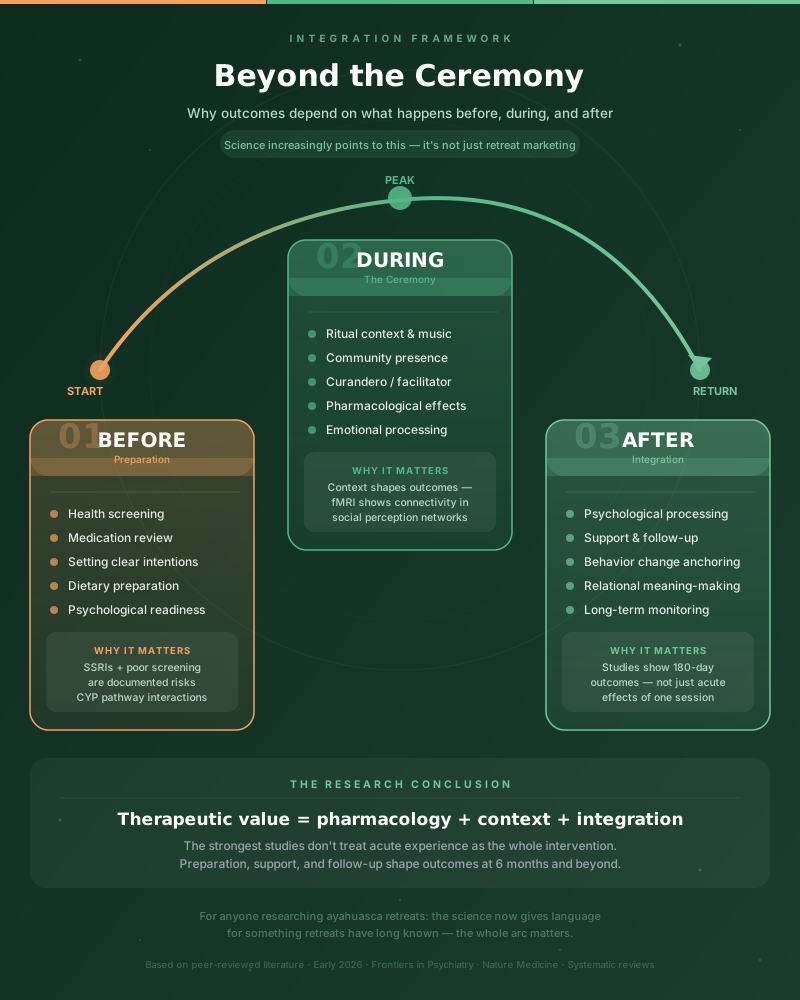
FAQ
What do the latest ayahuasca studies say about depression?
The current literature suggests a meaningful antidepressant signal, especially in longer follow-up data and related DMT research. But it still stops short of proving that ayahuasca is an established clinical treatment standard.
Do ayahuasca studies show long-term cognitive harm?
The best current review does not show clear long-term neuropsychological deficits as a general pattern. Some studies even report improvements in memory or executive function, but the evidence is still limited.
Is the DMT depression trial evidence for ayahuasca itself?
Not directly. It is evidence for a key ayahuasca-related compound in a controlled clinical setting. It strengthens the broader antidepressant discussion, but it is not the same as an ayahuasca ceremony study.
What are the main ayahuasca safety concerns in current research?
The main concerns include psychiatric vulnerability, uneven study quality, incomplete long-term adverse-event data, and predicted medication interactions, especially with some SSRIs.
Why does ayahuasca integration matter in the research?
Because outcomes may depend not only on the acute experience, but also on what happens before and after it. Preparation, context, support, and integration may shape the final mental health result.
What is the biggest weakness in ayahuasca research right now?
The biggest weakness is still methodological. Many studies remain observational, nonrandomized, context-heavy, and difficult to compare because protocols vary so widely.