
Investment Trends in Peru for 2026 Across Eco-Tourism, Blockchain and Carbon Markets
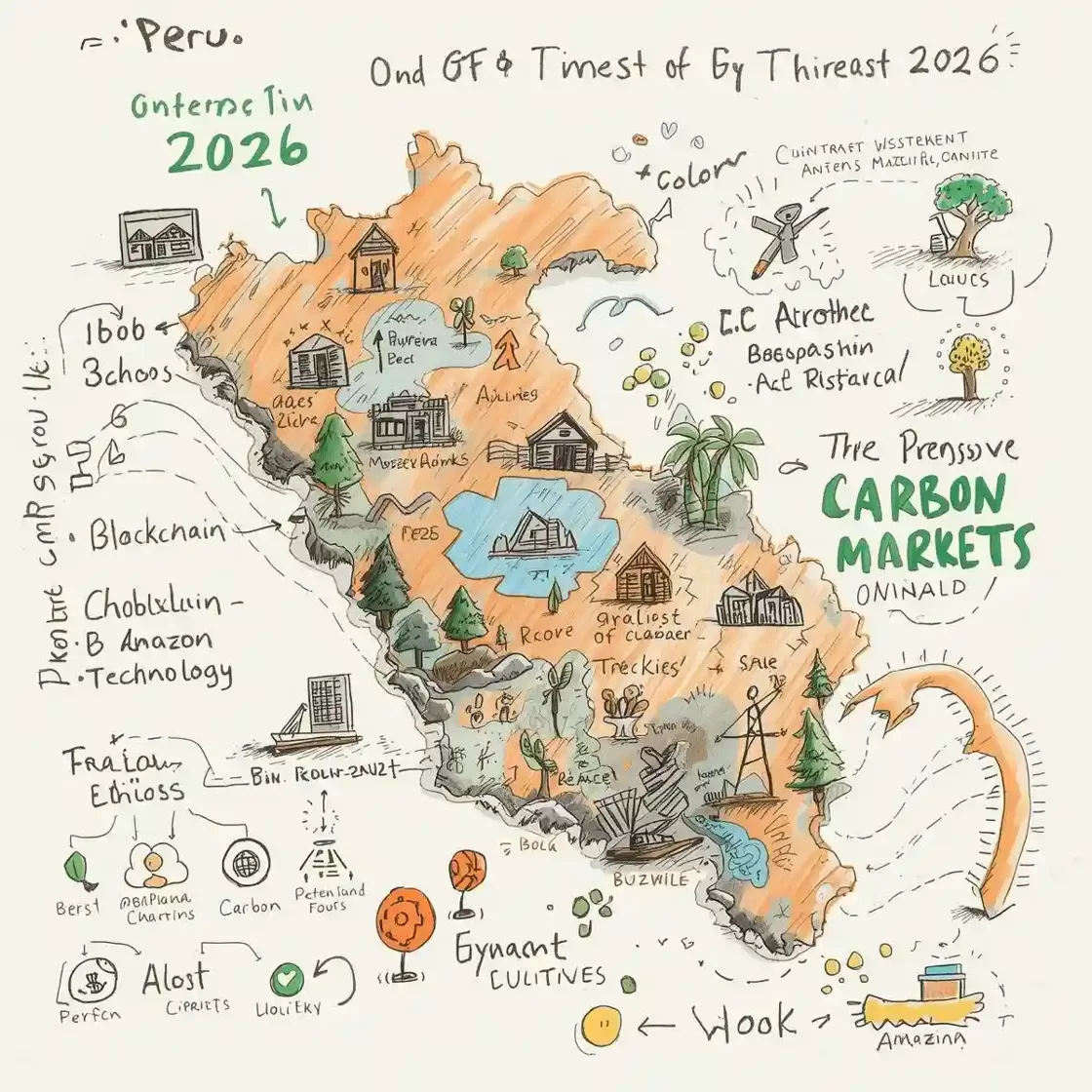
Peru's investment landscape in 2026 is being shaped by developments that go beyond its established mining, agriculture and tourism industries. New carbon-market procedures, international climate cooperation, emerging digital business models and proposed green hydrogen facilities are creating different opportunities for investors. Some already have legal frameworks and documented projects behind them. Others remain experimental, expensive or commercially unproven.
In February 2026, Peru's Ministry of Environment announced the registration of its first Article 6 mitigation initiative under RENAMI, the national mitigation registry. The country also strengthened its tourism regulatory framework, while authorities in Arequipa advanced permitting for a proposed green hydrogen and ammonia development. These developments matter because investment potential depends on what can legally and commercially operate, not simply on what technology makes possible.
This analysis examines investment trends in Peru for 2026 across blockchain applications in eco-tourism, carbon-credit markets, digital environmental monitoring and green hydrogen. It distinguishes verified developments from projections, explains where practical opportunities may exist and identifies the financial, legal and operational risks that should be understood before committing capital.
Peru's Amazon Remote Work Frontier — Can Loreto Become a Digital Nomad and Web3 Hub?

Could one of the world's most remote major rainforest cities become a serious destination for international remote workers and digital businesses? Iquitos, the capital of Peru's Loreto region, offers something that established digital nomad hubs rarely can: access to the Amazon rainforest, a distinctive river-based economy and the possibility of building professional life around a very different environment. Yet scenery does not make a technology hub. Reliable internet, electricity, healthcare, lawful immigration status and an actual market for services matter considerably more than an attractive concept.
Peru has taken steps that make this question worth examining. Its immigration legislation recognizes a digital nomad category, although the dedicated visa has not been confirmed as operational. The country has also adopted a framework for privately operated special economic zones, while Loreto already has a separately established, historically non-operational special development zone. Neither development means that Iquitos currently offers a tax-free Web3 district or an automatic right for foreigners to work remotely without immigration and tax considerations. Meanwhile, satellite broadband has made connectivity possible in locations where conventional networks remain limited, although actual reliability still depends on the site.
This article explores what a credible Amazon remote-work ecosystem could look like without confusing a policy proposal with an existing government program. It examines Iquitos and Loreto as potential locations, Peru's digital nomad and special economic zone rules, Starlink and alternative connectivity, Web3 and cryptocurrency compliance, business opportunities, local employment, housing, environmental safeguards and a realistic path toward a small-scale pilot. The central question is not whether the Amazon can imitate another digital nomad destination, but whether it can offer a useful form of remote working that benefits residents as well as visitors.
Paraguay vs Peru for Business — Which Country Fits Your Company?
Paraguay can tax a company's profits at 10%. Peru's general corporate income tax rate is 29.5%. At first glance, the choice seems obvious. But what if your customers are in Lima, your products need a Pacific shipping route, or your business requires a workforce that is difficult to recruit in a smaller market? The lowest tax rate can become a secondary advantage when the location makes it harder to earn revenue in the first place.
Paraguay and Peru offer fundamentally different business environments. Paraguay combines a relatively small domestic market with a competitive corporate tax framework, hydroelectric power and special arrangements for qualifying export operations. Peru offers a substantially larger consumer market, established commercial centers and direct access to Pacific maritime trade. Neither country eliminates the challenges of business registration, banking, employment, logistics or regulatory compliance.
This comparison examines the decisions that actually affect an entrepreneur's results: where paying customers can be found, how profits are taxed and distributed, what company formation involves, where goods can be moved efficiently and which investment incentives genuinely apply. It covers retail, business-to-business services, manufacturing, exports, technology and location-dependent investment projects. The objective is to determine which country fits the business model—not to choose a country first and then invent a business to justify it.
How to Start a Sustainable Eco-Business in the Peruvian Amazon

The rainforest may be the reason someone comes to the Peruvian Amazon, but it is not a business model. A beautiful riverfront property does not guarantee a profitable lodge. A productive cacao tree does not guarantee an export customer. And a product marketed as natural is not necessarily legal to harvest, process or sell. Before investing, the essential question is whether a business can earn enough to operate while respecting the land and people on which it depends.
The Peruvian Amazon offers several possibilities for nature-based enterprises. Ecotourism can build on the region's landscapes and wildlife. Agroforestry can combine agricultural production with tree cover on legally suitable land. Forest products and traditional crafts may create income without converting entire areas to agriculture, while responsibly managed aquaculture can serve local food markets. Each opportunity involves different production cycles, legal rights, logistical costs and commercial risks.
This guide explains how to assess these opportunities, test demand, establish a legally operating business and build financial and environmental responsibilities into its daily operations. It examines the authorities involved, practical startup costs, partnerships with local communities, routes to market and the evidence needed to support sustainability claims. The aim is not to present the Amazon as an easy place to make money, but to identify where a commercially viable enterprise can operate without making promises the business cannot fulfill.