
🌎 Best South American Countries for Expats: Six Countries and Twelve Cities Compared

Which South American country is best for expats in 2026? The answer depends on what you expect from living abroad. Chile offers established metropolitan infrastructure. Uruguay attracts people seeking institutional stability. Ecuador's Andean cities offer comparatively affordable living, while Colombia has developed international remote-working communities. Argentina brings exceptional cultural life, and Peru offers a distinctive choice between the Pacific coast, the Andes and the Amazon rainforest.
Yet affordability, safety and the right to remain in a country are separate questions. A city with inexpensive apartments may have limited specialist healthcare. A popular digital nomad destination may not provide a straightforward route to permanent residence. And a country with a reassuring international reputation can still present serious risks in particular locations.
This guide compares six countries and twelve cities using 2026 living-cost indices, official travel advisories, immigration requirements and practical considerations for families, retirees, remote workers and prospective property owners. Rather than declaring a universal winner, it explains which destinations make sense for different priorities—and what deserves investigation before relocating.
How Much Does It Cost to Live in the Peruvian Amazon?
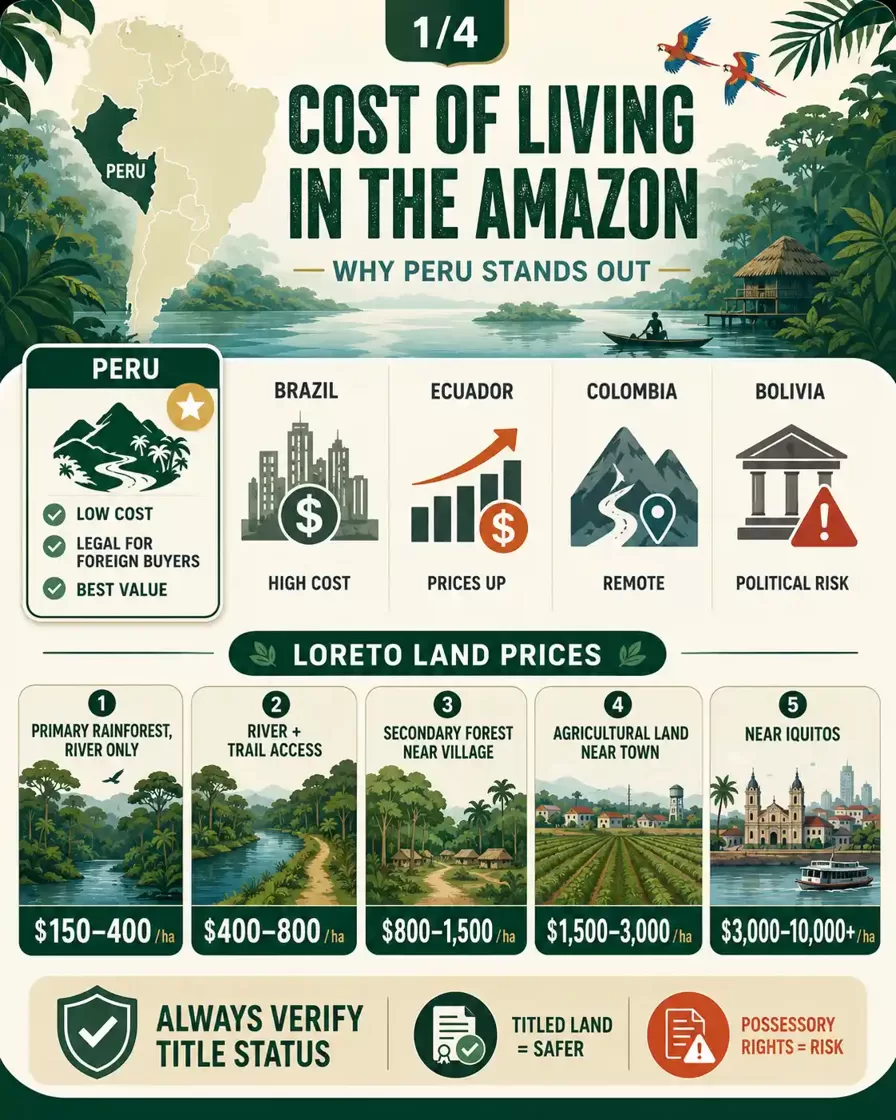
How much does it actually cost to live in the Amazon rainforest? In Peru's Loreto region, a modest rural lifestyle can cost considerably less than living in many international cities, particularly when housing is already available and some food comes from local markets or an established garden. But buying forestland, constructing a tropical home and maintaining an independent property are different financial commitments. The purchase price is only the beginning.
WELES Group lives and works in the Peruvian Amazon and has direct experience with rainforest property, local logistics and the practical expenses of operating in Loreto. This guide draws on that regional perspective while distinguishing local price indications from official charges and independently verifiable market data. A quoted price is useful for planning, but it should not be mistaken for a guaranteed transaction or the average cost across the entire Amazon basin.
The original budget estimates for Loreto suggest that some remote forest parcels may be advertised for a few hundred U.S. dollars per hectare, while more accessible land closer to towns can cost substantially more. Those differences reflect location, access, existing improvements and legal status. Crucially, a low asking price does not prove that a property has a transferable registered title or that farming, clearing and residential construction are permitted.
Building costs also depend on the intended standard. A basic timber shelter without plumbing cannot be compared directly with a permanent house equipped with safe drinking water, sanitation, solar electricity, batteries and communications. Delivery of materials, skilled labor, drainage, maintenance and replacement equipment can materially change the final cost, particularly where river transport is the only practical access.
Monthly spending introduces another distinction. A household using local markets, a simple existing dwelling and modest transport may have relatively low cash expenses. Someone renting a comfortable house, requiring frequent journeys to Iquitos, maintaining satellite internet or relying on regular medical treatment needs a different budget. Solar electricity may reduce purchased power or generator fuel, but batteries and equipment still have costs over their operating lives.
In 2026, satellite internet makes certain remote-working arrangements more feasible. Starlink advertises Peruvian residential plans starting at S/150 per month, subject to the actual address and plan. Yet a stable connection still requires a suitable installation, an unobstructed view of the sky and dependable electricity. Communication technology can reduce isolation without eliminating the difficulties of transport, healthcare and emergency access.
This article examines the cost of living in the Peruvian Amazon in 2026, concentrating on Loreto, Iquitos and surrounding rural areas. It covers land prices per hectare, jungle house construction, food and monthly spending, solar power, water systems, Starlink, transport, agricultural income, eco-tourism opportunities, property taxes, foreign ownership and residency. It also breaks down an illustrative startup budget so readers can see what the original estimates include, what they exclude and which figures require fresh quotations before any purchase.
The essential question is not whether life in the Amazon can be inexpensive. Under certain conditions, it can. The important question is whether the complete arrangement remains affordable, legal and practical after transport, maintenance, healthcare and the first serious equipment failure have been accounted for.
Best Countries to Live in the Jungle
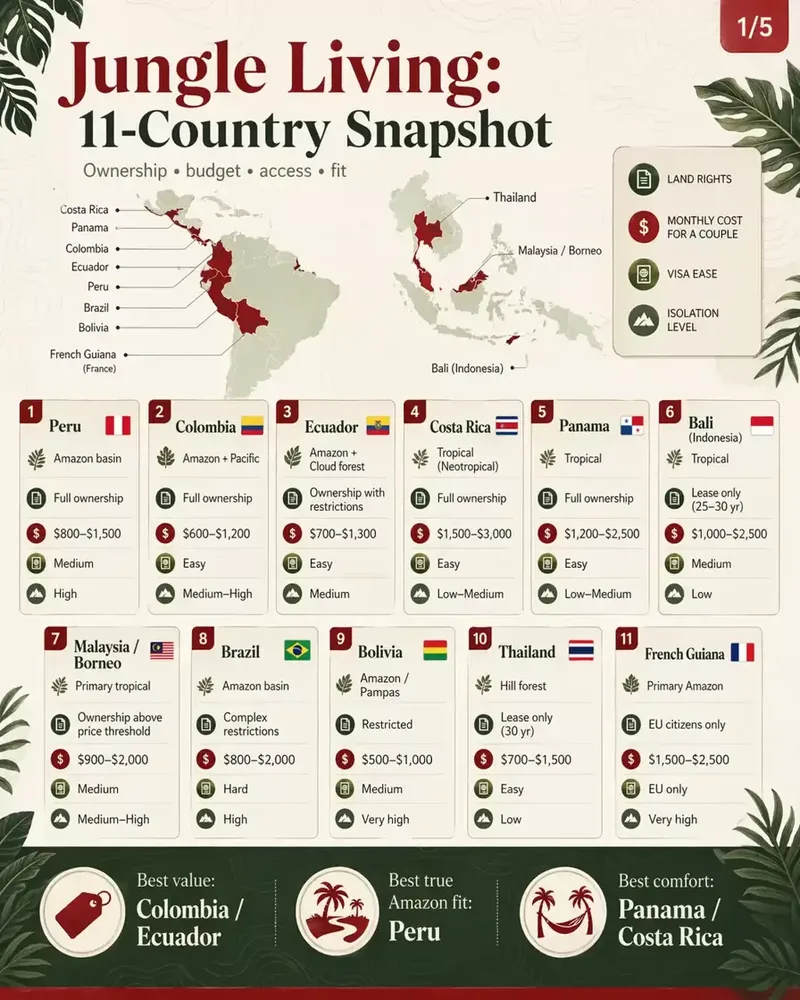
Where can you actually build a life in the jungle? Peru, Colombia, Ecuador, Costa Rica and Panama all offer access to tropical forests, but the experience of living there differs considerably. Some locations provide roads, hospitals and established residential communities within reach of rainforest. Others require boats, seasonal transport arrangements and a willingness to manage much of daily life independently. The more remote the property, the more important these differences become.
The choice becomes more complicated when buying land enters the picture. A foreigner may be allowed to purchase an ordinary house in one country while facing restrictions on agricultural land, protected forests, customary territories or property near international borders. In Indonesia and Thailand, foreign ownership rights are different from those found in much of Latin America. Even where a purchase is legally possible, that does not automatically make residential construction, tree clearing or commercial tourism activities permissible.
The best countries to live in the jungle in 2026 depend on what you intend to do there. A remote worker renting a house outside Ubud needs reliable connectivity and a workable immigration status. A family considering Panama or Costa Rica may place greater importance on schools and access to healthcare. Someone purchasing rainforest property near Iquitos, Tena or Leticia needs to establish title, lawful access, environmental restrictions and the real costs of building and maintaining a home.
Living expenses also deserve closer examination than the simple dollar ranges often repeated in relocation articles. The cost of renting a modest house in a regional town is not comparable to constructing an independent property reachable only by river. International cost-of-living databases rarely provide representative prices for remote rainforest settlements, while advertised land prices say little about whether a parcel has registered ownership or permission for its intended use.
This guide compares eleven destinations: Peru, Colombia, Ecuador, Costa Rica, Panama, Indonesia's Bali, Malaysian Borneo, Brazil, Bolivia, Thailand and French Guiana. It examines their tropical landscapes, property rules, long-term residence considerations, infrastructure, healthcare, connectivity, business opportunities and the trade-offs that affect everyday life. The comparison also considers how priorities change for retirees, families, remote workers, conservation-minded buyers and people developing eco-lodges or retreats.
Peru's Amazon deserves particular attention because it combines established regional cities with access to extensive rainforest landscapes. Iquitos, Tarapoto, Puerto Maldonado and Pucallpa serve different purposes and should not be treated as interchangeable locations. The same principle applies to Colombia's Amazon and Pacific forests, Ecuador's lowlands and cloud forests, and the contrasting tropical environments of Central and Southeast Asia.
The useful question is not which country has the most impressive rainforest photographs. It is where the legal, physical and financial conditions will allow you to live the way you intend, year after year.
Jungle Off-Grid Living and How to Build a Home That Lasts
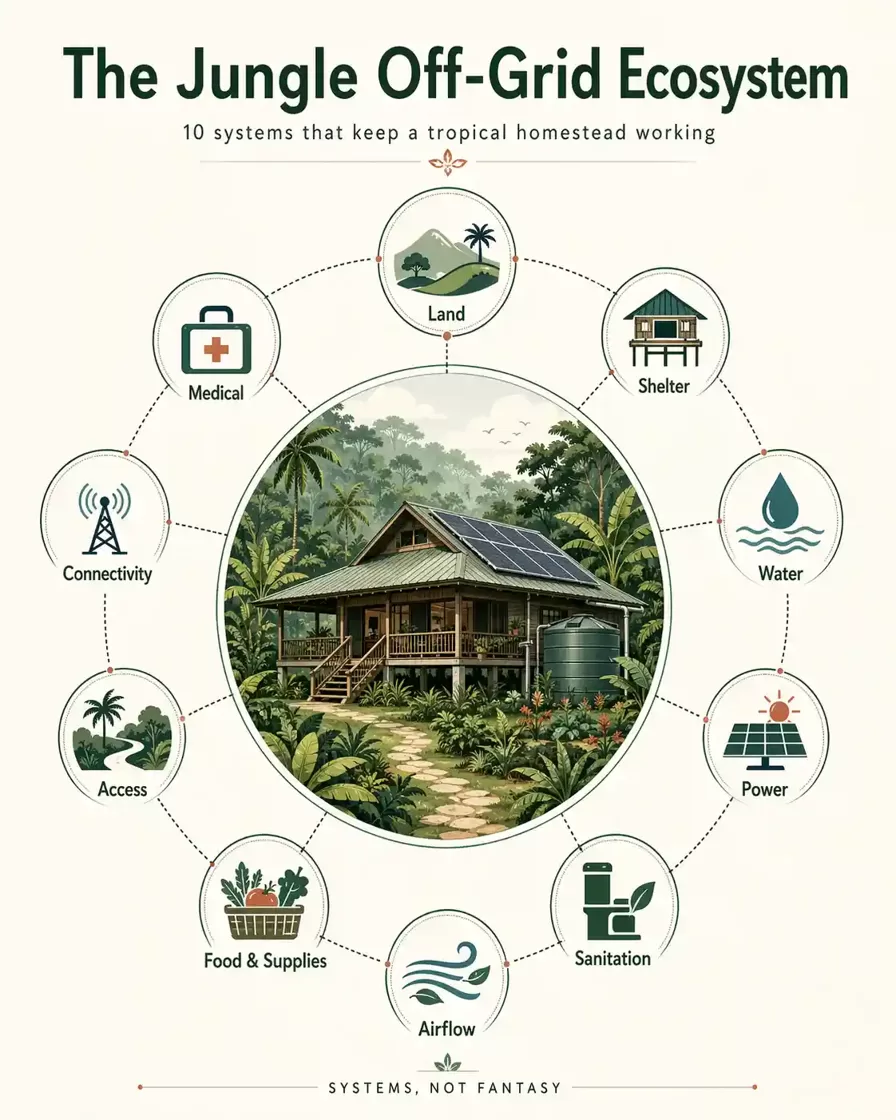
Can you live off-grid in a tropical rainforest? Yes. People build permanent homes, maintain small farms and operate remote properties in tropical environments. The difficult part is making the entire arrangement work throughout the year. A house that looks comfortable during a short visit may become difficult to maintain once prolonged rain, high humidity, equipment failures and interrupted transport become part of everyday life.
Living off-grid in the jungle means taking responsibility for services that a conventional home normally receives from outside providers. Drinking water must be collected or supplied, treated and stored. Electricity must be generated and managed. Wastewater needs an appropriate disposal system. Food, medicine, fuel and replacement parts must reach the property. Even an attractive, well-built home can become impractical when one of these arrangements fails.
The first decision is therefore about the land rather than the house. A forest property needs a verifiable owner, lawful access, suitable ground and permission for the intended use. In Peru, for example, the property registry, forest classification, protected-area boundaries and restrictions on riverbanks may all affect whether a proposed jungle homestead can be developed. Foreign buyers must also account for constitutional restrictions near international borders. A cheap parcel with unresolved rights can become an expensive mistake before construction begins.
Architecture creates another set of challenges. A rainforest house needs to deal with wind-driven rain, damp ground, insects, solar heat and materials that may deteriorate quickly when they remain wet. Roof overhangs, drainage, shading, screened openings and ventilation have a direct effect on comfort and durability. Natural airflow is useful, but it cannot always control indoor humidity when outdoor air is already hot and saturated.
Self-sufficiency also has limits. Solar panels require an appropriately sized battery system and sometimes backup generation. Rainwater harvesting depends on both catchment and safe storage. Growing fruit and vegetables can reduce certain purchases without eliminating the need for outside food supplies. Medical access, internet reliability and seasonal transport remain important even for people who want a quieter, more independent life.
This guide explains how to build and live off-grid in the jungle, from choosing tropical land and designing a climate-appropriate house to water treatment, solar power, sanitation, reliable internet, tropical health risks, financial planning and long-term maintenance. It includes practical examples of rainwater collection, household electricity demand and the full cost structure of a remote property, with assumptions clearly separated from established facts.
The goal is a home that remains legally usable, safe and manageable after the novelty of arriving in the rainforest has worn off. The best place to begin is with the systems that must continue working when the weather, equipment or circumstances become difficult.
Cost of Living Near Machu Picchu in 2026
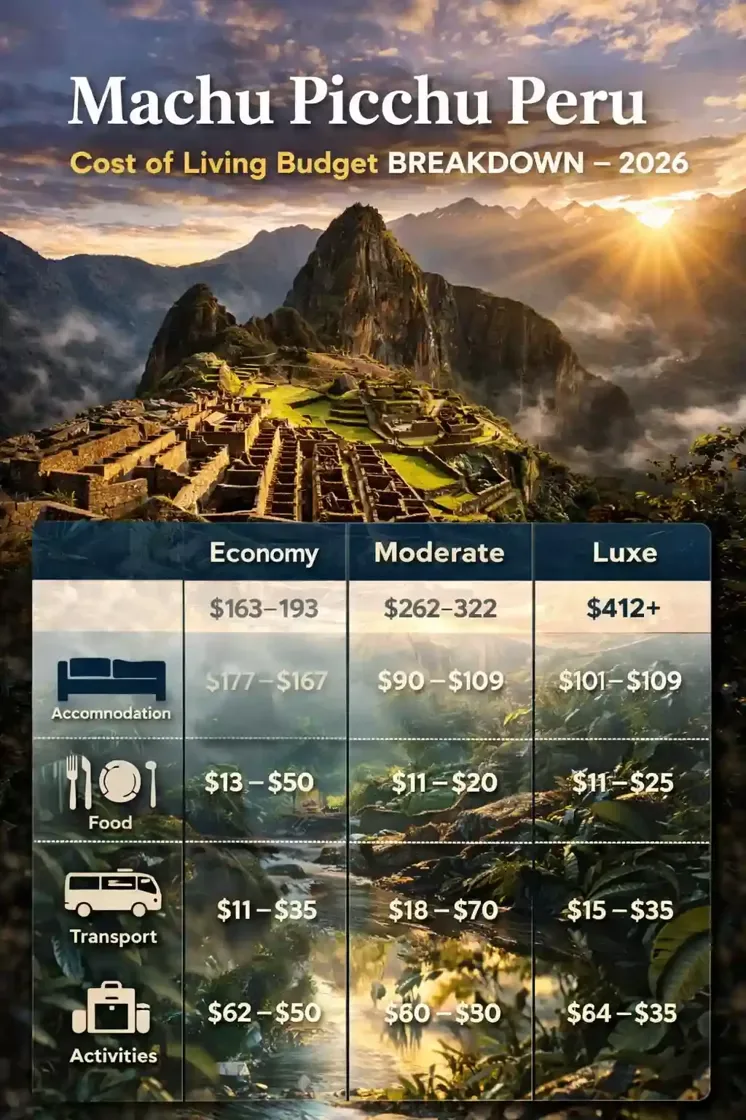
How much does it really cost to live near Machu Picchu in Peru? The answer depends on whether you want to visit the famous Inca citadel, spend several weeks in the town below it, or establish a longer-term base in the Cusco region. These are three different decisions with very different costs.
The archaeological site of Machu Picchu is a protected UNESCO World Heritage property, not a residential neighborhood where visitors can rent apartments. But the nearby town of Machu Picchu Pueblo, better known as Aguas Calientes, is a real inhabited community with homes, businesses, restaurants, hotels, a train station and municipal services. Farther away, Cusco offers a much larger housing market, everyday services and more possibilities for long-term living.
Travel costs also changed during 2026. The Ministry of Culture's standard admission price for a foreign adult remained S/152, but an additional S/11 conservation fee administered by SERNANP took effect in May. As a result, the combined standard entrance cost reached S/163, while a ticket for selected mountain routes reached S/211. Train fares and accommodation costs vary independently and must be checked for the intended dates.
The practical journey requires planning. From Ollantaytambo, the train to Aguas Calientes commonly takes around ninety minutes; a journey originating in Cusco can take considerably longer depending on the station and whether a bus–train service is used. From Aguas Calientes, visitors can reach the archaeological entrance by shuttle bus or, when the route is open and conditions permit, on foot.
For someone considering relocation, the difference is more significant. Cusco has a broader residential rental market, supermarkets, healthcare facilities and services used throughout the year. Aguas Calientes has permanent residents but a smaller housing market influenced by tourism and constrained access. Reliable public data on typical long-term apartment rents in Aguas Calientes are limited, so advertised hotel rates should not be presented as local residential rents.
This guide examines the cost of living near Machu Picchu in 2026, including official entrance fees, train and shuttle prices, housing in Cusco and Aguas Calientes, food and daily expenses, internet access, seasonal conditions and realistic example budgets for a day trip, a short stay and a month in the region. Official government charges are separated from variable commercial prices and illustrative planning estimates.
Before deciding where to stay, it helps to settle one question. Are you paying for a visit to Machu Picchu, or are you looking for somewhere in Peru to build your everyday life? The right budget starts there.
Living in Peru as an Expat — Advantages, Disadvantages and Real Costs
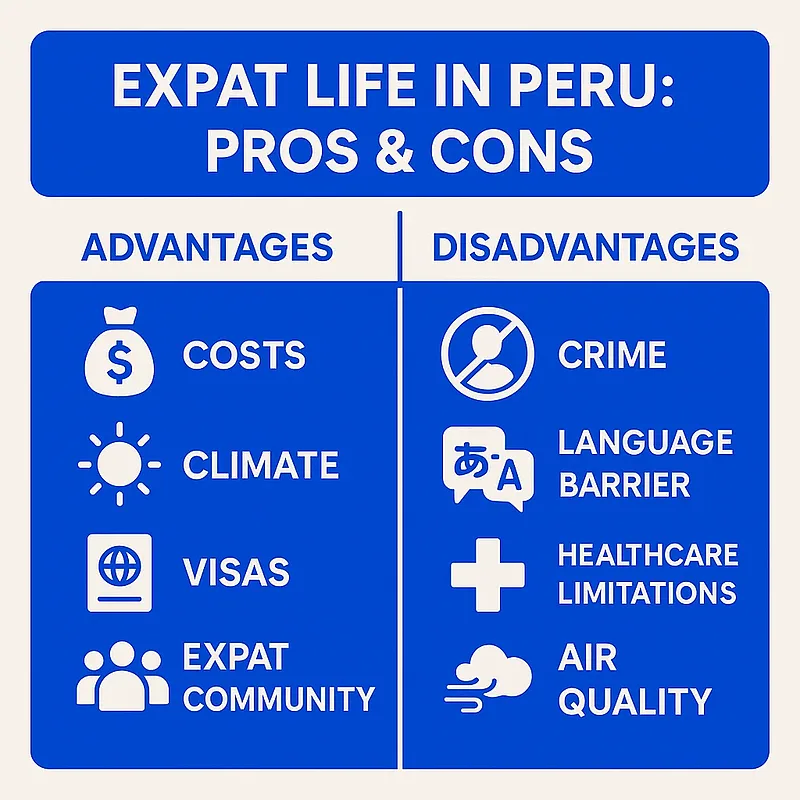
Peru can be an excellent place to live and a difficult place to settle. A comfortable apartment overlooking the Pacific in Lima, a house beneath the volcanoes of Arequipa, a rental in Cusco and a riverside home near Iquitos belong to the same country, but they offer remarkably different everyday lives. Housing costs, healthcare, climate, transport, employment and the ability to get things done can change considerably between them.
For foreigners considering a move, the advantages are real: geographical variety, distinctive food and culture, access to major cities and smaller communities, and the possibility of shaping a life around very different priorities. So are the disadvantages. Crime, bureaucracy, regional inequality, language barriers, uneven infrastructure and difficulties accessing specialized healthcare can affect daily life far more than they do a short holiday. A low advertised rent may also tell you very little about the total cost of living comfortably.
This guide examines the practical pros and cons of living in Peru as an expatriate. It compares popular destinations, explains how to build a realistic monthly budget, distinguishes visas from tax residency, and looks at healthcare, safety, employment, education and social integration. It also considers the particular demands of living in the Peruvian Amazon. The purpose is not to declare Peru better or worse than another country, but to help prospective residents decide which version of life in Peru, if any, actually fits their circumstances.
How to Get a Visa and Register a Company in Peru as a Foreigner

You can legally own a Peruvian company without having the right to live in Peru. You can enter the country for business meetings without being authorized to take a local job. And you can register a company with SUNARP while still needing separate tax registration, operating licenses and immigration permission before carrying out your plans. These distinctions are often overlooked, and they can turn a straightforward relocation or investment into an expensive administrative problem.
Peru offers several immigration routes for foreign nationals, including categories for employees, qualifying investors, retirees and family members of residents. Company formation follows a different process involving the public registry, SUNARP, and the tax authority, SUNAT. The appropriate sequence depends on whether you intend to work for a Peruvian employer, operate your own business, receive retirement income or simply own shares in a company managed by someone else.
This guide explains how to identify the right Peruvian visa or residence category, prepare the supporting documents, establish a company, activate its tax registration and understand the permits needed before trading. It also examines the limitations of business travel, investor residence and remote work, with direct links to the relevant government procedures so that each step can be checked against the requirements applicable to your circumstances.