
The Amazon Redemption Why Legitimate Conservation Investments Actually Work When Done Right
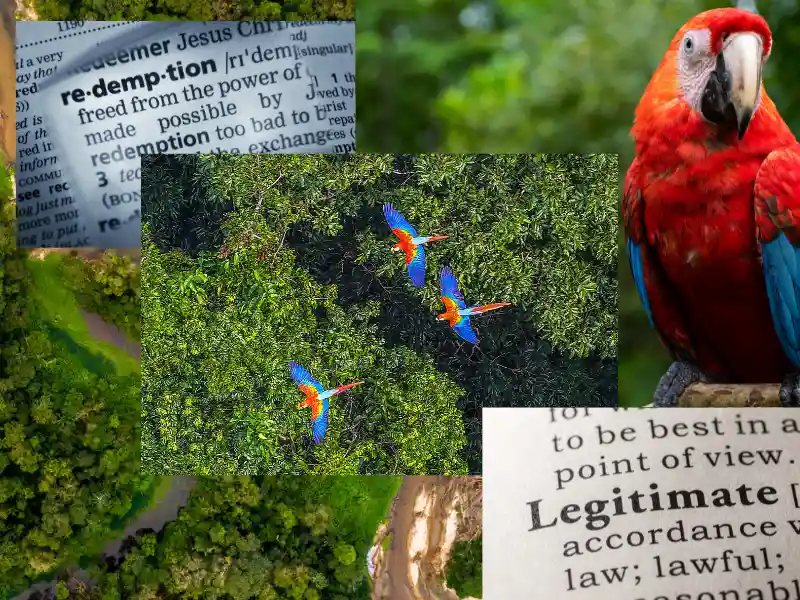
The Amazon has attracted billions in climate ambitions, carbon-credit projects and promises of investment returns. It has also exposed a difficult truth: protecting a forest on paper is much easier than protecting it on the ground.
Questionable carbon accounting, disputed land rights, weak community agreements and unrealistic financial projections have damaged trust in rainforest investments. These problems are documented, but they do not define every conservation project.
There are credible alternatives. Some combine legally established rights, community participation, long-term financing and measurable environmental outcomes. Others build viable businesses around sustainable land use without depending on carbon-credit sales.
The important question is no longer whether money can be made from conserving the Amazon. It is what makes a conservation investment legitimate, who actually benefits and how its economic value can be demonstrated.
That is where the real opportunity begins.
Illegal Gold Mining in the Peruvian Amazon and the Mercury Threat to Loreto
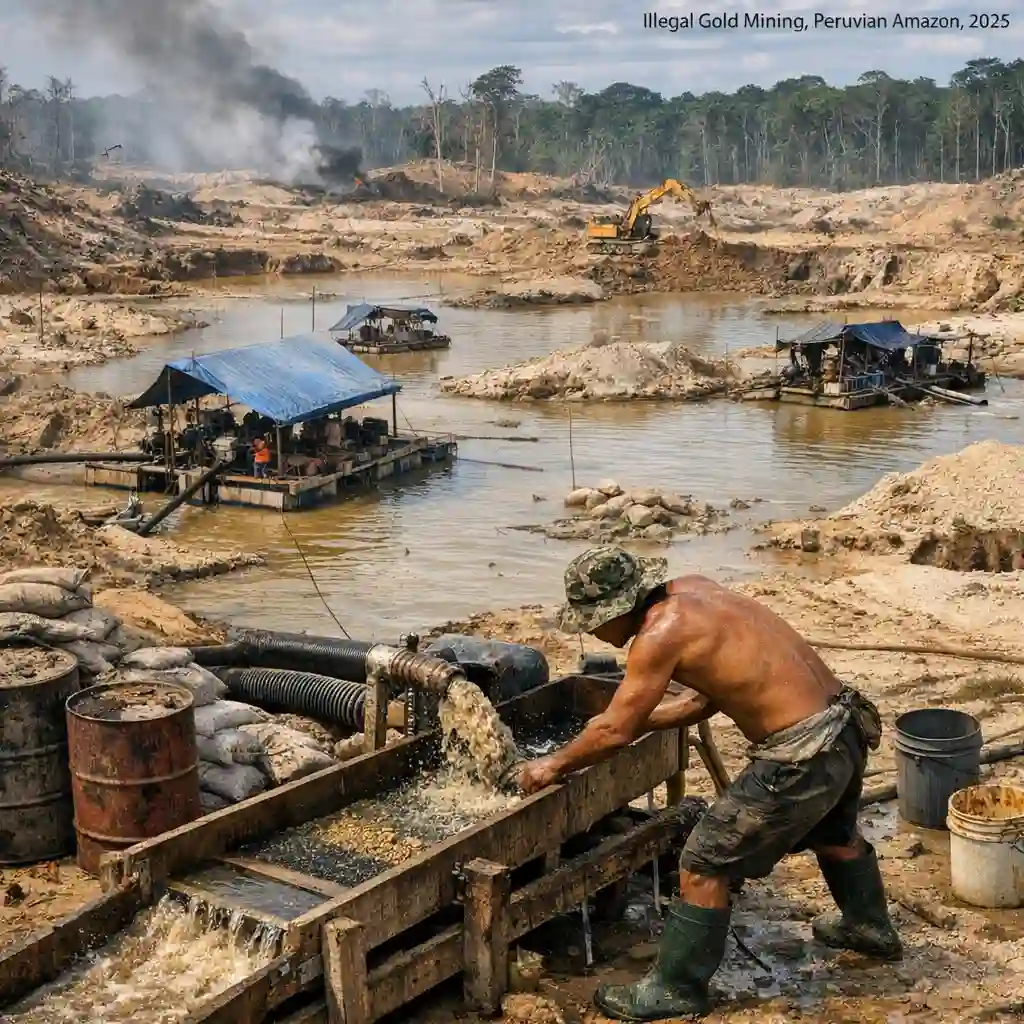
The gold mining crisis in the Peruvian Amazon has reached rivers that supply drinking water, sustain Indigenous communities and support some of the world's most complex freshwater ecosystems. Its effects are visible in satellite images of cleared forest, mining dredges operating along remote waterways and laboratory results showing elevated mercury exposure among people who rely on fish for food.
By mid-2025, the Monitoring of the Andean Amazon Project (MAAP) had documented 139,169 hectares of cumulative gold-mining-related deforestation across Peru's Amazonian regions. Approximately 97.5% of that footprint was concentrated in Madre de Dios. Yet the northern department of Loreto revealed another form of expansion, with mining equipment spreading through the Nanay, Marañón, Tigre and Putumayo river systems.
The latest evidence is even more concerning. An August 2026 MAAP investigation recorded 1,518 mining-dredge detections in Loreto between 2017 and June 2026, including 704 during 2025–2026. The Nanay River alone accounted for 1,076 recorded detections since 2021. These are observations accumulated through monitoring, not a count of machines simultaneously operating on the rivers.
The consequences extend into the food supply. Research by the Centro de Innovación Científica Amazónica (CINCIA) and its partners examined mercury in human hair and fish across the Nanay–Pintuyacu and Lower Putumayo basins. Among 439 participants, mean hair-mercury concentrations reached 8.41 mg/kg in Nanay–Pintuyacu and 15.67 mg/kg in Lower Putumayo. The findings indicate substantial exposure in the studied communities, although they do not establish that every individual case was caused by one identifiable mining operation.
Authorities have continued responding. In the first eight months of 2026, the Iquitos Port Captaincy reported 22 interdiction operations along the Nanay River and the destruction of 62 dredges. At the same time, community organizations continued demanding sustained protection of their rivers and territories.
This investigation examines illegal gold mining in Peru's Amazon from 2025 through 2026, the expansion of river dredging in Loreto, mercury contamination in the Nanay and Putumayo basins, mining-related deforestation in Madre de Dios, the role of criminal supply chains and the limitations of government enforcement. It draws on satellite monitoring, scientific measurements, Peruvian legislation and documented operations, distinguishing observed results from allegations and unresolved questions.
Why the Amazon Rainforest Matters for Climate, Biodiversity and Our Future
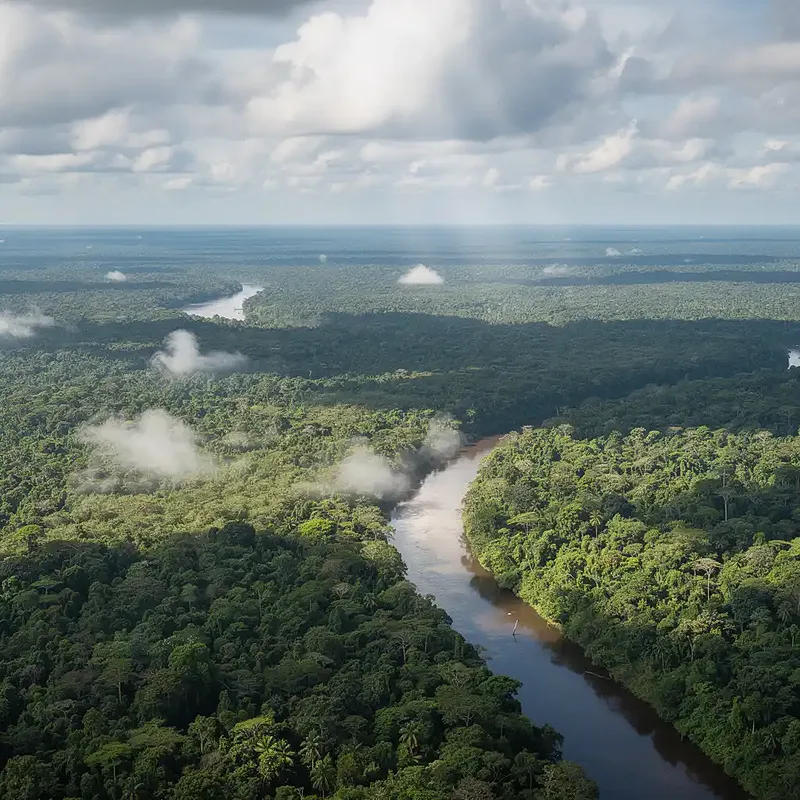
The Amazon rainforest does far more than store carbon or provide habitat for wildlife. It helps generate rainfall, regulates regional temperatures, influences the atmosphere across South America and supports one of the largest concentrations of biodiversity on Earth. Its forests, rivers, soils and wetlands form an interconnected system whose effects extend well beyond the Amazon Basin.
Covering approximately 6.7 million square kilometers, the Amazon biome extends across eight South American countries and French Guiana. It contains roughly 10% of known species and supports the lives and livelihoods of tens of millions of people, including hundreds of Indigenous peoples and communities. Yet the forest is experiencing deforestation, degradation, rising temperatures, drought and increasingly damaging fires.
Recent scientific findings make the situation more complicated than the familiar description of the Amazon as the lungs of the Earth. A 2026 study found that approximately 21% of rainfall within the Amazon rainforest originates from moisture recycled within the forest itself, on average. Another major study, published in Nature in October 2026, documented how human activity and drought have weakened the Amazon's carbon balance. The forest is important not because it supplies a mythical share of the world's oxygen, but because it helps regulate climate, water and carbon on a continental scale.
There is also measurable progress. Brazil's official monitoring reported a 41.8% decline in Amazon deforestation for the August 2025–July 2026 monitoring period. But global deforestation remains far above the trajectory needed to meet international forest commitments by 2030, and declining clearing rates do not eliminate forest degradation or the risks of ecological tipping points.
This guide explains why the Amazon rainforest matters for global climate, how flying rivers and carbon storage work, what drives deforestation, how Indigenous territorial rights contribute to conservation, and which practical actions genuinely help protect the forest. It separates established science from misleading statistics and examines what governments, businesses, communities and individual readers can realistically do.
What Peru Really Brought Home from COP30: Funding, Forests and Loreto
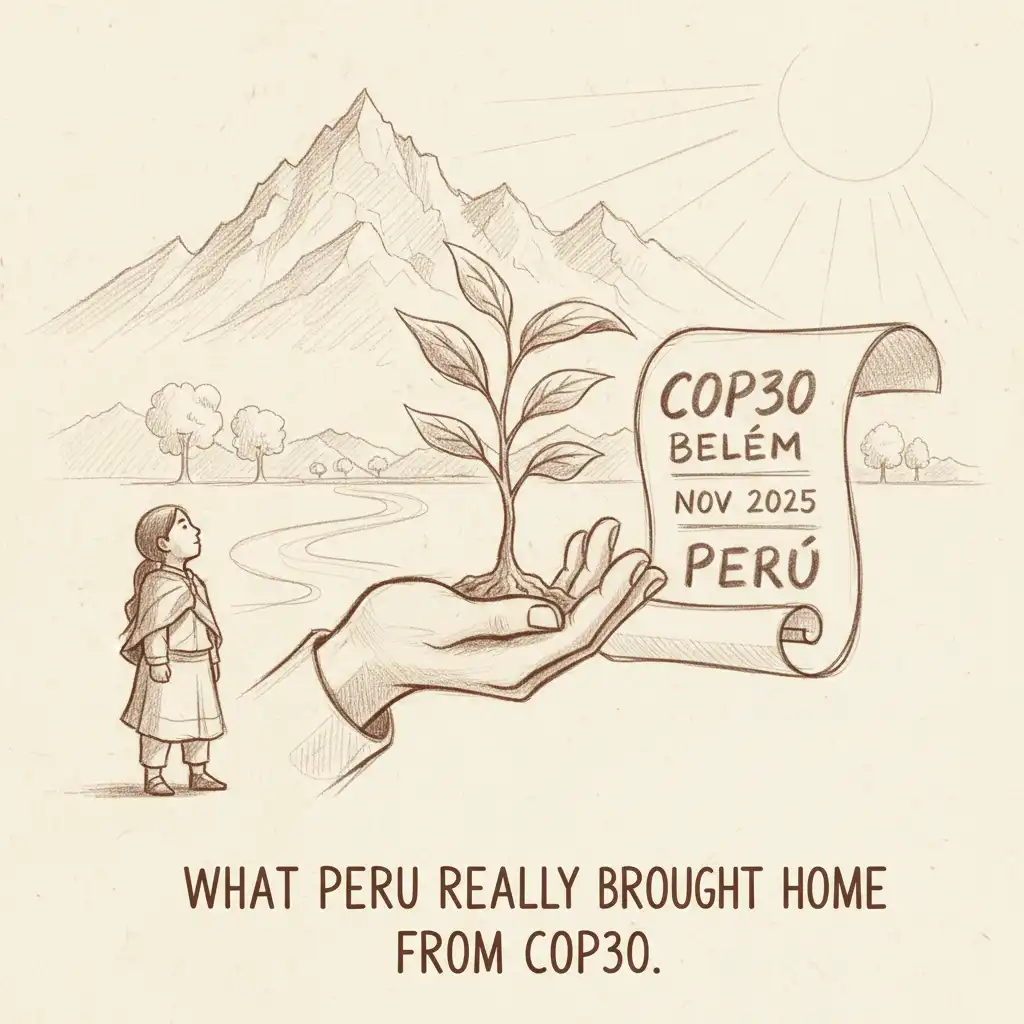
Peru left COP30 in Belém with a forest-finance strategy, international commitments and a difficult question: how much of the promised money would actually reach the Amazon? On November 18, 2025, the Peruvian government presented its Paquete País (Country Package), a plan designed to mobilize approximately US$140 million by 2030 for forest protection, land governance and sustainable development.
At the same climate summit, international donors announced a separate US$1.8 billion Forest and Land Tenure Pledge covering Indigenous Peoples, local communities and Afro-descendant communities in multiple eligible countries. Peru also participated in a broader commitment to strengthen recognition of community land rights. These announcements mattered, but the global pledge was not a US$1.8 billion allocation to Peru, and a national financing target was not money already disbursed.
The story did not end in Belém. Throughout 2026, Peru moved its Country Package through technical coordination, published an official strategic framework, and pursued donor partnerships. Indigenous organizations advanced a separate but complementary jurisdictional REDD+ initiative, with documented technical work in Loreto. By September 2026, new funding commitments and fundraising targets had emerged, although important questions about delivery remained.
This analysis examines what Peru actually secured at COP30, how the Paquete País works, where the US$140 million figure comes from, what the US$1.8 billion pledge really covers, and what the developments mean for Loreto, Iquitos, Indigenous land rights, conservation finance and sustainable tourism. The central distinction is simple: a funding announcement creates an opportunity; only implementation produces results.
Why Carbon Credits Won't Save the Amazon: How REDD+ Projects Fail

Imagine a company announces that it has become carbon neutral. Its factories still operate, its aircraft still fly, and its products still generate emissions. But the company has purchased 10,000 carbon credits from a rainforest protection project. On paper, those credits represent 10,000 tonnes of CO₂ equivalent. The company presents the purchase as an answer to its climate impact.
Now ask the question that matters: how much additional deforestation did the project actually prevent? The answer cannot be read directly from a photograph of standing forest, a satellite image or a certificate. It depends on an estimate of what would have happened without the project—and whether that estimate is credible.
The evidence is troubling. A major 2026 scientific synthesis examined 44 REDD+ projects and found that most reduced deforestation, but their combined claims exceeded independently estimated avoided deforestation by a factor of 10.7. This does not mean every credit is fictitious. It means the gap between real conservation and the volume of credits sold can be enormous.
The criticism goes beyond accounting. Some projects face weak monitoring, displacement of deforestation, uncertain permanence and disputes over community rights. Carbon-market enforcement cases have exposed deliberate manipulation, while new methodologies attempt to correct earlier weaknesses. Neither the claim that all REDD+ projects fail nor the claim that certification guarantees climate benefits is supported by the evidence.
This investigation examines why Amazon REDD+ carbon credits fail, what independent research actually proves, how verification works, what Peru's changing rules mean and how companies can distinguish credible forest finance from questionable offset claims. It also addresses the more difficult question: can a company purchase a climate result that it cannot directly observe?
The Amazon Investment Paradox: Why Carbon Credits Cannot Replace Land Rights
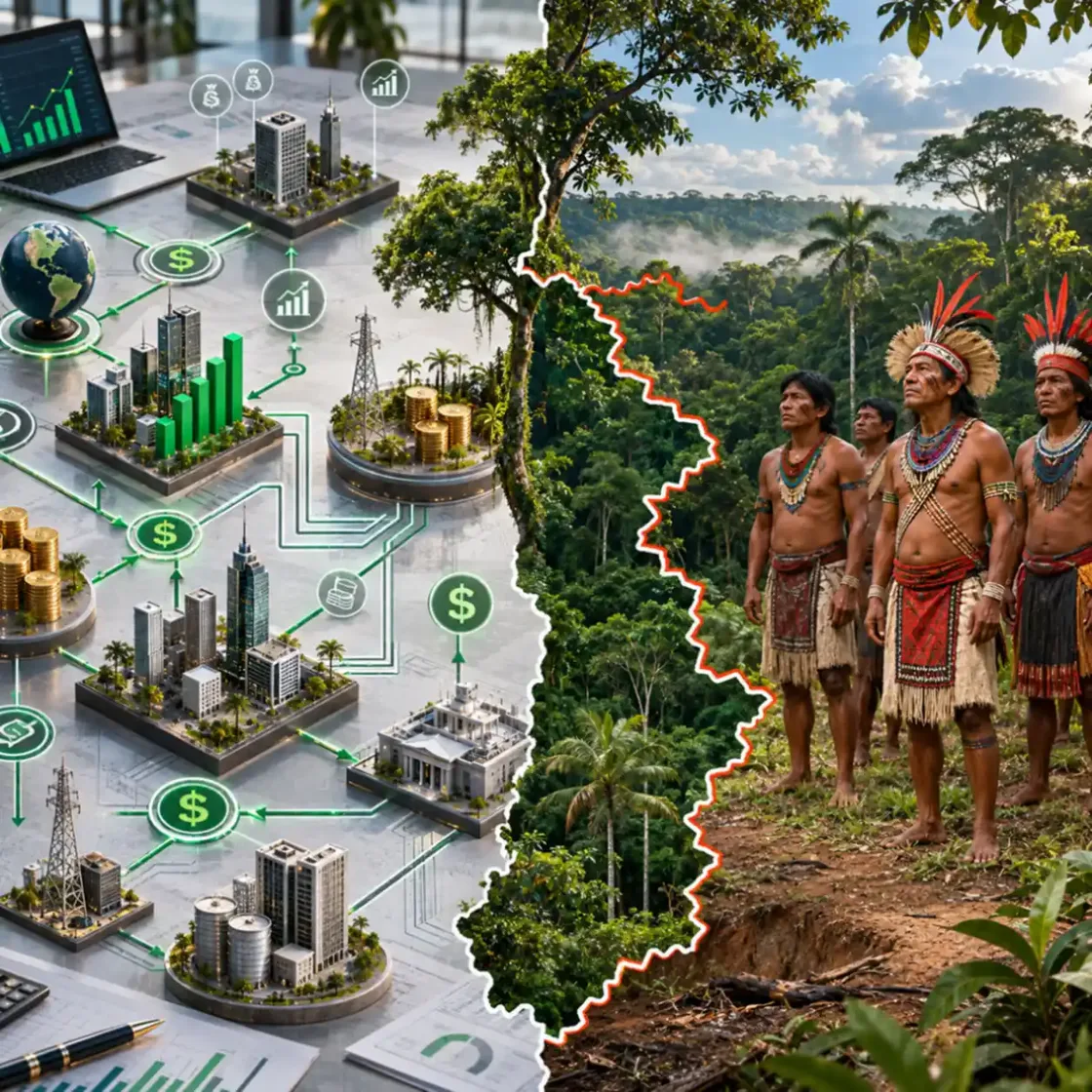
A forest can be worth millions in carbon credits and still be impossible to protect. Investors may finance a REDD+ project, purchase Amazonian land or secure a contract promising future conservation income. None of those transactions guarantees control over illegal logging, a defensible carbon baseline, enforceable territorial rights or agreement with the people who live in the forest.
That is the Amazon investment paradox. Global finance can assign a price to avoided deforestation, while the political and legal conditions needed to prevent that deforestation remain unresolved. A carbon credit represents a quantified environmental claim. A land title represents a legal interest. Neither automatically creates effective governance over a landscape.
The failures are documented, but they are not universal. Independent research has found substantial over-crediting in first-generation REDD+ projects, while also finding that many reduced forest loss to some extent. Real carbon-market fraud has triggered enforcement action. Meanwhile, Indigenous territorial recognition has produced measurable conservation benefits, and jurisdictional programs such as Guyana's ART TREES have mobilized significant finance under independently verified frameworks.
This analysis examines REDD+ carbon-credit integrity, Peruvian Amazon land-investment risks, Indigenous territorial rights, government enforcement and conservation-finance models across Peru, Brazil, Ecuador and Guyana. The central question is not whether money can help protect the rainforest. It is what money can accomplish when the rights, institutions and people responsible for protecting that forest are properly recognized—and what happens when they are not.
COP30: Deforestation, Private Jets and the Climate Summit Paradox

A climate summit in the Amazon was supposed to make the world's remaining tropical forests impossible to ignore. Instead, COP30 in Belém, Brazil, became the center of a different debate: a controversial highway cutting across an environmentally protected landscape, private aircraft arriving at Brazilian airports, and the carbon footprint of bringing tens of thousands of people together to negotiate emissions reductions.
Some of the criticism was grounded in real events. Other claims travelled considerably further than the evidence. Avenida Liberdade was not originally conceived for COP30, its projected vegetation clearance was often reported as completed deforestation, and widely circulated claims of 350 private jets emitting 40,000 tonnes of CO₂ lack a sufficiently documented COP30-specific calculation. Yet these corrections do not make the underlying environmental questions disappear.
The summit also produced tangible political outcomes, including new adaptation-finance commitments, implementation initiatives and the launch of the Tropical Forests Forever Facility. Meanwhile, Brazil's satellite monitoring showed continued reductions in Amazon deforestation through 2026. These results deserve to be examined alongside the ecological costs and accountability questions surrounding the event.
This analysis separates verified COP30 facts, disputed claims and measurable outcomes. It examines the highway's history and environmental footprint, available private-aviation evidence, the actual climate agreements reached in Belém, and the larger question: how should global climate diplomacy be judged when the process of organizing it creates environmental impacts of its own?
Debt-for-Nature Swaps in Peru: How Sovereign Debt Can Protect the Amazon
What if a government could turn part of its foreign debt payments into long-term financing for forests, rivers and biodiversity? Peru has already done precisely that. In September 2023, Peru and the United States finalized a debt-for-nature agreement designed to redirect approximately US$20 million toward tropical forest conservation over 13 years. It was Peru's third such agreement with the United States, following earlier transactions in 2002 and 2008.
Debt-for-nature swaps do not make sovereign debt disappear. They restructure, reduce or redirect particular debt obligations in exchange for specified environmental commitments. Modern transactions can also use discounted bond repurchases, credit guarantees and dedicated conservation funds to mobilize financing that might otherwise be unavailable.
For Peru, the question is no longer whether the concept can work. The more demanding questions are how much conservation funding a transaction actually creates, who controls the money, how Indigenous and local communities benefit, and whether the financial savings justify the costs. This guide examines Peru's real agreements, international precedents and the conditions under which another transaction could strengthen protection of the Amazon.
Amazon Carbon Investment Risks — Benefit Sharing, Article 6 and Capital Protection
A rainforest carbon project can have verified credits, an international buyer and an impressive financial forecast—and still become a difficult investment. The underlying problem may have nothing to do with the quantity of carbon stored in the forest. A community may dispute who had authority to sign a long-term agreement. A developer may promise revenues that cannot be distributed under its existing contracts. Or a buyer may require an international authorization that the project has never obtained.
These risks are especially important in the Peruvian Amazon, where forest conservation can involve private property, public land, Indigenous and communal territories, protected areas and multiple institutions. Two safeguards deserve particular attention: transparent benefit sharing, which establishes how affected rights holders and project participants are involved and compensated, and Article 6 compliance, which governs specific forms of international cooperation and accounting under the Paris Agreement. Both can strengthen the design of a project. Neither is an insurance policy against financial loss.
This guide examines how investors can evaluate those safeguards before committing capital. It explains community agreements, Indigenous rights, benefit-sharing formulas, grievance procedures, Peru's RENAMI registry, host-country authorization, corresponding adjustments, carbon reversal buffers and the contract terms that determine who bears project risks. It also provides a practical investment-screening framework and an illustrative revenue waterfall. The central question is straightforward: when a forest-carbon project encounters a legal dispute, lower credit issuance or a delayed payment, who has the right to decide what happens—and who ultimately pays?
From Carbon Credits to Natural Capital — Investing in Peru's Amazon Ecosystems

A rainforest can store carbon, regulate water, protect habitats, support local livelihoods and provide the setting for a viable business. Yet these benefits do not automatically produce five separate sources of income for its owner. Some can be measured but not sold. Others may support contractual payments, lower operating risks or strengthen an existing enterprise. The difference between ecological value and realizable revenue is where natural capital investment begins.
Peru's Amazon offers an important setting for examining this distinction. Forest conservation projects operate alongside Indigenous territories, private land, protected areas, community economies and emerging environmental finance mechanisms. The country has an established legal framework for payments linked to ecosystem services, a national system for registering relevant climate mitigation measures and initiatives to develop biodiversity finance. But these arrangements serve different purposes. A carbon credit, a watershed conservation agreement and a biodiversity outcome are not interchangeable assets, and an environmental assessment is not a financial guarantee.
This guide explains how natural capital can be identified, measured, financed and valued in the Peruvian Amazon. It examines carbon and biodiversity markets, watershed services, conservation agreements, sustainable production, investor rights, blended finance and the difference between ecosystem accounting and conventional financial valuation. Rather than assuming that every environmental benefit can be monetized, it asks a more useful question: which benefits have identifiable beneficiaries, enforceable rights, credible measurement and someone prepared to pay for them?
Amazon's Green Gold — Can REDD+ Investments Really Return 300%?

Can an investment in Peru's Amazon rainforest generate a 300% return? The arithmetic is straightforward: an investor who puts in $1 million would need to receive $4 million in total net proceeds to achieve a 300% gain. The difficult part is explaining where that money comes from. Forest protection alone does not create income. Carbon credits must first be generated under an eligible methodology, verified, issued and sold. Project costs, community obligations, taxes and financing arrangements determine how much of the revenue, if any, ultimately reaches investors.
The idea of turning conservation into an investable business is not imaginary. REDD+ projects in the Peruvian Amazon already operate under international carbon-crediting frameworks, and corporate buyers do pay for certain verified climate outcomes. But the market is uneven. Credit prices fluctuate, expected issuance volumes can be revised, and a project that appears highly profitable on paper can lose money through delayed verification, weak demand or unresolved land rights. The supposed value of a forest's carbon reserves is not equivalent to cash that an investor can withdraw.
This article puts the 300% return claim through a financial reality check. It separates land ownership, carbon-credit trading and equity investment; explains how project revenue becomes investor cash flow; and tests what would have to happen for an exceptional return to be achieved. It also examines Peru's carbon-market regulation, the evidence for higher-quality credit premiums, the practical costs of protecting Amazonian forest and the due diligence required before financing a project. The objective is not to dismiss the opportunity, but to distinguish a possible investment outcome from a persuasive number with no verified financial basis.
Investing in Amazon Carbon Projects in Peru — REDD+, ARR and the Integrity Premium
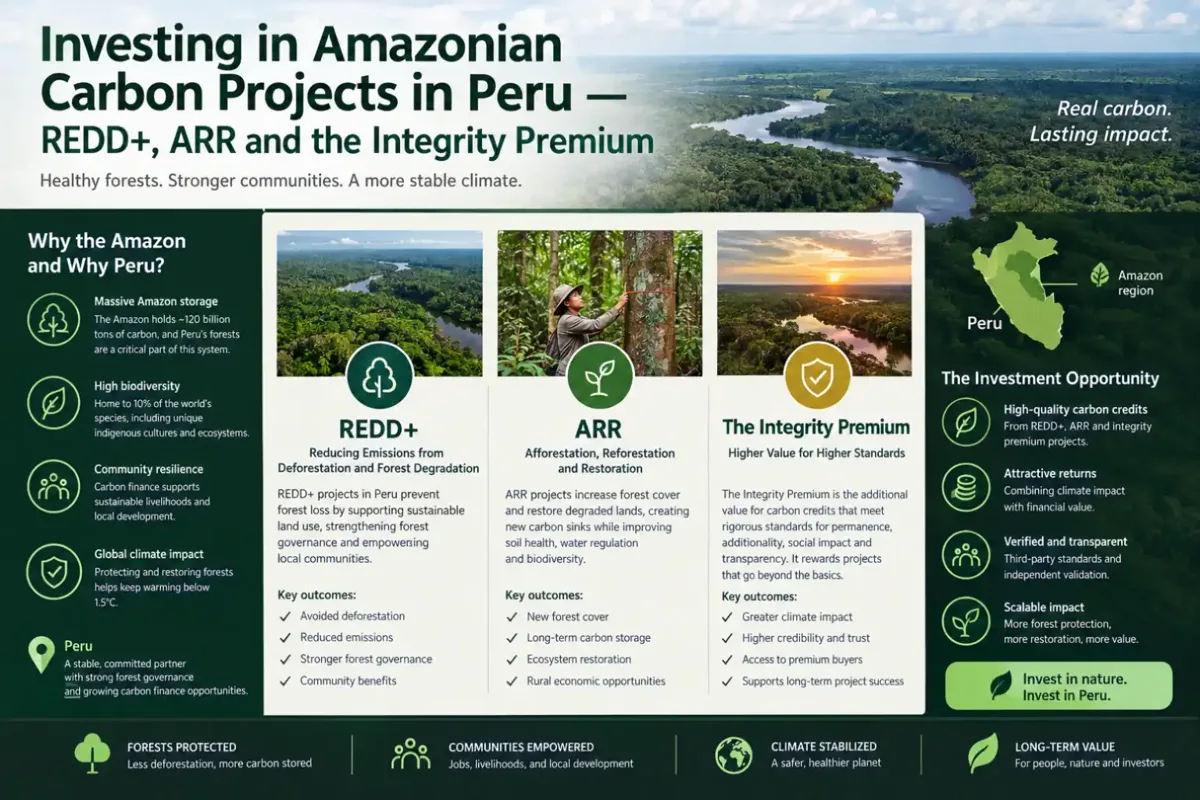
Two projects operate in the Peruvian Amazon. One protects existing rainforest from deforestation. The other restores degraded land and allows vegetation to capture additional carbon over time. Both may eventually generate carbon credits, but the risks, cash flows, methodologies and buyers can be very different. The first depends heavily on proving what forest loss would otherwise have occurred. The second must demonstrate measurable carbon removals as vegetation grows. Neither produces a guaranteed financial return simply because the underlying activity benefits the climate.
Investors increasingly encounter the term integrity premium — the possibility that credits with stronger climate accounting, transparent registry records and credible environmental and social safeguards can command better prices or attract more selective buyers. This differentiation exists in parts of the carbon market, but it is not a fixed markup, a certification guarantee or evidence that demand will rise indefinitely. A project can be environmentally valuable and still produce disappointing investment results.
This guide examines REDD+ and afforestation, reforestation and revegetation (ARR) as distinct investment opportunities in Peru. It compares their technical requirements, development costs, potential revenue, land rights, community arrangements and exposure to changes in carbon-market rules. It also explains Peru's RENAMI framework, the significance of international integrity standards and what the country's existing forest-carbon projects reveal about both opportunities and disputes. The central question is not how many carbon credits a forest might theoretically contain, but how many eligible units a project can defensibly issue, sell and finance over its operating life.
Peruvian Amazon Carbon Credits — What Corporations Can and Cannot Claim

A company buys carbon credits from a rainforest protection project in Peru. The credits are independently verified, the forest is real, and the money may help finance conservation. Does that purchase reduce the company's emissions? Can it satisfy a climate regulation, lower a carbon-related tax or protect the business from penalties? These questions sound similar, but the answers are legally and technically different.
Peru's Amazon rainforest plays an important role in climate regulation, and forest-carbon projects offer one way to finance efforts to reduce deforestation. REDD+ initiatives, international carbon standards and Peru's National Registry of Mitigation Measures (RENAMI) form parts of a developing system for measuring, recording and financing climate outcomes. Yet certification does not remove every risk. Baselines can be disputed, forests can be lost after credits are issued, Indigenous and community rights require careful protection, and a credit accepted in one market may be ineligible in another.
This guide explains what corporations can legitimately achieve by purchasing Peruvian Amazon carbon credits—and what they cannot. It examines REDD+, the relationship between voluntary credits and mandatory climate regulations, Peru's carbon-market framework, Article 6 of the Paris Agreement, project verification, pricing, biodiversity benefits and real-world examples such as Alto Mayo. Most importantly, it provides a practical method for distinguishing credible climate finance from an expensive claim that will not withstand legal or scientific scrutiny.