
Buying Land in Peru: What Foreign Buyers Must Verify Before Paying

Buying land in Peru as a foreigner is legally possible. Buying the wrong land, paying the wrong person or trusting the wrong documents can turn a promising investment into a prolonged legal problem. A property may have an attractive price, spectacular rainforest surroundings and a seller who appears entirely cooperative. None of those things establishes that the seller can transfer ownership, that the boundaries are accurate or that the land can legally be used for the buyer's intended project.
Peruvian law generally gives foreign individuals and companies property rights comparable to those of Peruvian citizens. Permanent residence is not ordinarily required simply to acquire qualifying real estate. However, Article 71 of the Constitution restricts specified foreign acquisitions within fifty kilometers of international borders, including indirect acquisitions. Buyers entering Peru as tourists may also need a separate immigration permission to sign documents. These are different legal questions, and confusing them can create avoidable problems before the purchase even begins.
The most important investigation starts with SUNARP, Peru's public property registry. Buyers should establish who owns the property, whether that person has authority to sell, what legal burdens or pending documents exist and whether the property being shown corresponds to the registered description. A Partida Registral is an essential starting point, but even an apparently clean registry record cannot establish every fact about occupation, access, flooding, neighboring claims or land-use restrictions.
Rural purchases demand particular attention. In Loreto and other Amazonian regions, a property may be described as titled land while the buyer is offered only possession documents, an incomplete survey or access across a neighbor's property without a documented right of passage. Forest classification, protected areas, Indigenous community rights and restrictions on agricultural conversion can also affect what an owner may lawfully do. Ownership does not automatically grant permission to clear forest, extract timber, build an eco-lodge or conduct tourism activities.
The transaction itself creates another set of decisions. Preliminary contracts can be binding. Deposits need clear conditions. Purchase documentation commonly proceeds through a lawyer-reviewed minuta, a notarial public deed and registration with SUNARP. Peru also has a mechanism called bloqueo registral, which can reserve registration priority during a qualifying transaction. Taxes and fees must be calculated according to the actual deal rather than estimated from generic dollar amounts.
This guide concentrates on the **legal risks and due diligence that foreign buyers should understand before paying for property in Peru in 2026**. It explains what SUNARP documents can reveal, how to investigate rural boundaries and land classification, how to protect payments, which warnings deserve immediate attention and how to distinguish a problem that can be resolved from a transaction that should not proceed.
For the complete chronological procedure, including a detailed walkthrough of the purchase process, see WELES Group's How to Buy Land in Peru as a Foreigner — 2026 Legal Guide. The purpose of this article is different: to help a prospective buyer recognize the weaknesses in a deal before those weaknesses become expensive.
How Much Is Rainforest Land Worth in Peru? Valuation Beyond Price per Hectare
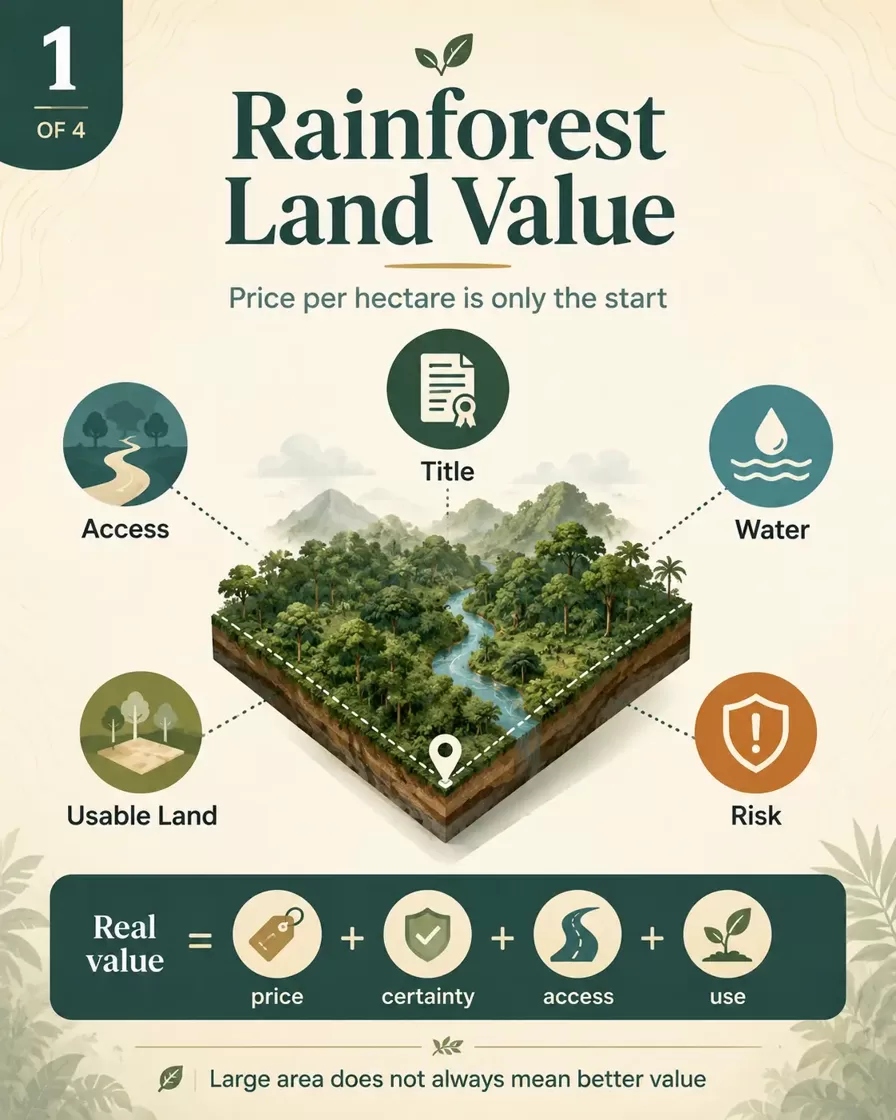
How much is rainforest land actually worth in Peru? An advertised price of $300, $700 or $2,000 per hectare may seem like a straightforward answer, but it tells a buyer surprisingly little. Two properties in the Peruvian Amazon can contain the same number of hectares and differ dramatically in legal security, accessibility, terrain, environmental restrictions and the amount of money required to maintain them. The lower-priced parcel may ultimately demand more capital than the expensive one.
The first problem is that forestland is not a uniform commodity. A hundred hectares of seasonally flooded terrain, a hundred hectares with reliable river access and a hundred hectares containing existing buildings are three different assets. Their value also changes with the buyer's intended purpose. Land acquired for long-term conservation is evaluated differently from a site intended for a private residence, an agroforestry operation or a commercial eco-lodge.
Peru has a formal framework for property valuation. Its Reglamento Nacional de Tasaciones addresses rural land appraisal through market comparisons and relevant physical characteristics, including land classification, topography, water availability and proximity to roads or rivers. These requirements provide a much more defensible foundation than multiplying acreage by an asking price from an unrelated listing. They also highlight an important distinction between a professional commercial valuation and a buyer's assessment of the additional costs involved in owning or developing a property.
Legal certainty comes before either calculation. A buyer must establish who owns the property, what is recorded in SUNARP, whether its boundaries can be identified on the ground and whether the seller has the right to transfer it. Forest classification, protected-area boundaries, community rights, riverbank restrictions and constitutional limits on certain foreign acquisitions can all affect what the buyer is legally able to acquire and do with the land. A visually attractive forest parcel may not be suitable for the project being advertised.
Accessibility can be just as decisive. Around Iquitos and elsewhere in Loreto, properties may depend on rivers, trails, seasonal roads or combinations of transport. The cost of delivering materials, bringing workers to the site, inspecting boundaries and responding to emergencies can alter the economics of an entire project. A property with a relatively high asking price may offer better value if it already has dependable access and usable infrastructure.
The value of standing forest deserves separate consideration. Intact habitat, ecological connectivity and biodiversity may be central to conservation or nature-based tourism, but ecological importance is not the same as immediate resale value or guaranteed commercial income. Carbon credits, timber harvesting and other activities require their own legal and economic assessment. They cannot simply be added to the land price as speculative future revenue.
This guide explains how to value rainforest land in Peru in 2026, with particular attention to rural properties in Loreto and the wider Peruvian Amazon. It covers official appraisal methods, price-per-hectare comparisons, SUNARP checks, access rights, river and flood risks, the distinction between total area and legally usable land, forest quality, hidden expenditure, raw land versus existing eco-lodges, and the specific considerations involved in assessing a 700-hectare property.
The purpose is not to invent a universal price for the Amazon. It is to give buyers a reliable method for understanding what a property is worth, what it would cost to own and operate, and which unresolved risks should prevent a purchase altogether.
Amazon Land Investment in 2026 Across Peru, Brazil and Ecuador
Buying Amazon rainforest land in Peru, Brazil or Ecuador can look like a straightforward investment in conservation, ecotourism or future carbon revenue. In practice, the three countries offer very different property rights, regulatory systems and routes to generating income. A parcel advertised as private forestland may have unresolved boundaries. A registered conservation area may not be available for unrestricted development. And a forest containing substantial carbon stocks does not automatically qualify its owner to issue or sell carbon credits.
The financial background changed again in 2026. The World Bank's latest State and Trends of Carbon Pricing report found that direct carbon pricing covered just over 29% of global greenhouse gas emissions and generated more than US$107 billion in government revenue during 2025. Carbon-credit issuances increased by 8%, while average credit prices declined slightly. These figures describe carbon markets globally, not the returns available to someone buying Amazonian property.
National developments are equally significant. Peru is implementing its National Registry of Mitigation Measures (RENAMI). Brazil is building its emissions trading system under Law No. 15,042/2024. Ecuador introduced international carbon-transfer rules in May 2026 and reformed its environmental legislation in September. None of these developments removes the need to verify land ownership, carbon-project eligibility, community rights or actual buyer demand.
The differences are particularly important for foreign investors. Peru's Constitution restricts certain property acquisitions within 50 kilometers of international borders. Brazil applies special controls to foreign acquisitions of rural land through INCRA. Ecuador restricts foreign ownership of rural land in designated border and protected areas. In all three countries, forest and conservation rights may impose obligations that are not apparent from an asking price.
This guide compares Amazon land investment in Peru, Brazil and Ecuador in 2026, including foreign ownership rules, land registration, REDD+ projects, carbon and biodiversity credits, ecotourism opportunities, conservation costs, financial modeling, taxation, community agreements and exit risks. It also provides a practical due-diligence framework for distinguishing a legally transferable asset from an attractive but commercially unworkable proposal.
The first question is not which country promises the highest return. It is what the investor can legally acquire, how the asset could realistically generate revenue and what happens if that revenue never arrives.
How to Buy Land in Peru as a Foreigner — Legal Steps and Due Diligence
Can foreigners buy land in Peru? Yes. Foreign individuals and companies can generally purchase qualifying private property in Peru without obtaining residency first. Article 71 of the Peruvian Constitution grants foreigners broadly equal property rights, but restricts the acquisition and possession of land and certain other resources within 50 kilometres of international borders, except under a specific legal exception.
Buying land in Peru involves more than signing a purchase agreement. A foreign buyer should verify the seller's legal ownership through SUNARP, examine registered charges and pending transactions, confirm the property's physical boundaries and permitted use, arrange the appropriate notarial documentation, comply with applicable taxes and register the acquisition. Rural and Amazon rainforest properties require additional checks involving forest classification, community rights, environmental restrictions and access.
This guide explains the property purchase process step by step, from selecting a plot and checking its legal status to making payments, signing the public deed and completing registration. It also covers purchase costs, common mistakes, buying land remotely and the legal differences between acquiring residential, agricultural and rainforest property in Peru.
Types of Land and Property Rights in the Peruvian Amazon: 2026 Guide
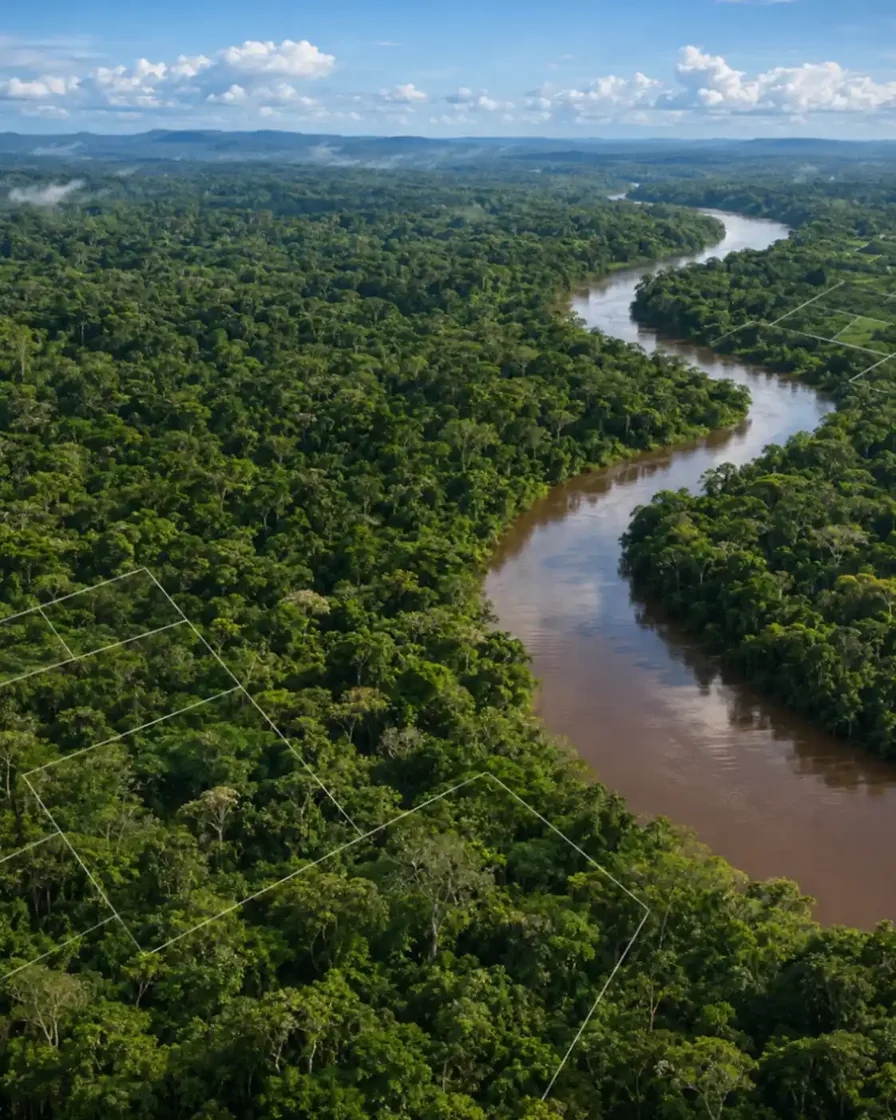
Two properties in the Peruvian Amazon can look identical from the river and have entirely different legal status. One may be privately owned rural land registered with SUNARP. Another may be state forest under a conservation concession, an Indigenous community territory, a protected natural area or land affected by a public river buffer. The difference determines whether you can legally purchase the property, construct an eco-lodge, develop agriculture, harvest timber or transfer your rights to another person.
The first mistake many buyers make is assuming that a land title automatically authorizes every use of the land. It does not. In Peru, ownership, physical possession, forest classification, zoning, environmental restrictions and permits are separate questions. A registered 20-hectare property may contain much less land suitable for the planned development, while a forest concession offering access to thousands of hectares may not convey ownership of the soil at all.
For foreign buyers, Article 71 of Peru's Constitution adds another critical consideration: acquisition and possession restrictions within 50 kilometers of international borders, including certain indirect arrangements. Elsewhere, legitimate ownership remains subject to land-use rules, existing rights and environmental requirements. Buying through a Peruvian company does not automatically bypass those restrictions.
This 2026 guide explains private rural and urban property, native and peasant community territories, forest concessions, protected natural areas, private conservation areas (ACP), possession rights, leases, usufructs, easements and riverbank restrictions known as fajas marginales. It also provides a practical method for checking SUNARP records, maps, ownership history and permitted uses before investing in a homestead, Amazon eco-lodge or conservation project.
The central rule is simple: establish exactly which legal right is being offered—and what that right allows—before negotiating the price.
Amazon Land Due Diligence in Peru: The 15-Step Buyer Checklist

Buying land in the Peruvian Amazon requires more than checking a property deed. A seller may appear in the official registry while the property's boundaries remain disputed, its access depends on an undocumented route, or its intended use conflicts with forest, water or protected-area regulations. A promising location and an apparently clean title are only the beginning of due diligence.
For foreign buyers, the investigation also involves Article 71 of Peru's Constitution, which restricts certain acquisitions within 50 kilometers of national borders. Buyers should verify the seller through SUNARP, compare registered boundaries with an independent survey, examine cadastral overlaps, and check protected areas through SERNANP. Indigenous and community rights, river margins regulated by ANA, and the property's physical condition require separate attention.
This 15-step Amazon land due diligence checklist explains which official documents to request, how to investigate a rural property in Loreto, Ucayali, San Martín or Madre de Dios, what an independent lawyer and surveyor should verify, and how to structure the final purchase. It also distinguishes registered ownership from possession rights, ecological zoning from legal permission, and a signed agreement from a fully registered transaction.
The objective is practical: identify problems before paying for land, committing to construction or relying on rights that have not been independently verified.
How to Pass Amazon Land to the Next Generation

A person can spend decades acquiring and protecting rainforest land, only to leave the next generation an estate that nobody knows how to manage. The documents may be valid. The land may be valuable. Yet the heirs may disagree about ownership, expenses, conservation obligations or whether the property should be sold. Inheritance transfers rights. It does not automatically transfer a workable plan.
This is particularly important for families holding land in the Peruvian Amazon. Property registration, succession law, company ownership, environmental restrictions and cross-border family arrangements can all affect what happens after the original owner's death. A trust or holding company may help organize continuity, but neither automatically removes compulsory inheritance rights or legal restrictions on foreign ownership.
The following guide explains how to structure Amazon land holdings for future heirs, compare direct ownership with corporate and fiduciary arrangements, document conservation commitments, prevent family deadlock and prepare a practical handover. The objective is not to create the most complicated ownership structure. It is to leave the next generation land they can legally hold, responsibly manage and make decisions about.
From Vineyard to Rainforest: Nature-Backed Trophy Assets for UHNW Families
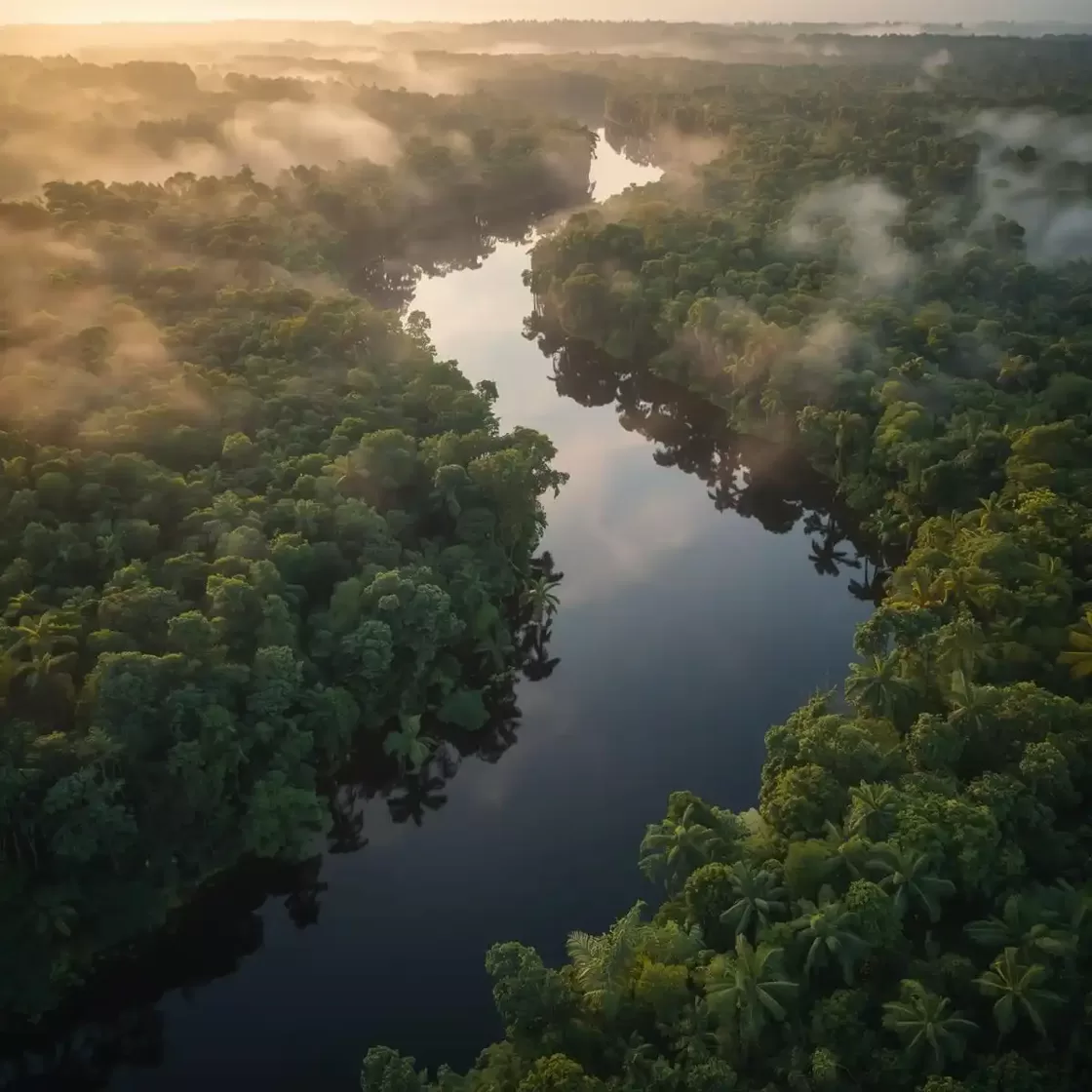
A vineyard in Tuscany. A villa on the Mediterranean. A private island with a perfect view. For generations, these have been familiar symbols of exceptional wealth. But another kind of property deserves attention: an intact forest, a private watershed, a vast conservation estate, or a landscape whose greatest feature is that much of it remains untouched.
These properties are sometimes described as nature-backed trophy assets. Their appeal goes beyond architecture or prestige. They can offer privacy, personal enjoyment, intergenerational stewardship and the opportunity to protect ecosystems within a long-term family holding. Yet their investment characteristics differ considerably from those of conventional luxury real estate.
Owning a forest does not automatically mean owning a profitable environmental asset. Ecological value, market value and financial income are separate considerations. This article examines why such properties attract interest from wealthy families and family offices, how natural capital can be assessed, what ownership actually costs, and when a rainforest estate may represent a meaningful legacy rather than an expensive liability.
Buying jungle land in Peru? Understand SUNARP records, possessory claims, disputed boundaries, Indigenous rights and forestry rules before paying.
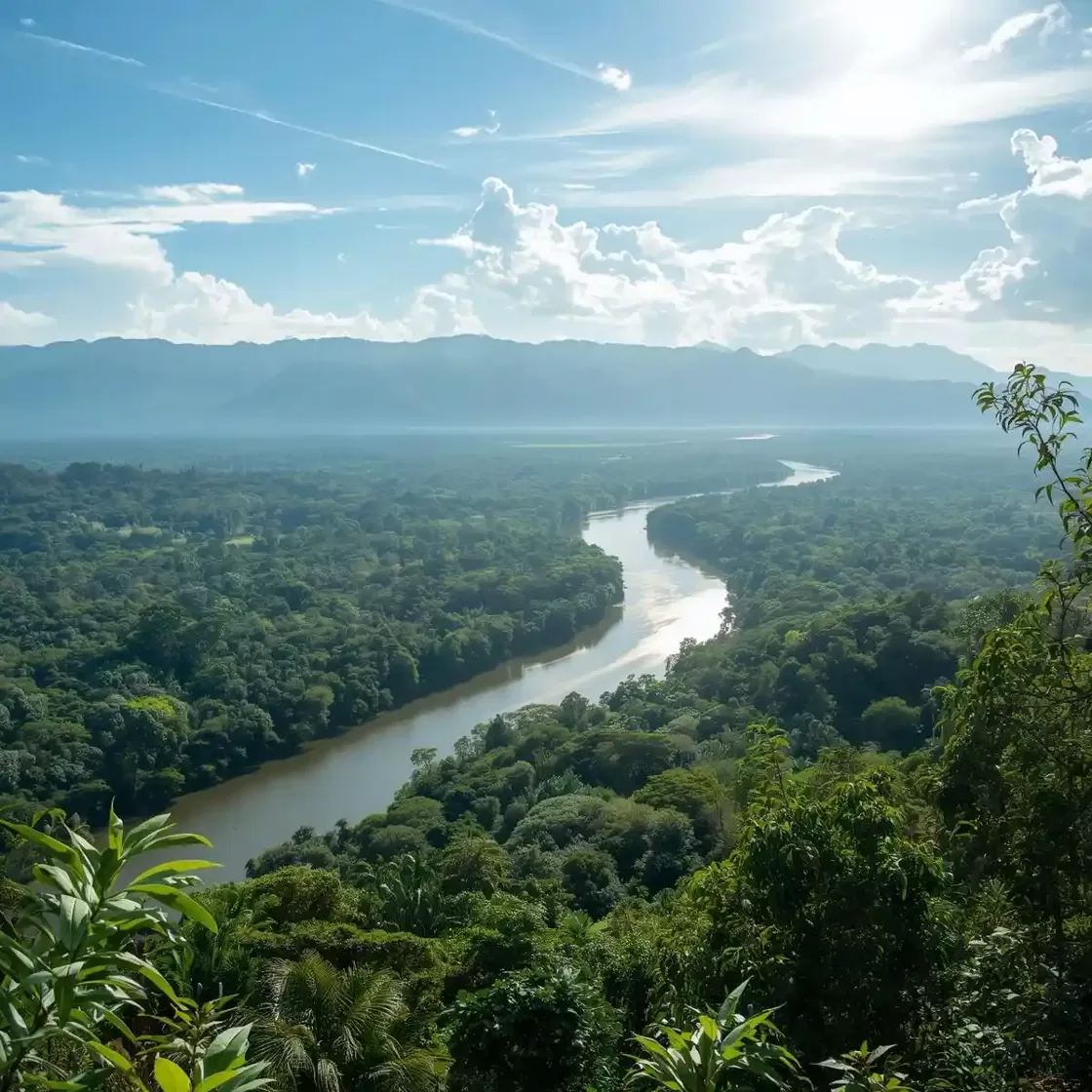
Buying jungle land in Peru can involve a legal risk that is easy to miss: a property may have a seller, a contract, a tax history and even a SUNARP registration record without every question about its ownership, boundaries or permitted use being resolved.
SUNARP, Peru's public registry authority, is central to protecting property transactions. But a registry entry does not replace an independent survey, an investigation of competing land claims or verification of environmental restrictions. In Loreto, these distinctions matter particularly when purchasing remote forest property, riverside land or territory intended for tourism, agriculture or conservation.
This guide explains how to interpret SUNARP records, distinguish ownership from possessory claims, investigate boundary and Indigenous territory conflicts, and understand the consequences of Peru's forestry legislation and constitutional rulings. The objective is straightforward: know what you are legally acquiring before committing your money.
Buying Amazon Rainforest Land in Peru — Investment or Madness?

Buying a piece of the Amazon rainforest sounds either visionary or completely irrational, depending on whom you ask. One person sees land that may become increasingly valuable as intact ecosystems grow scarcer. Another sees an isolated property with uncertain boundaries, expensive maintenance, difficult access and no obvious buyers. Both may be looking at the same forest.
The distinction between an extraordinary investment and an expensive mistake is rarely the beauty of the property. It is what the buyer can legally own, what the land can actually be used for, how much it will cost to protect and maintain, and whether there is a credible reason for its value to increase. Peru offers several distinct legal arrangements, including titled private property, recognized Private Conservation Areas and concessions for certain activities on public forests. Confusing these arrangements can destroy an investment before a single tree is touched.
This article examines the case for and against buying Amazon rainforest land in Peru. It explores the ownership rules, conservation opportunities, possible business models, hidden costs, environmental responsibilities and the question investors often overlook: who would eventually buy the property from you, and why? The Amazon may offer something far more meaningful than an ordinary real-estate investment. Whether it also offers a sound financial return requires evidence, not faith.
5 Things to Check Before Buying Land in the Peruvian Amazon

Imagine finding forty hectares of rainforest beside a quiet Amazonian river. The price looks reasonable, the photographs are beautiful, and the seller says you can build a house, plant fruit trees or open a small lodge. Before discussing the price, ask for the property's registration number. Then ask where its legal boundaries are, how you reach it when the river is low, and whether the intended use is permitted. The answers may change the value of the land completely.
Buying land in the Peruvian Amazon is different from purchasing an ordinary residential plot. A registered title does not automatically establish buildable land, a riverfront location does not guarantee drinking water or legal boat access, and an existing clearing is not proof that further development is authorized. Forest classifications, communal rights, flood exposure and transportation costs can turn an apparently inexpensive property into a complicated long-term responsibility.
These five checks provide a practical starting point for anyone considering rainforest property in Peru, whether the goal is a private home, agroforestry, conservation or a small eco-lodge. They cover ownership, permitted land use, access, environmental conditions and the costs that continue after the purchase. The objective is straightforward: identify the questions that could stop a transaction before committing money to land that may not support the life or business you have in mind.